Owen Patrick Smith set out to end the killing of jackrabbits in American coursing. His artificial hare turned the chase into a spectacle and helped create a gambling industry that would take greyhound racing far beyond anything he imagined.
Owen Patrick Smith with the first mechanical rabbit at Emeryville, February 1920. Smith and the lure are from the original photograph (Public domain); the Greyhound dogs are composited. Dogs in History (AI).
In the first years of the twentieth century, in Hot Springs, South Dakota, a chamber of commerce man was handed the job of running a jackrabbit coursing meet. The format was old and very simple: two greyhounds held back in slips, a jackrabbit shaken out of a bag, open ground. Owen Patrick Smith liked watching the jackrabbits run. He could not stand what happened when the dogs caught one.
The Hare That Could Not Be Caught
Smith spent years on the problem. Accounts differ on when he solved it — some date the first patent to 1910, others put a working lure system at 1912 — but one document is unambiguous. United States Patent 1,410,842, granted on 28 March 1922, filed from an address in Chicago, in the name of Owen P. Smith. A jackrabbit is a hare, so the term he chose was exact rather than decorative: an inanimate hare conveyor, a hare rendered as freight, drawn around a rail on a mechanism, running the same line at the same speed every time and arriving nowhere.
Smith filed in August 1920, three months after his Emeryville track had already opened. The patent office granted it on 28 March 1922. US Patent 1410842. Public domain, via Wikimedia Commons.
His aim was neither modest nor cynical. He wanted the killing stopped, and he wanted greyhound racing to be seen the way horse racing was seen.
The idea itself was not new, and it had already failed once. In March 1876, beside the Welsh Harp reservoir at Hendon in England, an artificial hare was dragged along a four-hundred-yard straight course by a cord wound onto a windlass. The public did not take to it, and the objection recorded at the time is the most useful sentence in the sport’s early history: the fastest greyhound always won, and the cleverest did not. What Smith added, half a century later, was the oval — a track the crowd could see all of at once, from a seat they had paid for.
From Coursing to Racing
Handlers parade the field at Emeryville. A day's card might use only sixteen or twenty dogs. Emeryville Historical Society, Blue Star Amusement. Public domain.
Smith tested the lure at Emeryville, California, in 1919 and opened his track there the following year, with the Blue Star Amusement Company. The oval was twenty-five feet wide and three-sixteenths of a mile around, about the footprint of a football field, with a tramway carrying the lure on the inner edge. The Oakland Enquirer announced the opening on 26 May 1920 for the Saturday following, and boasted of the first electrically controlled hare ever seen in the West.
The San Francisco Examiner covered the opening weekend under the headline Hounds Give Pursuit to Fake Bunny and observed that the only cruelty anyone could now allege was the cruelty of fooling the hounds. The stuffed rabbit carried a distinct bunny odor and was kept about fifty feet ahead of the field. At the first meeting one of the dogs caught it, and the machine survived only because the dog was too startled to do anything about it.
Everything about the contest changed at once. Coursing had been two dogs and one jackrabbit across country nobody had prepared, and the jackrabbit decided where it went. On the oval there was nothing alive to chase, and the line was set by the men who owned the track. Greyhounds were scarce in those first years, so two-dog races were still common, but the starting box at Emeryville had six stalls and the dogs ran six in a field from the opening meeting — a number that means nothing against a live jackrabbit and everything on a betting slip. Coursing was judged on two dogs because the points went to the dog that forced the turns, and a third would have made that unscoreable. Within a decade, tracks elsewhere were running eight.
A course had no fixed length. It ran until the jackrabbit was caught or got away, and nobody knew in advance how long that would take. A race had a distance chosen in advance by the men selling tickets, who added hurdle events and varied the lengths to hold an audience. A day’s racing at Emeryville might involve only sixteen or twenty greyhounds, bought from farmers in the outlying country who had mostly brought them from Texas or Oklahoma, and some ran several times in an afternoon. The thing being measured was no longer whether a dog could read an animal. It was how fast it could cover a fixed line.
The dogs wore colored collars rather than the numbered blankets used today, and a canvas curtain was drawn across the track to stop them after the finish.
Then Came the Money
There was no betting at Emeryville to begin with. The profits were meant to come from gate receipts, and Paul Hartwell’s history of the sport records what happened next in a sentence: Smith was a realist and soon accepted that gambling was going to pay the bills. Most afternoons thereafter had bookmakers calling the odds, and a punter could shop from one to another for a better price on the dog he fancied.
California had laws against racetrack betting and enforcing them was somebody’s job. Emeryville was chosen partly because the town tolerated this sort of thing, but tolerance is not the same as permission, and the sport spent its twenty years in the state under intermittent harassment.
The dogs were given racehorse names: Palm Flower, Sinn Feiner, Tammany Hall, Dry Martini, Badly Blended, Montana Boy, Daddy Long Legs, Gypsy Queen. A bugle called them to the starting gate, as at a racecourse. Smith had wanted the sport seen the way horse racing was seen.
It did not survive its second summer. The track opened only on Saturdays and Sundays — in an era of six-day working weeks there was no audience on the other five — and it had no lighting, so it could not run at night, which is where the money would later be found. Crowds rarely passed two or three hundred a day. Smith fell out with his partners, insisting on total control of the operation, and the partnership became unworkable. On 19 June 1921 the Oakland Tribune reported that the owner was closing the plant for a fortnight to make improvements. It never reopened. The first greyhound track to open in America was the first to close.
The grandstand and the sixteen hundred pounds of rail were taken apart and shipped to Tulsa, Oklahoma, where betting was under less scrutiny.
Sixty-seven dog tracks opened across the country in the decade after Emeryville, and every one of them was operating outside the law. Smith himself went on to open twenty-five.
They managed it by disguising the wager. Bettors bought options, or shares in a winning dog, or even shares in the betting stands themselves. Tracks would run for a day or a week, get raided, go quiet, and open again once the coast was clear. The trade called it running on the fix, and a track that failed was a bloomer. One owner of the period recalled needing to be quicker than his own dogs to get the kennel cages out of town ahead of the law, and noted that anyone who came second found a different sort of cage waiting.
There was one serious attempt to do it legally. After Kentucky passed a statute authorizing regular race meetings, Smith and his partners opened a four-thousand-seat, fifty-thousand-dollar facility at Erlanger, and the question reached the United States Supreme Court in 1927. The Court found that horse tracks qualified under the statute and dog tracks did not. In California it was the state attorney general — Earl Warren, later Chief Justice — who set about closing the tracks that followed Emeryville. Warren held that the sport drew low-income fans who could not afford to gamble, that owners rigged the odds, and that a substantial share of relief money was going through betting windows rather than into the mouths of the children it was meant to feed. He sent state agents to raid the tracks, and by 1939 every one of them had shut.
Florida became the first state to legalize dog racing, in 1931, passing a pari-mutuel bill over the governor’s veto.
When Greyhounds Became Stars
In 1922 a Chicago reporter went out to the dog track and wrote up what he found. Nearly two hundred bookmakers were working the paddock. The keepers paraded the greyhounds, the mechanical rabbit set off on its journey, and the field was released for a three-eighths-mile dash. The favorite at one to two was a dog named Racing Ramp, who came home in front while the band played.
Then the crowd went under the grandstand to be paid, and a middle-aged man walked in and demanded his five dollars back. He had bet on Armingle, dog number two, he said. He had not been able to see any such dog in the race.
Baseball legend Babe Ruth poses with other spectators with a winning greyhound Racing Ramp at the Derby Lane Greyhound Track in St. Petersburg, Florida, in 1925. Derby Lane Greyhound Track Records, Special Collections Research Center, North Carolina State University Libraries, Raleigh, NC. Public domain.
Three years later a photographer at a new track in St. Petersburg, Florida, took a picture of the winning dog being held up for the camera. The dog was Racing Ramp. The man holding him was Babe Ruth.
Lou Gehrig came that season too, and the golfer Walter Hagen. In three years the sport had gone from a back-lot afternoon to something like glamour. Pari-mutuel betting would remain illegal in Florida for another six years, and the track sold shares in the dogs to get around it. Everything in the photograph is legitimate except the reason most of the crowd was there.
Then Came the Monkey Jockeys
When the racing alone stopped drawing crowds, tracks in nine states strapped monkeys to the dogs. Humane societies ended it after monkeys were shaken to death. Buffalo Times, 1935. Public domain.
Hurdles and varied distances held an audience for a while. When that stopped being enough, some of them strapped monkeys to the dogs. Tracks in Florida, Kansas and Texas used monkey jockeys, as did tracks in California, New Jersey, New York, Ohio and Oklahoma. The monkeys were sometimes shaken to death during the performance. Local humane societies eventually put a stop to it.
A sport invented to end cruelty to one animal had, inside fifteen years, found a use for a second.
The Live Lures Never Stopped
In June 1978 the reporter Geraldo Rivera took a first-hand look at the training and coursing of Kansas greyhounds with live lures and aired it on the ABC program 20/20. Senator Birch Bayh introduced a bill to make live-lure training a federal crime. His amendment to the Animal Welfare Act never became law, and the industry undertook to police itself.
In 2002 an Arizona breeder lost his state license when investigators found a hundred and eighty rabbits at his kennel. In 2011 a Texas licensee forfeited his privileges after being filmed training greyhounds on live rabbits on his farm. Not jackrabbits on open ground by then, but rabbits, in a kennel.
Smith’s machine did everything he designed it to do. It ran the same line at the same speed and it never bled, and it turned out that a hare that could not be caught was worth a great deal of money to people who had no particular feeling about jackrabbits.
Florida voters banned greyhound racing in 2018, and the track where Babe Ruth held Racing Ramp ran its last race in December 2020. Smith patented the artificial hare in 1922 so jackrabbits would stop being killed. Eighty-nine years later, they were still training on live ones.
Did You Know?
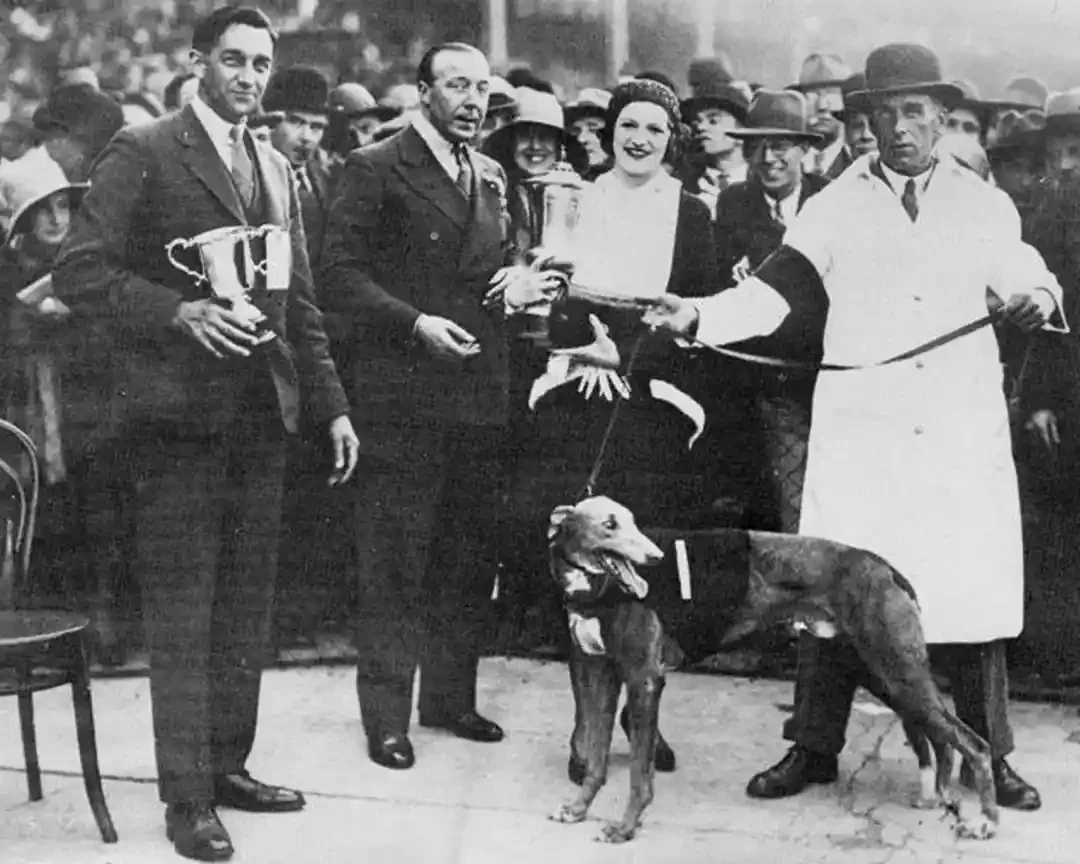
British racing was legal from the start, and it made Mick the Miller a household name. Presentation after the 1930 English Derby. Public domain, via Wikimedia Commons.
Charles Munn bought the British rights from Smith and formed the Greyhound Racing Association Trust in August 1925. British racing was legal from the start, and within four years it had produced Mick the Miller, an Irish-bred Derby winner who became a household name.
In Australia and New Zealand the mechanical lure is called the tin hare, a term in coursing use by at least 1927. It later transferred to lightweight railcars, and the Rail Motor Society of New South Wales still publishes The Tin Hare Gazette.
Smith died in January 1927, a year after founding the International Greyhound Racing Association in Miami. It was never international.
The grey in greyhound has nothing to do with color. It descends from Old English grighund, and the dogs came in every shade; the French lévrier is the plainer word, from Latin lepus, hare — the hare-dog.
Étienne de Bourbon’s thirteenth-century account of Saint Guinefort calls him a canis leporarius — a hare-dog, from lepus, the root behind the French lévrier. Seven centuries later the hare was a motorized rag on a rail.
Breed: Greyhound | Country of origin: Britain | First use: Coursing, pursuing hare and deer by sight across open ground | Origins: 9th century
Discover More Working Dogs Who Earned Their Keep…
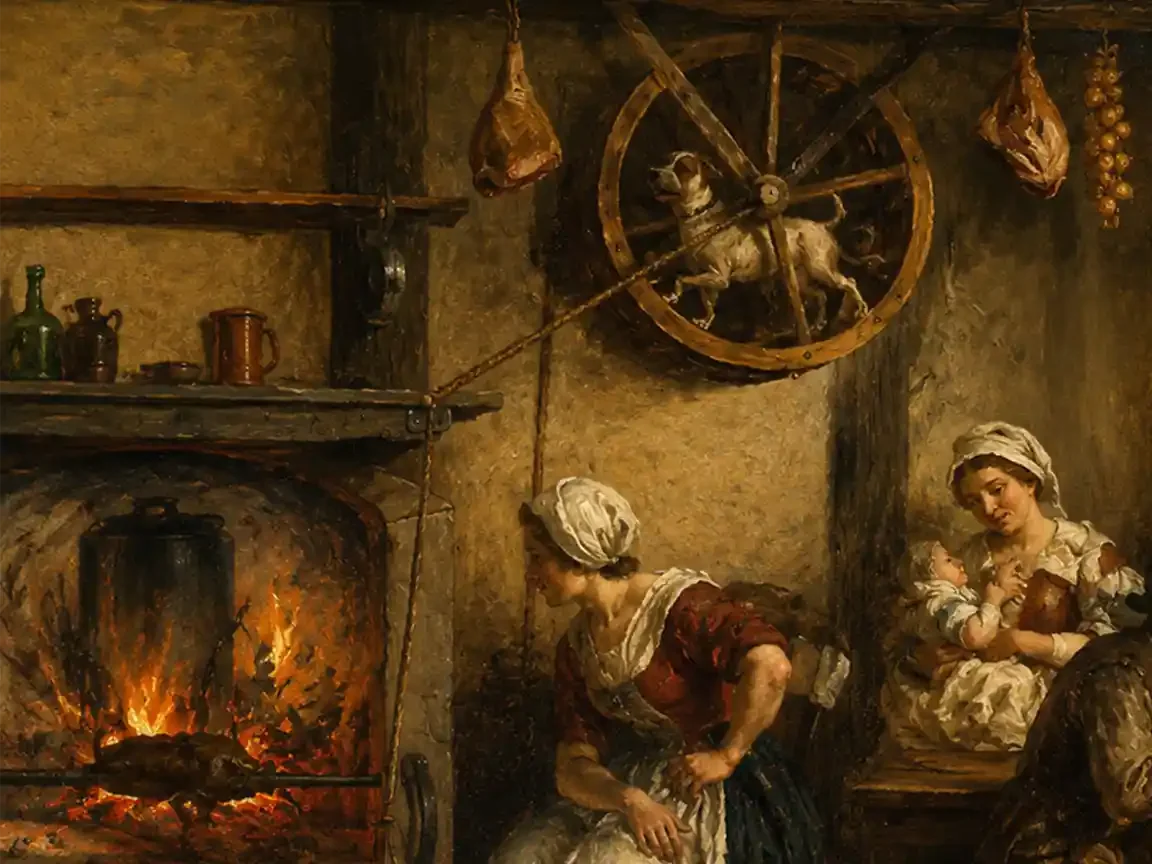
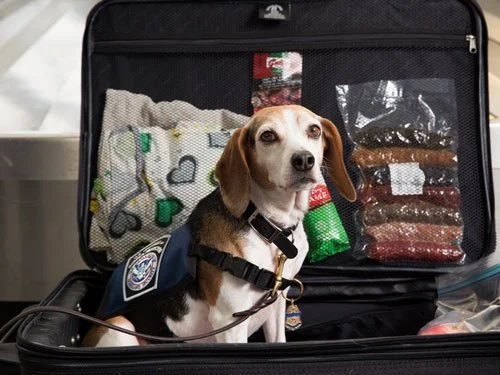
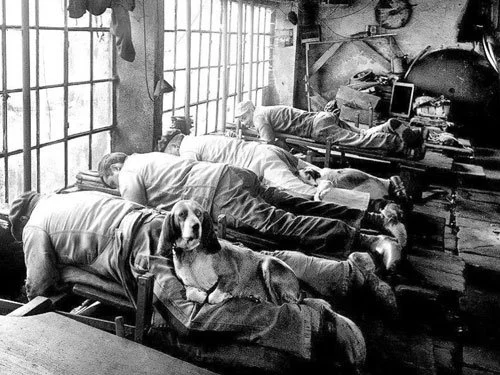
Owen Patrick Smith built a hare no greyhound could catch. Other working dogs were bound to a trade just as tightly, beside the knife grinders of France, among the baggage at America’s airports and at the hearths of British kitchens.