The Dogs of 9/11 Went Above and Beyond
Hundreds of dogs worked Ground Zero after September 11. They searched for survivors, recovered the dead and comforted the people working in the ruins. Injured and exhausted, they kept working while veterinarians cared for them —and their exceptional service helped change how working animals are treated in disasters.
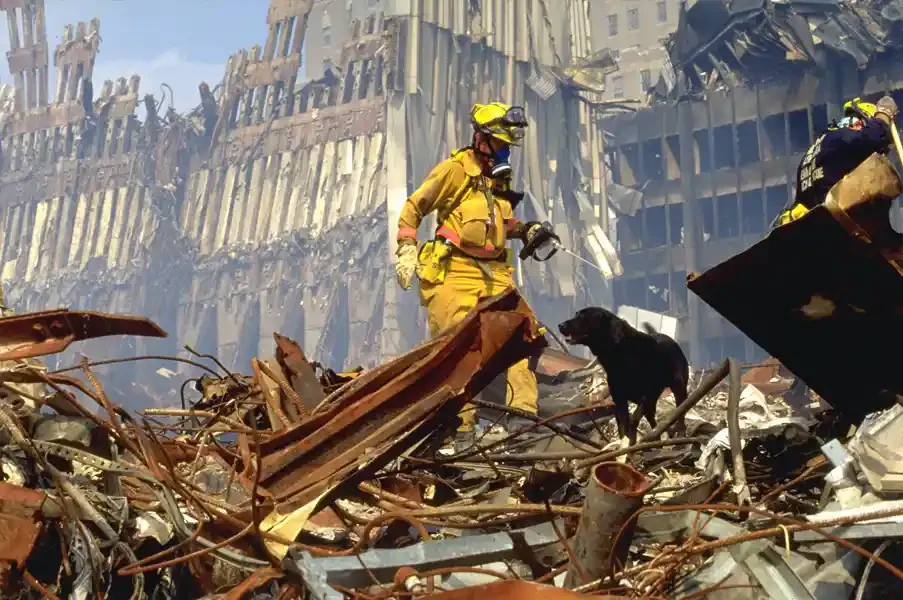
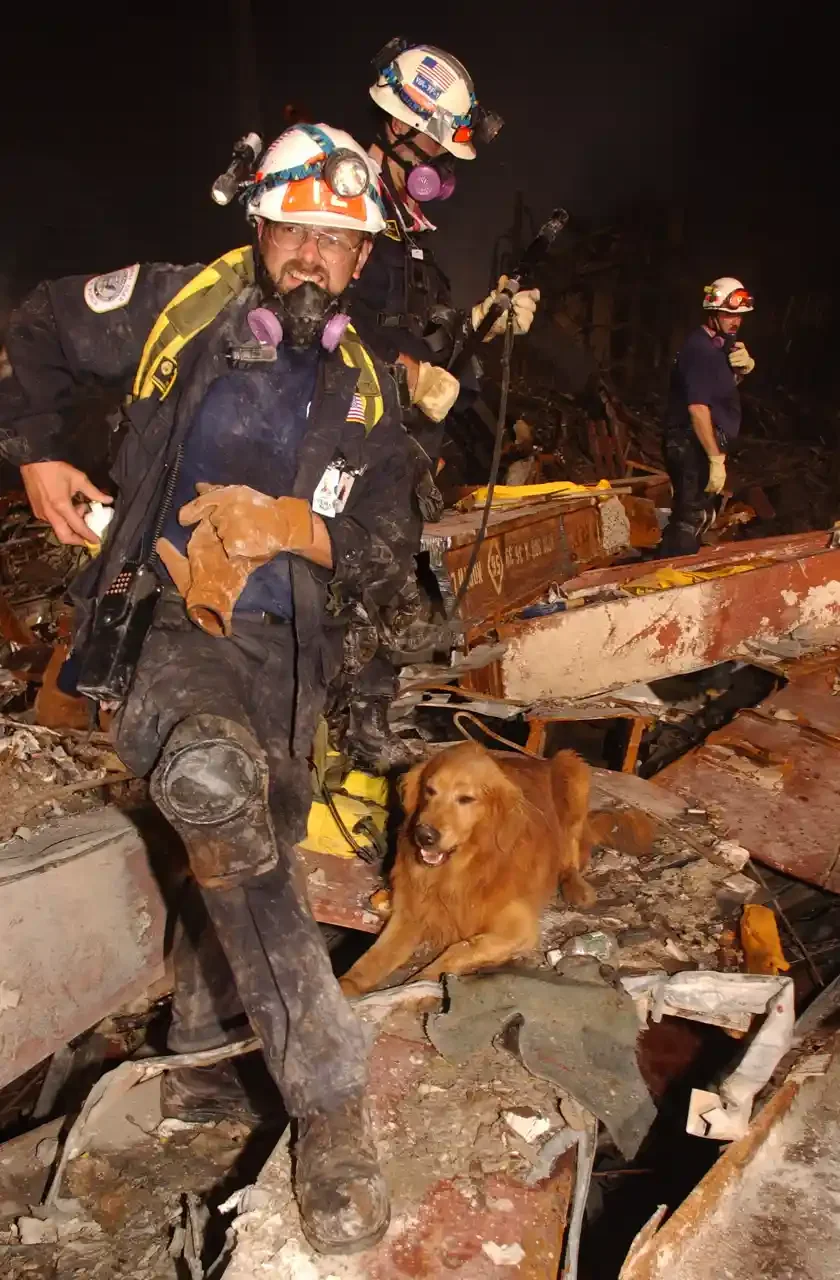
FEMA 4124 - Mike Scott from the California Task Force-8 and his dog, Billy, search through the rubble for victims of the September 11 terrorist attack, New York, September 2001. Photo by Andrea Booher/ FEMA News Photo.
Hundreds of Dogs, Three Vital Jobs
At Ground Zero, the dogs came off the ruins exhausted. One search dog was so tired that it collapsed before reaching the door of the makeshift veterinary station. Its handler carried the dog inside, where it was given food and water and whatever else it needed. When the dog could stand again, it began pulling its handler back toward the rubble.
The scene, recalled by Suffolk County SPCA chief Roy Gross, captures something easily lost in the familiar photographs of dogs at the World Trade Center. More than 300 dogs passed through Ground Zero during the operation, but they were not all doing the same work. Some searched for people who might still be alive; some worked in the recovery of human remains; others offered comfort to people who had spent hours or weeks among the ruins.
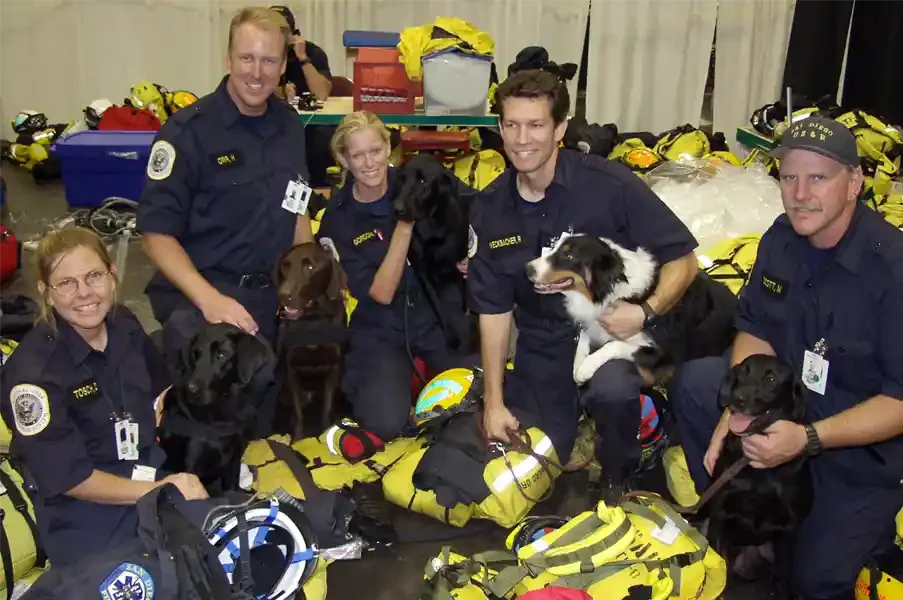
On September 11, FEMA deployed twelve Urban Search and Rescue task forces, eight to New York and four to the Pentagon, and the teams included specially trained search dogs. The canine teams arrived with handlers from around the country and worked in rotations rather than as one large group. At Ground Zero, the dogs entered the collapsed remains of the World Trade Center, a landscape of concrete, steel, dust and debris that rescuers simply called the pile.
The scale could be confusing when viewed from the ground. A dog arriving from another state might work one shift and be gone within a week, replaced by another team and another handler. The dogs were therefore part of a moving operation rather than a permanent population on the site. That rotation is one reason the number of dogs involved is larger than any photograph can suggest. The result was a succession of canine teams rather than one fixed cast of characters.
The Search Was Different
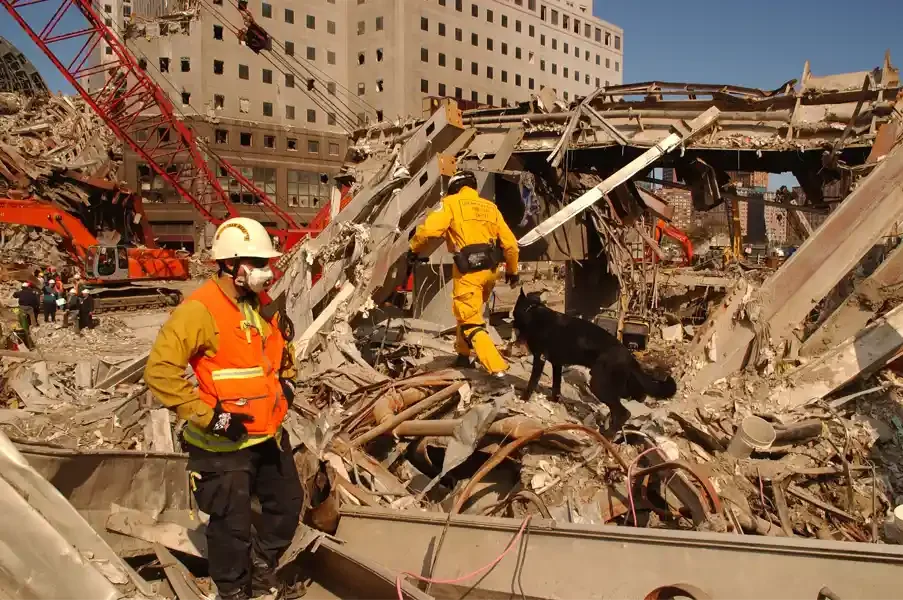
FEMA 4813 - Urban Search and Rescue Washington Task Force-1 member, Thunder, from Lakewood, Washington searches through the rubble for victims of the September 11 terrorist attacks, New York, September 2001. Photo by Andrea Booher/ FEMA News Photo.
The first job was the one most people remember: finding survivors. Search dogs could work through unstable areas and into voids that were difficult or dangerous for people to enter. California Task Force 1, for example, worked in, under and around the footprint of the South Tower for nine days, and its search dogs made live alerts during the first four days.
But the search was not straightforward. Michael Shorter, one of the veterinarians who worked at Ground Zero, later described the problem faced by recovery dogs: they were trained to locate a body, yet the remains of the World Trade Center were so dispersed that the scent was not concentrated in one place. It was everywhere. The dogs had to work in an environment where the thing they had been trained to detect seemed to surround them.
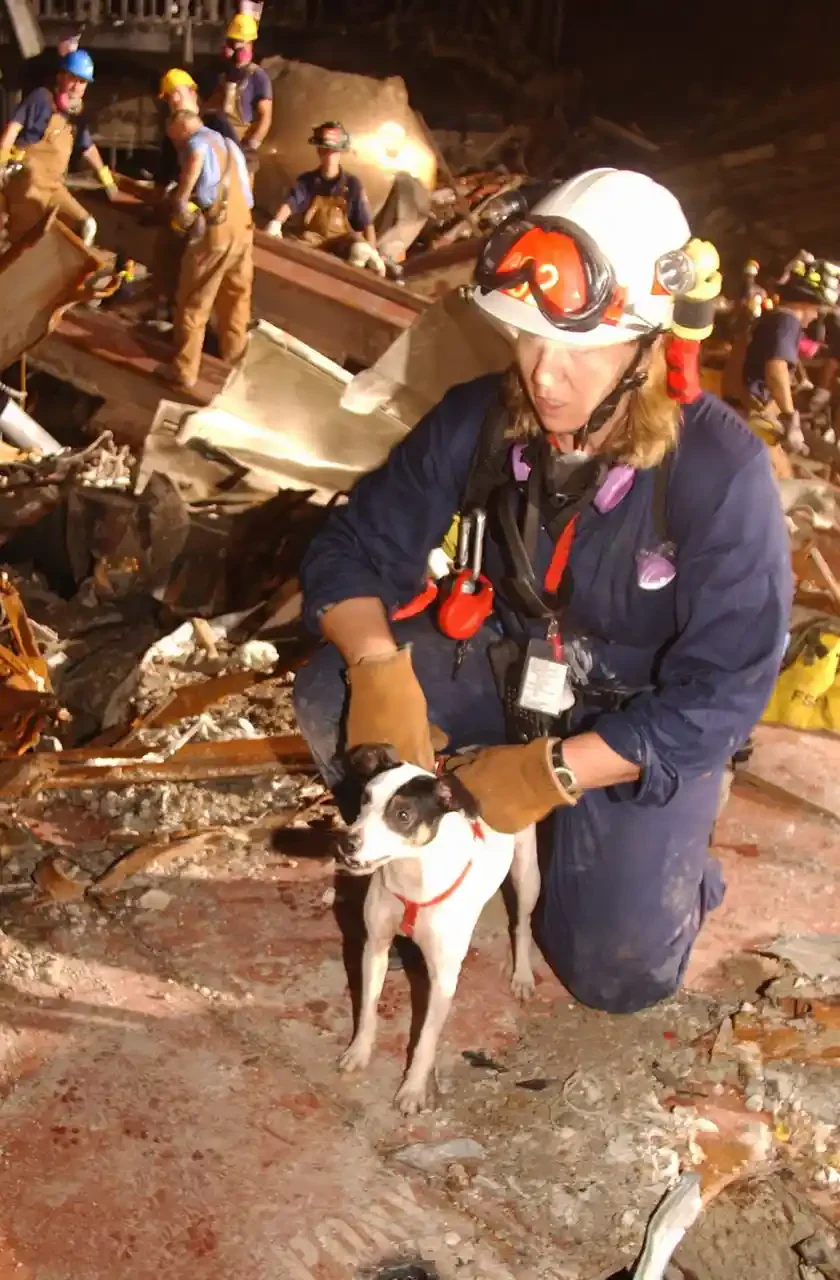
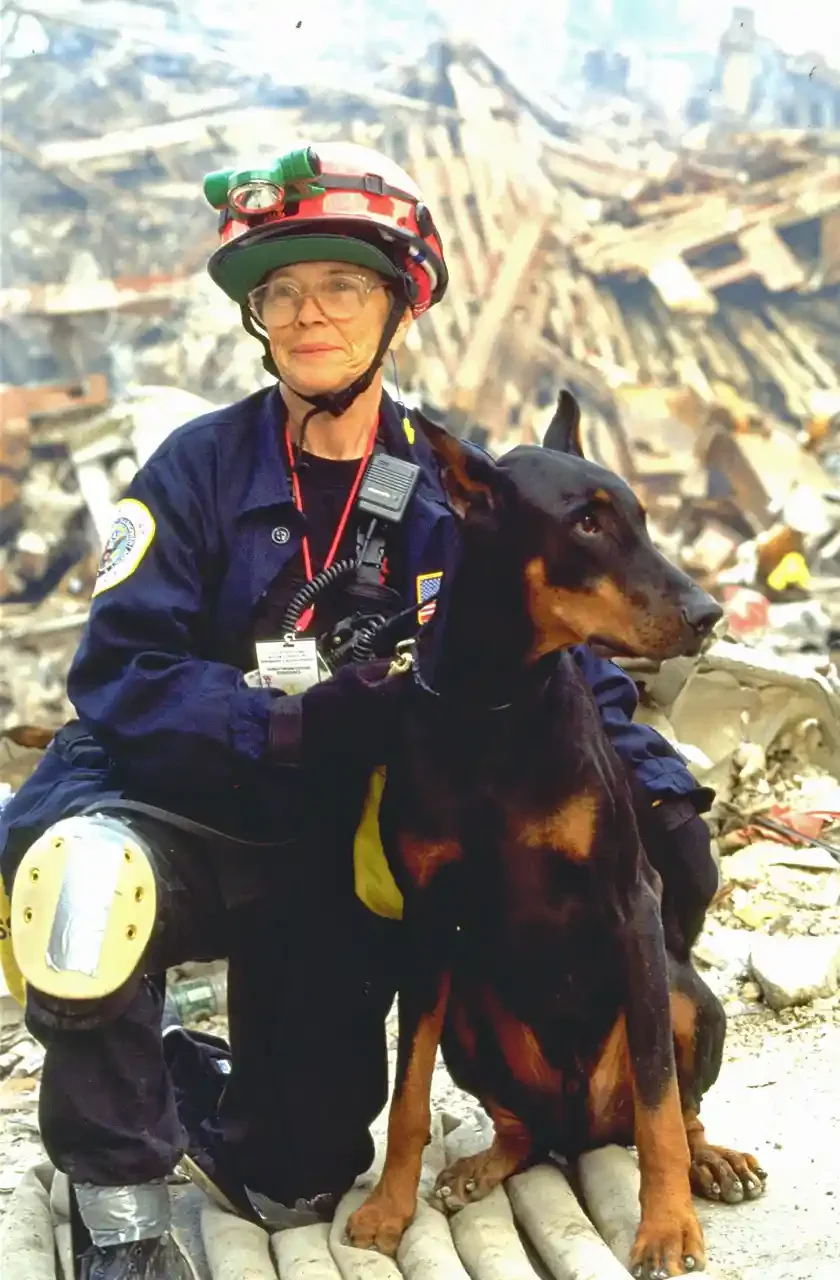
FEMA 5616 - Rescue workers work with dogs to search for victims of the World Trade Center attacks, New York, September 2001. Photo by Andrea Booher/ FEMA News Photo.
Ricky, a rat terrier with the Puget Sound Urban Search and Rescue team, had another advantage that had nothing to do with his nose. At seventeen inches and eighteen pounds, he could enter buckled stairwells and voids where larger dogs could not. Ricky worked the night shift with Thunder, a golden retriever, and both dogs had been trained to signal a live find by barking. Neither dog made that sound at Ground Zero.
Janet Linker of the Seattle Fire Department had raised Ricky from a puppy. After the operation, she said it was difficult to know how many people Ricky and Thunder had helped locate. She had watched a policeman and a firefighter being carried from areas the two dogs had just searched; the people in those stairwells were gone rather than alive.
The Work Became Recovery
For some dogs, the change from rescue to recovery was not a new assignment so much as a new reality. Riley, a golden retriever with Pennsylvania Task Force 1, had been trained to find living people. At Ground Zero, Riley spent his deployment recovering the dead. His handler was left trying to explain to the dog that he was still doing his job.
For California Task Force 1, the change was stark. Its search dogs made live alerts during the first four days; the task force ultimately participated in the recovery of 30 to 35 bodies and made no live rescues. The dogs had entered the ruins looking for people who might still be alive, but the work increasingly became one of locating those who had not survived.
Handlers also had to keep the dogs motivated to search. The National September 11 Memorial & Museum records that, when the dogs were finding no survivors, handlers sometimes staged a “mock find” so the animals could experience the success of finding someone.
The dogs were not interchangeable pieces of equipment. Their training shaped what they were looking for, how they responded to a find and how they worked with their handlers. At Ground Zero, those distinctions became increasingly blurred as the search for survivors gave way to the recovery of human remains.
What Came Off the Pile
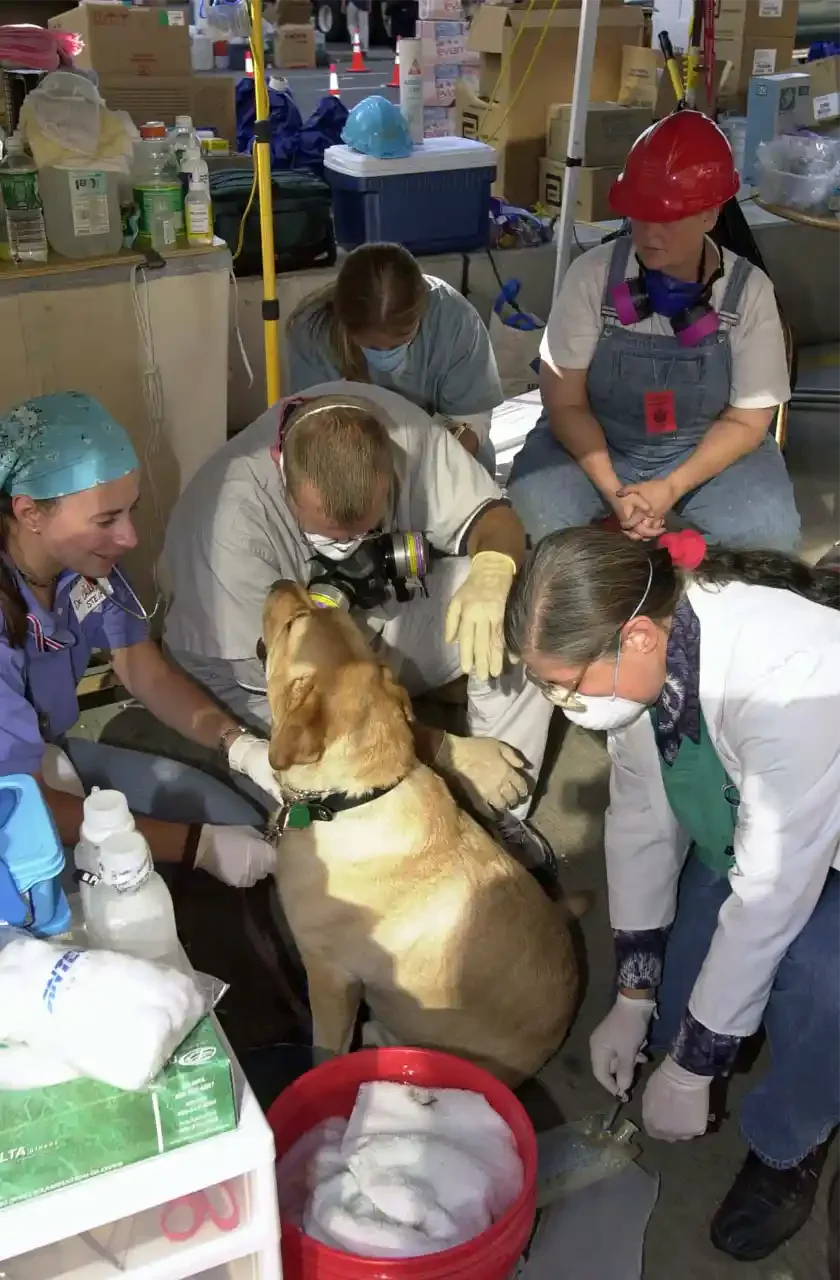
The physical cost was immediate. Contemporary accounts recorded lacerations, smoke and dust inhalation, eye irritation, torn nails, foot injuries, dehydration and exhaustion. Laura Kressler, a medical officer with the second veterinary team, remembered checking dogs for wounds, burns and cuts, flushing their eyes and ears, bandaging their feet, and showering and decontaminating them after their shifts. Once, she removed jet fuel from a golden retriever that had fallen through the pile.
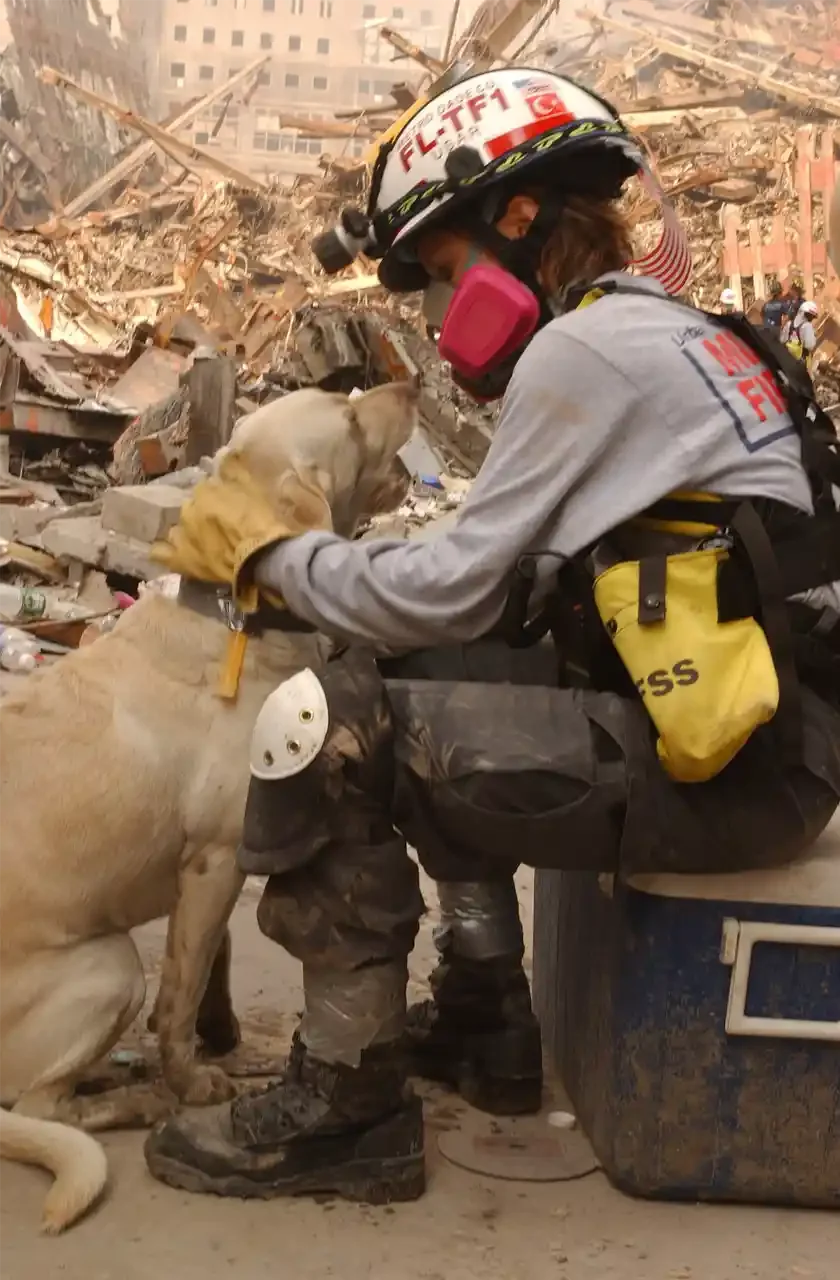
FEMA 13121 - Urban Search and Rescue teams search for survivors amongst the wreckage of the World Trade Center while search and rescue dog Bretagne takes a much needed break, New York, September 2001. Photo by Andrea Booher/ FEMA News Photo
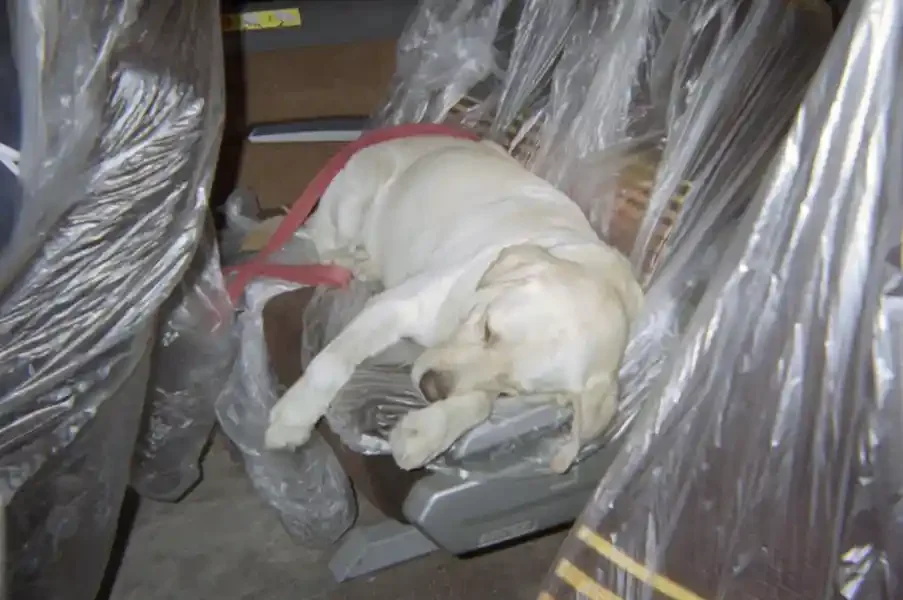
Some of the dogs became public faces after Ground Zero. Bretagne, a golden retriever with Texas Task Force 1, was just two years old when she arrived at the World Trade Center. A photograph taken during the operation shows her resting among the wreckage, a quiet reminder of the physical demands placed on the dogs working there.
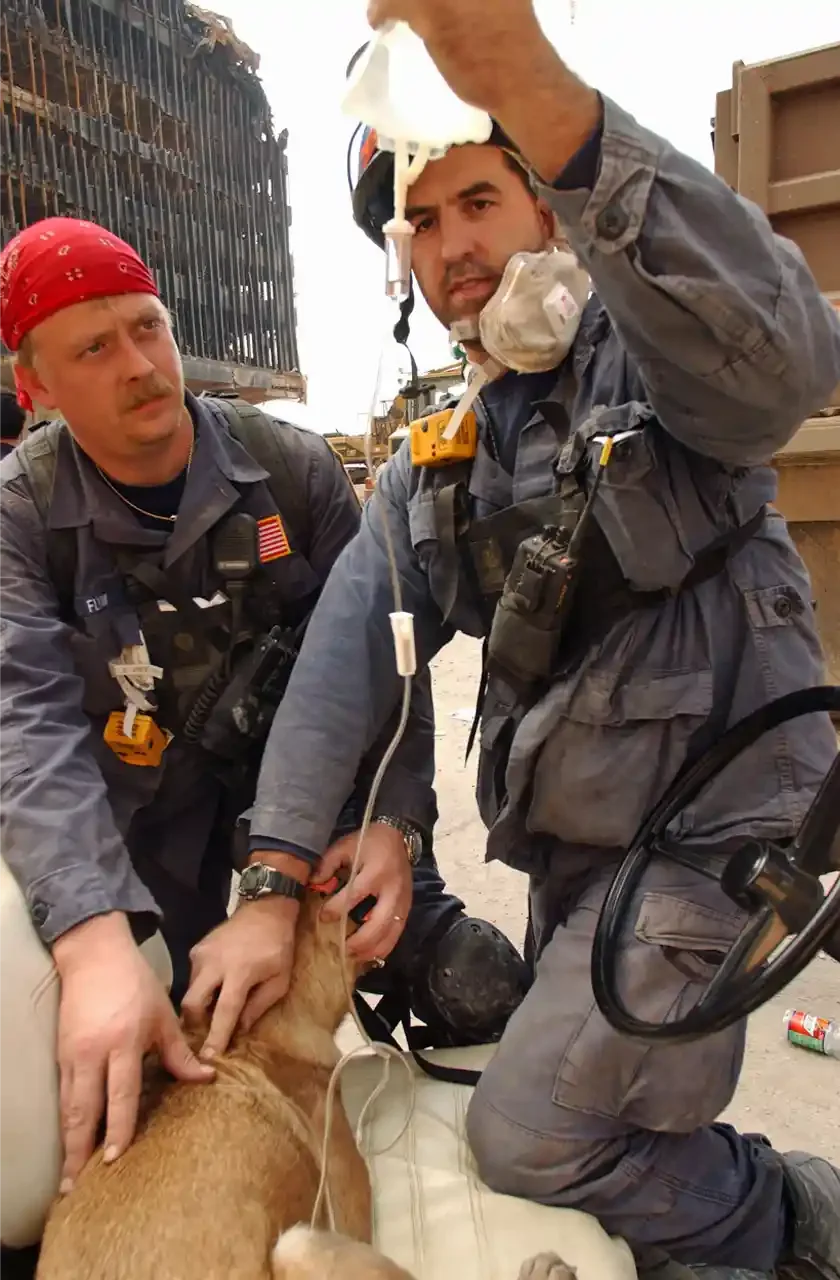
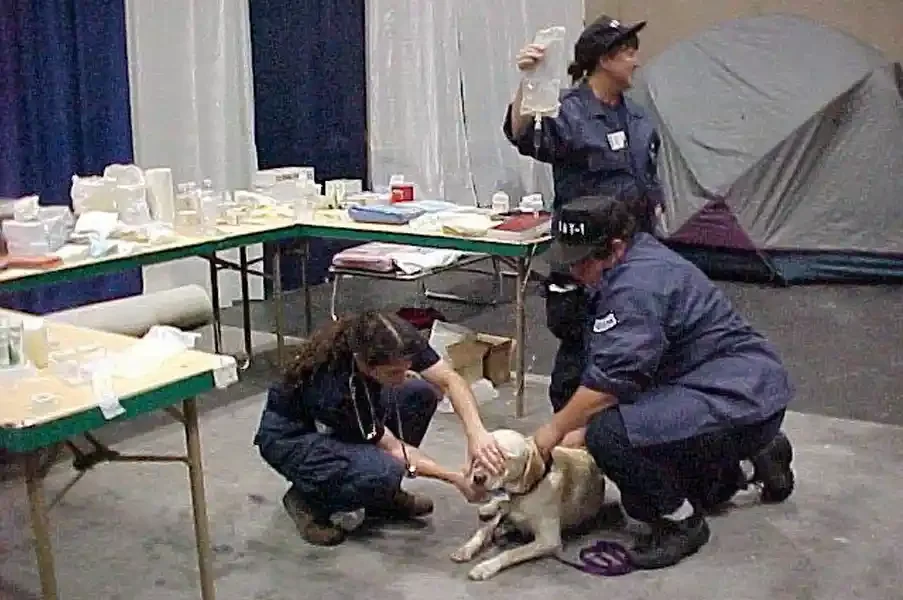
Dehydration was the biggest problem, Gross recalled. The dogs were so coated in contaminants that they needed to be washed, and some received intravenous fluids while they were being cleaned. Their eyes were irrigated with saline. The practical routine was repeated as each exhausted dog came off a shift: examine it, treat what was injured, remove the material clinging to its coat, and give it enough time to recover.
FEMA 3982 - Dr. H. Marie Suthers-McCable, D.V.M. from Virginia Tech, works on Kinsay, a member of the Texas Task Force One Urban Search and Rescue team who was injured while searching in the wreckage. Fellow team member Bob Deeds and an unidentified other provide assistance, New York, September 2001. Photo by Mike Rieger/ FEMA News Photo.
The veterinary response began almost as quickly as the dogs' work. On the morning of September 11 Michael Shorter and Barbara Kalvig left their Manhattan veterinary practice and headed toward the ruins, expecting to help human casualties. Instead, they found handlers and dogs covered in dust and debris. When an older dog named Bear came toward them, its handler asked for supplies and help. Shorter and Kalvig soon realized that the dogs were becoming part of their emergency work.
Other veterinarians were improvising care at the same time. The Suffolk County SPCA brought its mobile veterinary unit to West Street that evening, where veterinarians and technicians began working 12-hour shifts. People brought tents, the fire department isolated a hose, and one doctor arrived with camping equipment, a Coleman outdoor shower and a turkey fryer to heat water for washing the dogs.
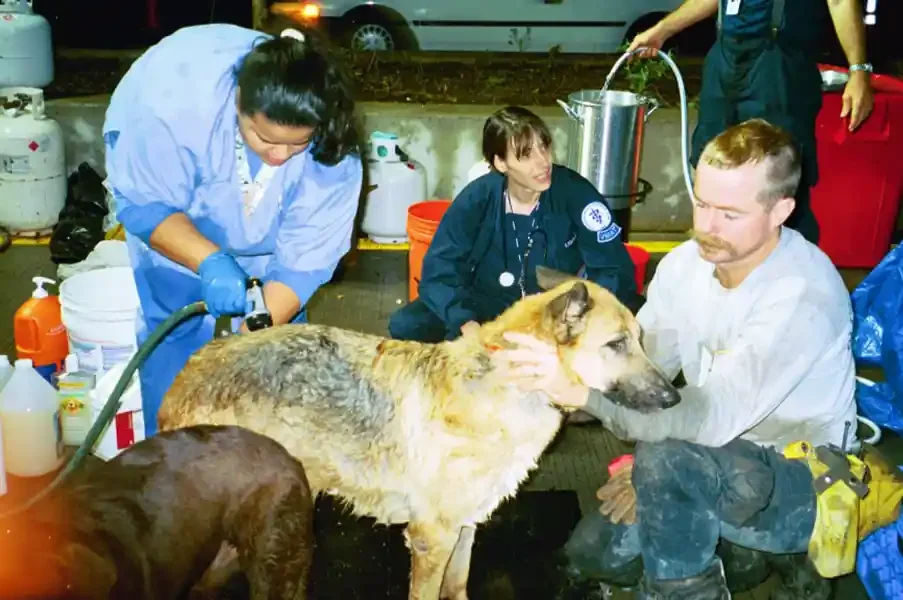
AVMA-19 - Veterinarians and handler Michael Kidd (right) decontaminate Mizu, a cadaver dog with Florida Task Force 1, after a shift at the World Trade Center, New York, September 2001. Photo courtesy of Michael Kidd.
Federal veterinary assistance was also moving into place. FEMA's Veterinary Medical Assistance Team 1 (VMAT-1) reached the World Trade Center the afternoon of September 11 and established canine triage facilities, including a mobile unit at Ground Zero and a veterinary trailer near the Jacob Javits Convention Center with X-ray and anesthesia equipment. As the operation expanded, dogs needing more extensive treatment could be sent to the Animal Medical Center.
From September 11 through October 31, fifty-one members of the four federal veterinary teams provided more than 900 treatments to roughly 300 search dogs. The figure was cumulative: task forces rotated through the site, and the dogs changed with them. John Charos deliberately worked twelve-hour veterinary shifts so handlers would not have to bring an exhausted dog to a different veterinarian each time.
On more than one occasion, veterinary volunteers had to physically pull dogs from service because they could not get handlers to stop after eighteen or twenty hours.
People Came to the Dogs
FEMA 5660 - Dr Laura Rand (in blue) and Jodi Pannell (L) pose with Uno, a Red Cross dog, in the V-MET tent at Ground Zero, New York, September 2001. Photo by Michael Rieger/ FEMA News Photo.
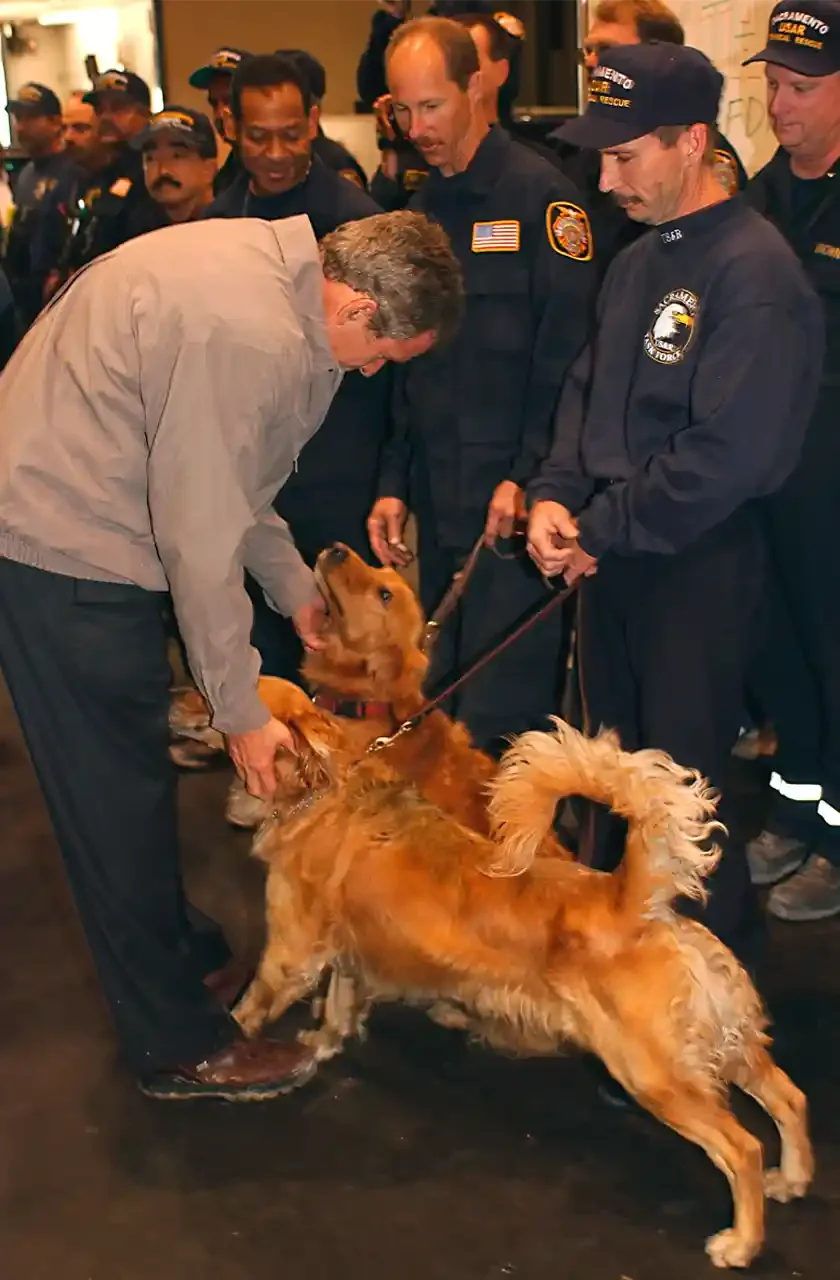
The veterinary station acquired another function that nobody had designed. Patrice Klein noticed that a search dog did not have to be working to draw people toward it. Workers saw a dog sitting or resting between shifts and came over, because the animal offered a brief change from the work around them.
Thunder offered that kind of relief in a different way. Rescue worker Bob Sessions remembered men who had reached the limit of what they could take asking to play fetch with the golden retriever, then stepping away to sit with the dog or talk. For a few minutes, the rubble and the work could recede, replaced by something familiar: a dog wanting to play.
Gross had also brought a dog of his own to the site, one with no search training. One day a firefighter came down from the rubble, approached the dog and knelt to pet him. The firefighter began to cry, and then began to talk. The dog did not need to locate a scent or enter a void to be useful in that moment.
The more than 300 search-and-recovery dogs were never at Ground Zero at the same time. Federal teams generally rotated after about a week, and after roughly three weeks, according to NYPD Emergency Service Unit canine division lieutenant Daniel Donadio, recovery work was left largely to the NYPD canine unit. NYPD dogs then worked on rotation for nine months, until May 30, 2002.
Therapy dogs also became part of the response on a much larger scale. Nikie, a therapy dog handled by Frank Shane, worked at Ground Zero and the family assistance center for months. The role was still relatively new to disaster response in 2001, but the experience would help establish therapy dogs as a standard part of disaster response.
What the 9/11 Dogs Started
The veterinary response outlasted the tents and trailers. Michael Shorter and Barbara Kalvig's work drew the attention of New York City's Office of Emergency Management, which asked for a more formal disaster-animal response. The New York City Veterinary Emergency Response Team was formed, and Kalvig later said that 197 veterinarians and about 100 veterinary technicians had been mobilized during the Ground Zero response. By the time Hurricanes Irene and Superstorm Sandy struck New York, the team was already in place to provide veterinary assistance during major disasters.
The dogs had arrived at Ground Zero to do a job, but the job kept changing. They searched for people who might still be alive, helped recover those who were not, and gave exhausted responders moments of comfort when there was little else to offer. Alongside them, veterinarians improvised a system of care that eventually helped change the way working animals were included in disaster planning.
Twenty-five years later, the dogs of Ground Zero are gone. What remains is the record of what they did: searching, recovering, comforting—and helping change the way working animals are cared for when disaster strikes.
The 9/11 Dogs: A Visual Record
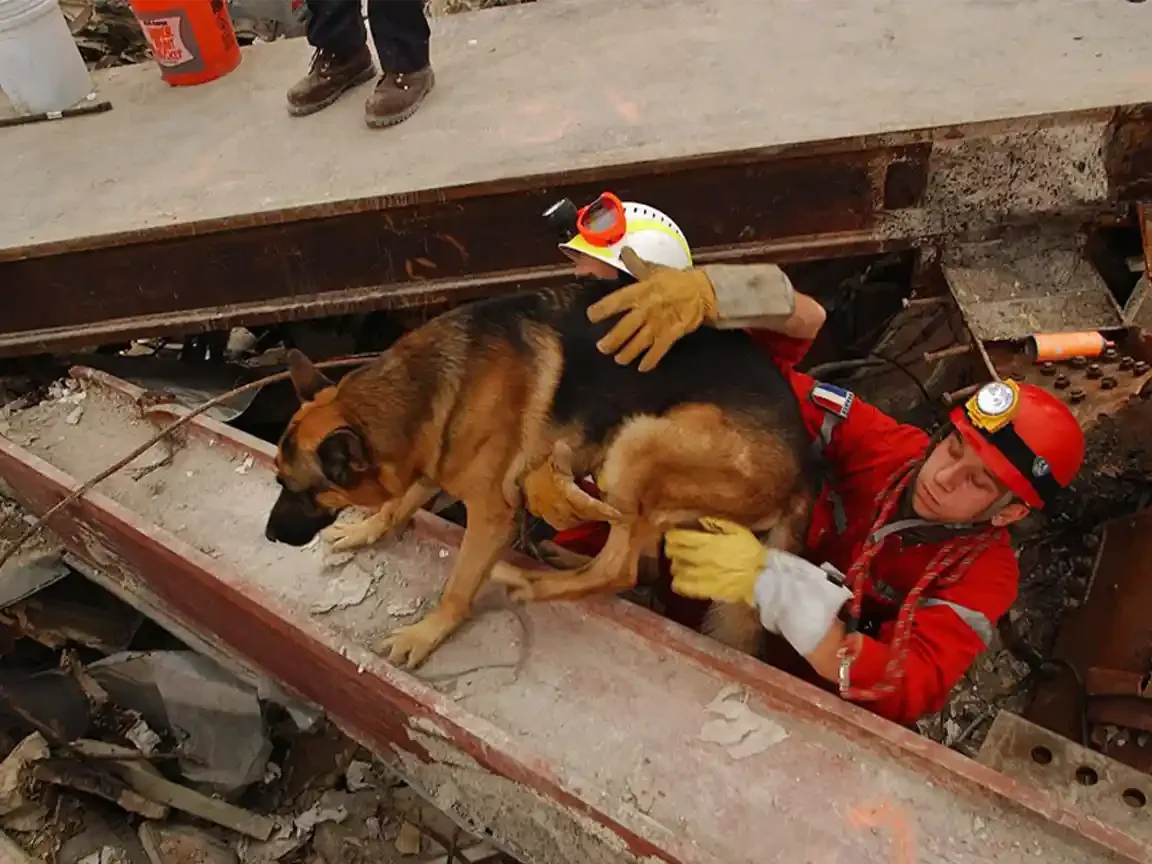
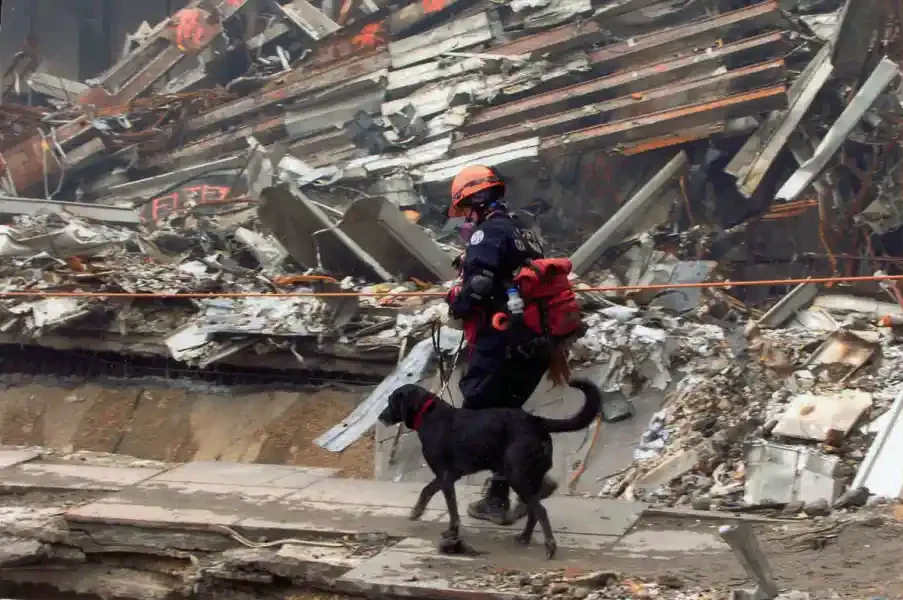
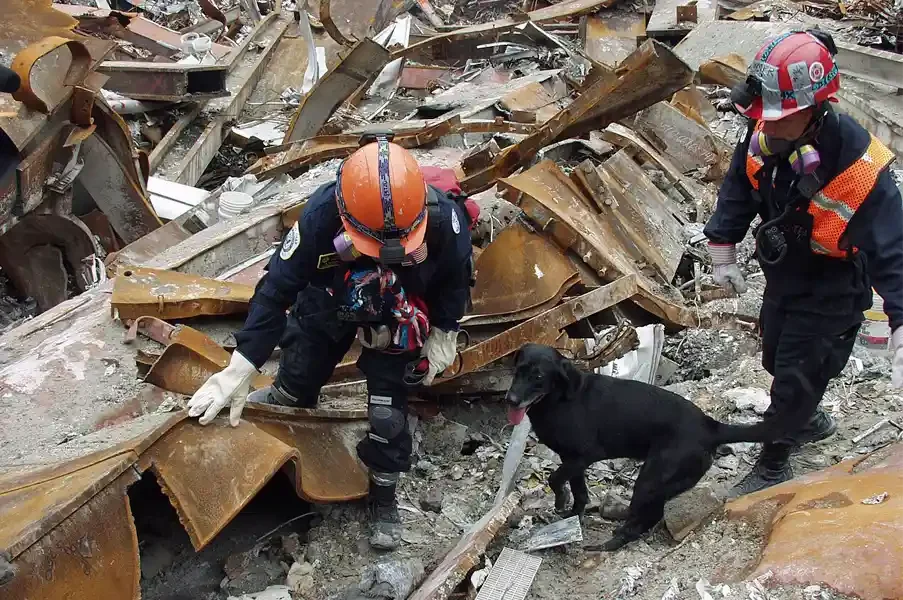
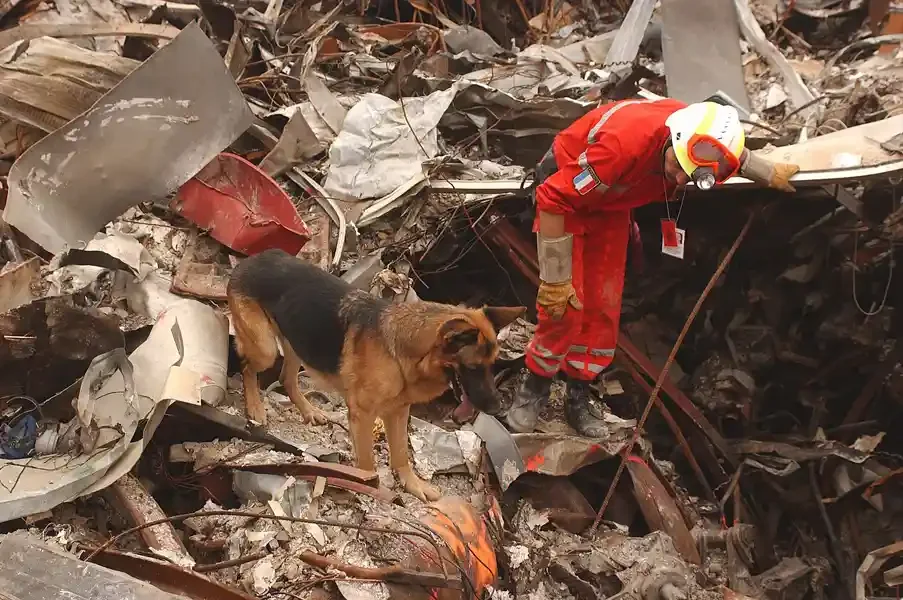
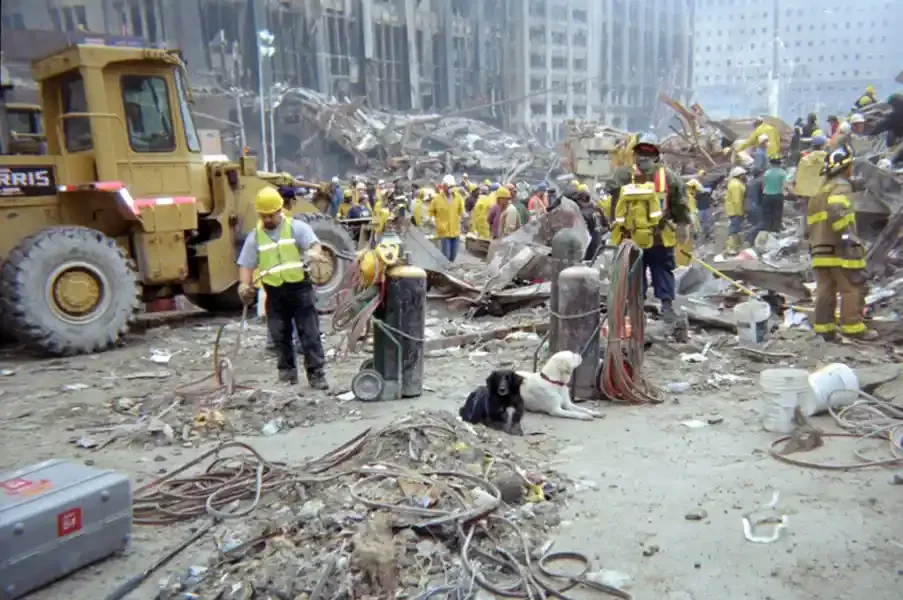
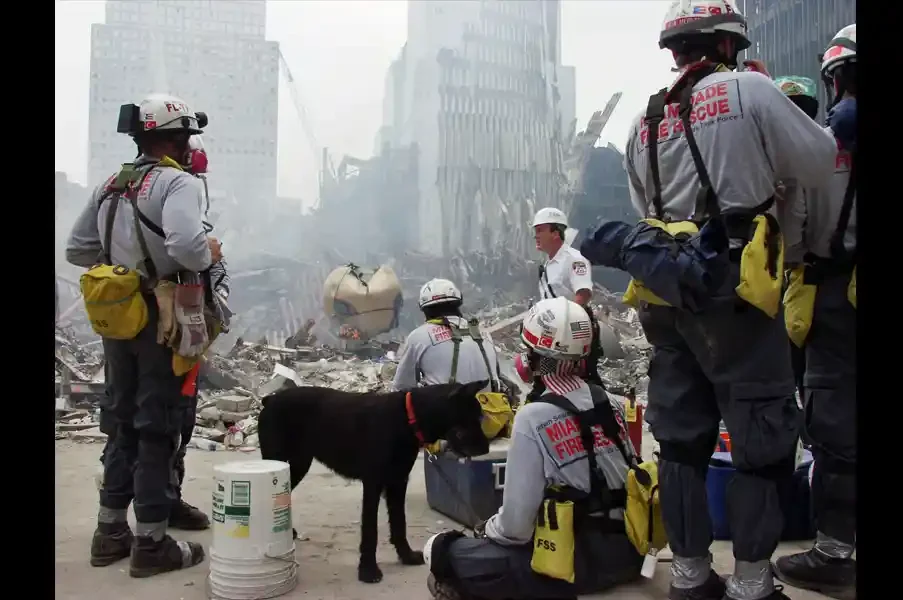
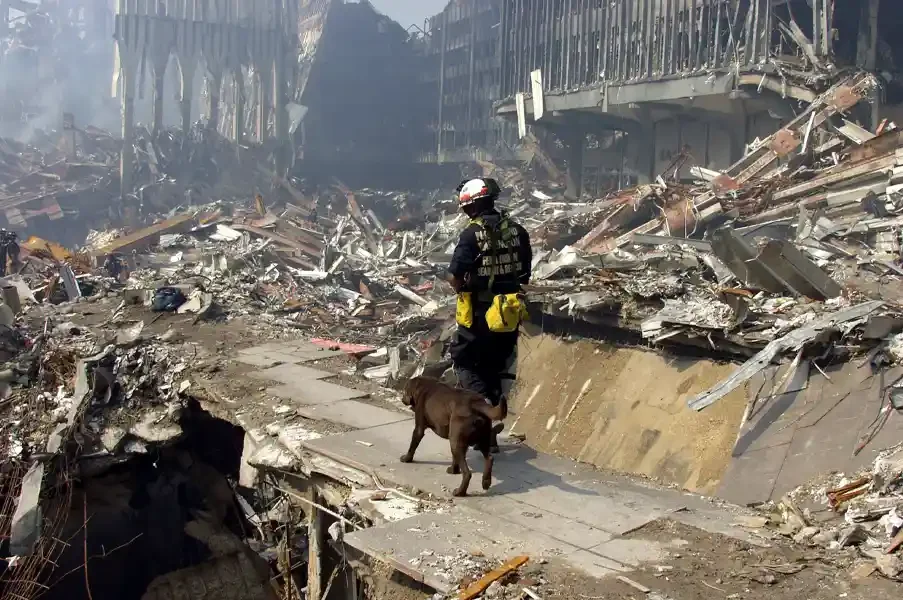
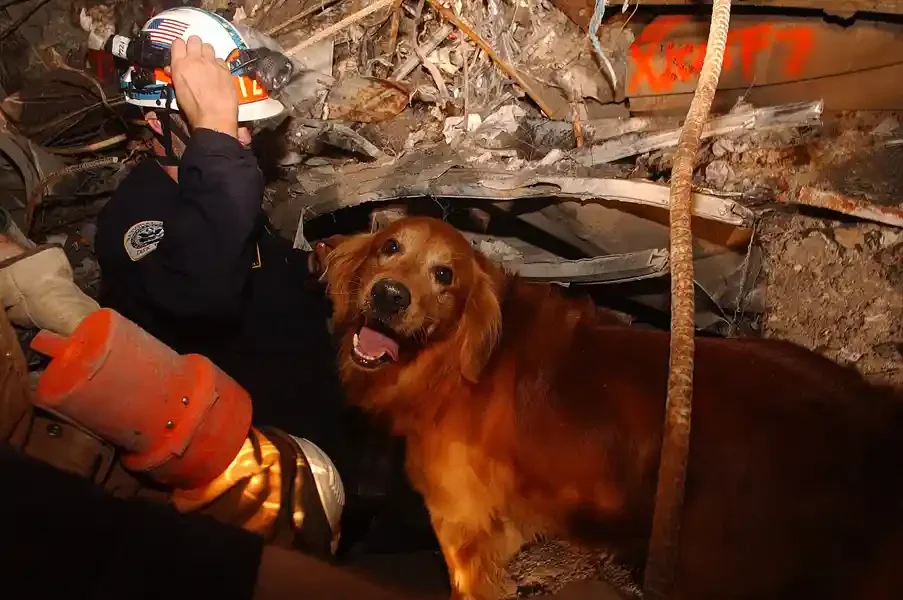
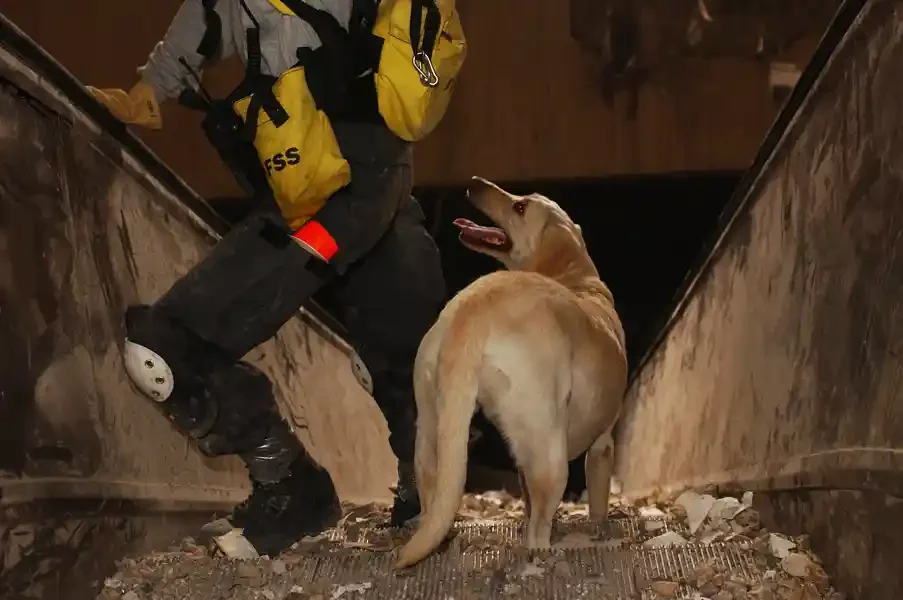
Photographs from September 2001 documenting the dogs, handlers and veterinarians working among the ruins of the World Trade Center.
Did You Know?
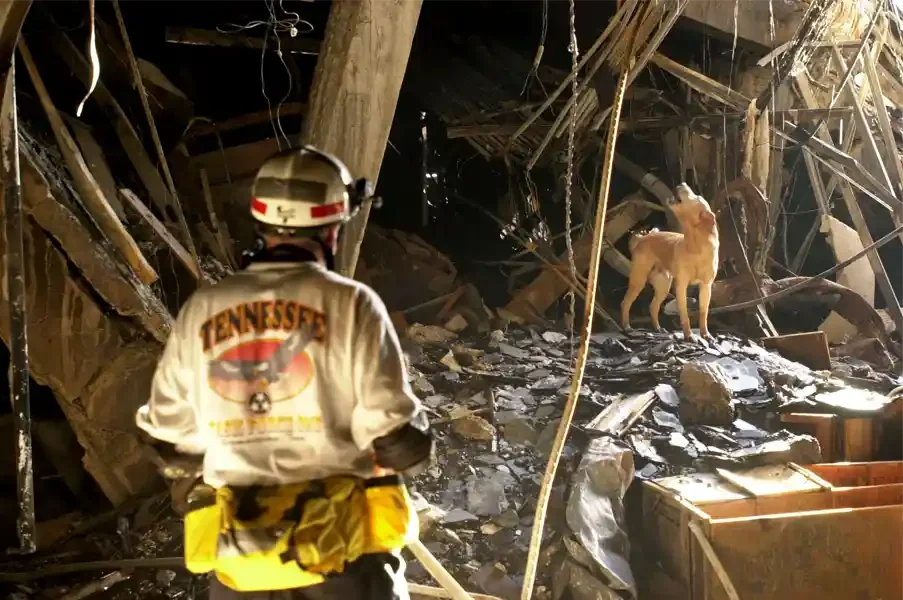
FEMA 4523 - Trained rescue dog Gus and his trainer Ed Apple with the Tennessee Task Force One Search & Rescue search for survivors in the wreckage at the Pentagon, Arlington, VA, September 2001. Photo by Jocelyn Augustino/ FEMA News Photo.
At the Pentagon, dogs were used first to search the damaged building and then to recover human remains. The operation grew to 29 canine teams, with dogs and handlers coming from across the country.
At least 16 breeds were deployed to the three 9/11 sites, including German Shepherds, Labradors and Golden Retrievers. The teams also included specialized dogs, from large Beaucerons carrying cameras to Ricky, an 18-pound Rat Terrier able to navigate tight, collapsed spaces.
On March 5, 2002, NYPD German Shepherd Apollo received the Dickin Medal on behalf of the search and rescue dogs at Ground Zero and the Pentagon. Guide dogs Roselle and Salty also received the joint Dickin Medal for their ultimate devotion to duty after safely guiding their blind owners down more than 70 flights of stairs from the burning World Trade Center towers before they collapsed.
Sirius, a Port Authority explosives detection dog, was in his kennel below the South Tower when it collapsed. His remains were recovered in the winter of 2002 and carried out with a full honor guard.
At the Flight 93 crash site in Pennsylvania, human-remains detection dogs worked the FBI-led recovery after the plane crashed near Shanksville.