Togo and Balto: The Sled Dog Heros History Got Wrong
In December 1925, Central Park unveiled a statue to Alaska’s most famous sled dog — wearing medals that belonged to a different dog. What happened next to both Balto and Togo had little to do with heroism.
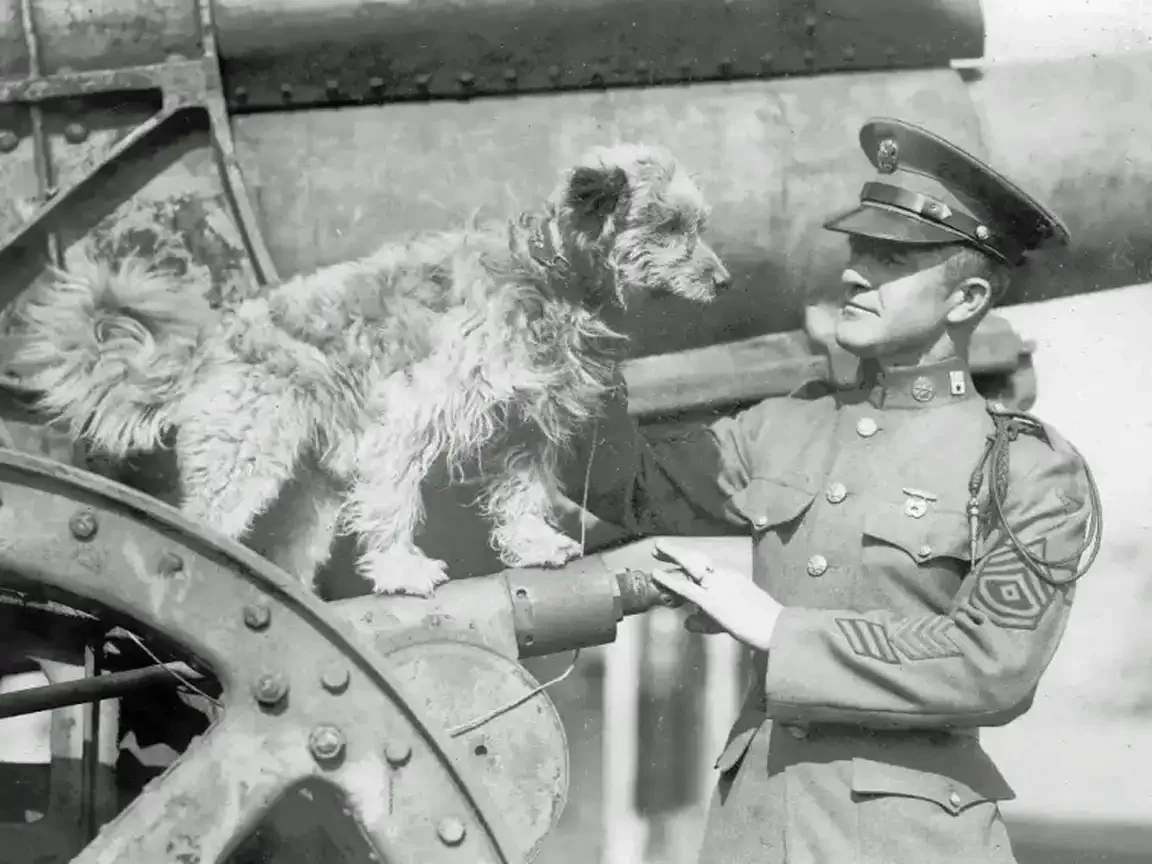
Left: Balto with Gunnar Kaasen. Right: Togo with Leonhard Seppala. After the 1925 sled relay delivered life-saving diphtheria antitoxin to Nome, Alaska, Balto became famous, while Togo — who ran nearly five times farther — received only a fraction of the credit. Public domain.
Togo the Best Dog and Balto the Afterthought
Leonhard Seppala ran the best dog team in Alaska, and everyone in Nome knew it. A Norwegian immigrant working for the Hammon Consolidated Gold Fields company, he kept some thirty Siberian huskies, bred from stock imported from the Chukchi people of northeastern Siberia, and he had won the All-Alaska Sweepstakes three years running. Alaskans called him the fastest musher on the trail. He was also, by reputation, something of a showman — known to flip backward handsprings off his sled just to make people laugh — which makes the seriousness with which he ranked his own dogs all the more telling. Of his thirty, two would eventually become famous, and Seppala would have ranked them in precisely the opposite order from the one history settled on.
Seppala called Togo the best dog he ever drove, and the one he trusted most. Public domain.
Togo arrived first, in 1913 — a sickly puppy with a throat ailment that made Seppala lose patience with him almost immediately. He gave the dog away. Togo escaped through a window and ran back to Seppala’s kennel on his own. Given a second chance, he turned out to be something close to a prodigy: willful, fast, and so attuned to changes in the ice and weather that Seppala learned to trust the dog’s judgment over his own eyes in a whiteout. By 1925, at twelve years old, Togo was Seppala’s unquestioned lead dog — the one he reached for when something actually mattered.
Balto was simply one more working dog in Leonhard Seppala's kennel, kept for slow freight rather than glory. Public domain.
Balto, born in 1919, came out of the same kennel six years after Togo arrived, and Seppala never thought much of him. He rated Balto a “scrub freight dog”: calm, sturdy, fine for hauling slow loads through town, but lacking the speed or instinct of a real leader. He handed the dog’s day-to-day work to his assistant, a fellow Hammon company employee named Gunnar Kaasen, and moved on. Kaasen disagreed with his boss’s assessment, at least where his own affections were concerned — he was known to slip Balto extra food from his lunch pail, and the dog became, by more than one account, his favorite in the kennel. Seppala thought Balto had never led a winning team in his life. Kaasen thought he had a friend.
Nome: A Town Out of Serum
By January 1925, Nome had dwindled from its gold-rush peak to a community of under 1,500 people. The town’s only doctor, Curtis Welch, ran a twenty-five-bed hospital that rarely saw more than a handful of patients at a time, until children began dying that winter of what he eventually diagnosed as diphtheria. The antitoxin on hand had expired years earlier. Welch wired the territorial governor, the surrounding towns, and the U.S. Public Health Service, warning that without fresh serum, the outbreak could turn into an epidemic capable of killing the town’s children by the dozen.
The nearest reliable stock sat in Anchorage, more than a thousand miles south. A train could carry it as far as Nenana, but from there, 674 miles of frozen trail separated the medicine from the people who needed it, and Alaska's only available planes, open-cockpit biplanes with no precedent for flying in extreme cold, were judged too unreliable to risk. Mark Summers, the mining company manager who employed both Seppala and Kaasen, proposed a dog-sled relay and recommended Seppala for its hardest section. The board of health agreed within hours. Nome’s fate, more or less, had just been handed to a Norwegian dog driver and his kennel.
261 Miles Through the Worst of the Storm
Leonhard Seppala poses with his racing team, Togo is far left. He trusted the dogs enough to send into a blizzard. Public domain.
A relay of twenty mushers and roughly 150 dogs would carry the serum the length of the trail in stages, each team running an assigned leg and handing off to the next. Seppala drew the hardest section: the middle of the route, including a shortcut across the frozen expanse of Norton Sound, where the ice could open beneath a team without warning. He was forty-seven that winter, already considered old for the trail; Togo, at twelve, was no younger. He left Nome on January 27 expecting to run more than 300 miles alone, out and back, into a gathering storm.
He never had to go quite that far. The relay schedule shifted while he was already on the trail, with no way for anyone to reach him and say so, and a musher named Henry Ivanoff met him early outside the village of Shaktoolik with the serum already in hand. Togo and Seppala turned straight around and ran back into the same blizzard, this time carrying the cargo that mattered.
Visibility dropped to nothing; the dogs’ breath froze in clumps along their muzzles, and Seppala could barely see the front of his own team. He let Togo find the way. Crossing Norton Sound, the ice cracked between the team and the shore — accounts of exactly how close the call was differ, but Seppala credited Togo’s instincts with getting them across safely. By the time he reached the roadhouse at Golovin and handed the serum to the next driver, Seppala and Togo had covered something close to 261 miles: more than 200 miles farther than any other team on the relay, through its most dangerous terrain, in cold that fell toward 30 degrees below zero with a wind that made it feel far worse.
Balto Wasn’t Supposed to Be There
Gunnar Kaasen kept Balto close even off the trail, by more than one account, the dog was his favorite. Public domain.
Gunnar Kaasen had not been scheduled to run the relay’s final leg. The territorial governor, trying to speed the delivery along, ordered extra drivers added at the last minute, and Kaasen — Seppala’s own assistant, minding the company’s routine freight runs back in Nome — found himself drafted. He went through the kennel for a team and picked Balto to lead it, knowing the choice would not have pleased his boss.
Charlie Olson handed Kaasen the serum at Bluff after a brutal stretch of his own — he lost flesh to frostbite digging his dogs out of a snowdrift along the way — and Kaasen pushed on toward the next scheduled stop, a roadhouse at Port Safety, where a musher named Ed Rohn was waiting to take over for the final stretch. Rohn was asleep when Kaasen arrived. Kaasen later said he saw no light in the cabin window and chose not to wake him, deciding it was faster to keep going himself. Rohn and other mushers who knew Kaasen suspected a simpler reason: that he wanted to be the one who finished the run.
Kaasen’s run was not undeserved on its own terms. Partway through, a gust of wind flipped his sled and threw the sealed serum cylinder into the snow; Kaasen dug for it bare-handed in cold that later cost him part of his fingers to frostbite. Balto, by Kaasen’s own account, found the trail more than once when the musher himself could see nothing. None of that is in dispute. What followed it is the part of the story that gets simplified.
Balto’s team covered the final 53 miles in total darkness, through a blizzard so thick that Kaasen said he sometimes lost sight of his own dogs. They reached Nome around half past five in the morning on February 2. One detail rarely survives into the popular version of the story: the photographs and film footage that ran in newspapers around the world, showing Kaasen and Balto arriving triumphantly, were staged hours later, after daylight returned. The real arrival happened in the dark, in front of almost no one at all.
How Newspapers Made Balto a Hero
What happened next had less to do with sled dogs than with newspapers. Of the twenty teams on the relay, Kaasen’s was the one that crossed into Nome with the wires already humming and reporters anxious for exactly this kind of ending. Within days, Balto’s name ran in headlines across the country. Togo’s did not. Seppala had not even made it back to Nome before the story of “Balto’s run” had started to set, and he would spend years afterward trying to loosen a version of events that had already hardened into fact. The pharmaceutical company that made the antitoxin paid Kaasen a thousand dollars for his trouble. Hollywood paid considerably more.
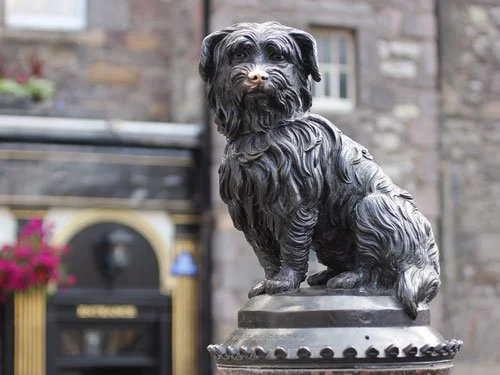
Gunnar Kaasen stands beside the finished bronze at its December 1925 unveiling — the only attendee, besides Balto, who had actually been on the trail. Public domain.
Kaasen and Balto were touring the West Coast within weeks and starred together that same year in a short film called Balto’s Race to Nome. A group of New York artists and dog lovers, led by the painter Cecilia Beaux, raised funds for a permanent monument, and the city agreed to place it in Central Park — an unusual honor for an animal still alive to see it unveiled. The sculptor, Frederick Roth, modeled the figure’s body not on Balto at all but on a New Hampshire malamute named Chinook, and cast its chest with racing decorations that, according to several accounts of the relay, actually belonged to Togo. The plaque beneath credited “the sled dogs” who relayed the serum, plural and anonymous; the bronze dog standing on the rock above it had only one name attached by the time anyone bothered to read further.
Balto flew to New York for the unveiling that December, ten months after the run, and is, by most accounts, the only animal honored with a Central Park statue to attend its own dedication. He did not, by the Times’ account, seem especially moved by the occasion.
Togo's Smaller Tour and Retirement
Seppala was careful in public, praising Kaasen and the other mushers rather than attacking anyone outright. Privately, the unfairness sat with him for decades. Asked late in life to name the best dog he had ever driven, he did not hedge: Togo, he said, had stamina, loyalty, and intelligence that could not be improved upon — the best dog that had ever traveled the Alaska trail. In 1926, he took Togo on his own tour of the lower forty-eight, drawing respectable crowds from Seattle to New England; the pair appeared in a cigarette advertisement and on a trading card, which was about as close as Togo came to matching Balto’s level of fame. It was not close.
Seppala eventually put his resentment in writing, careful even there to share credit before withdrawing it: he never wanted to take recognition from any dog or driver who had run the relay, he wrote, but when the country’s enthusiasm settled on a statue for Balto, he resented it — because if any dog deserved special mention, it was Togo.
Togo did not finish his life on tour. By 1927, Seppala was splitting his time between Alaska and a kennel he had opened with a New England partner in Poland Spring, Maine, and he decided the old dog had earned a rest rather than one more demanding trip. He left Togo there. Togo died in Maine in December 1929, at sixteen. — old age, finally, for a dog whose hardest miles were already a decade behind him.
Balto Rescued by Strangers
Balto’s life took a worse turn. Kaasen kept the team on the road for nearly two years, trading on the dog’s fame through the vaudeville circuit long after Hollywood had moved on to other stories. Exactly what went wrong between Kaasen and Seppala afterward is not fully settled; the two men seem never to have discussed the run directly, and a falling-out between them is documented without a clear account of what caused it.
What is documented is where the dogs ended up. They passed from a touring promoter to a circus operator and, by early 1927, into the back room of a Los Angeles “dime museum” — a sideshow dressed up as an educational exhibit. Balto and six surviving teammates were kept chained to their old sled for display, fed irregularly, and left thin enough that a visiting newspaperman described them as the most dejected lot of huskies he had ever seen, animals that would never see snow again.
A Cleveland businessman named George Kimble found them there by chance, drawn in by a sign advertising “Balto the wonder dog,” and was appalled enough by their condition to act. He could not afford the asking price on his own, so he went home and made the story public instead. The Cleveland Plain Dealer ran it, and the response came almost entirely from people with no connection to the original story at all — schoolchildren emptying their pockets, a kennel club, bank employees, a judge who helped negotiate the final price down. In ten days, the city raised enough money to buy Balto and his team outright.
Kaasen, for his part, eventually went home. He returned to Alaska, worked for some years as a company freighter, and retired in 1952 without — so far as the record shows — ever publicly explaining what had gone wrong with the team he left behind on the road.
Balto’s Life in Cleveland Ohio
The same press that made Balto famous in 1925 covered his 1927 rescue from a sideshow with equal enthusiasm. Public domain.
On March 19, 1927, Balto and six remaining teammates arrived in Cleveland by train. Despite rain, thousands of people turned out to watch the team — their old sled fitted now with iron wheels so it could roll over cobblestone and streetcar track — pulled through Public Square by dogs the city had never met until a newspaper told it to care. A judge read a deed of gift aloud at City Hall, transferring ownership of the team to Cleveland “forever,” and the dogs moved into a permanent home at the Brookside Zoo, where, for the first time since the run, nobody asked anything of them.
After Death, the Score Was Never Settled
Balto lived there for six more years, eventually too old and arthritic to do much but be visited, and died in March 1933 at fourteen. A veterinarian who had followed the Cleveland fundraising campaign treated the appointment as an honor rather than a job. The Cleveland Museum of Natural History had him mounted afterward, and he stands there still, in a glass case rather than on a rock, no longer required to perform anything for anyone.
Togo was mounted too, eventually, and now stands at the Iditarod Trail headquarters in Wasilla, a few hundred miles from where he actually worked. Visitors to Central Park still climb on Balto’s statue, polishing its bronze ears and back smooth with the attention, mostly unaware that the medals on his chest were never his to wear, or that the body underneath them was modeled on a dog who had never set foot in Alaska.

Balto's mounted body has stood in Cleveland's Museum of Natural History since 1933. Public domain.
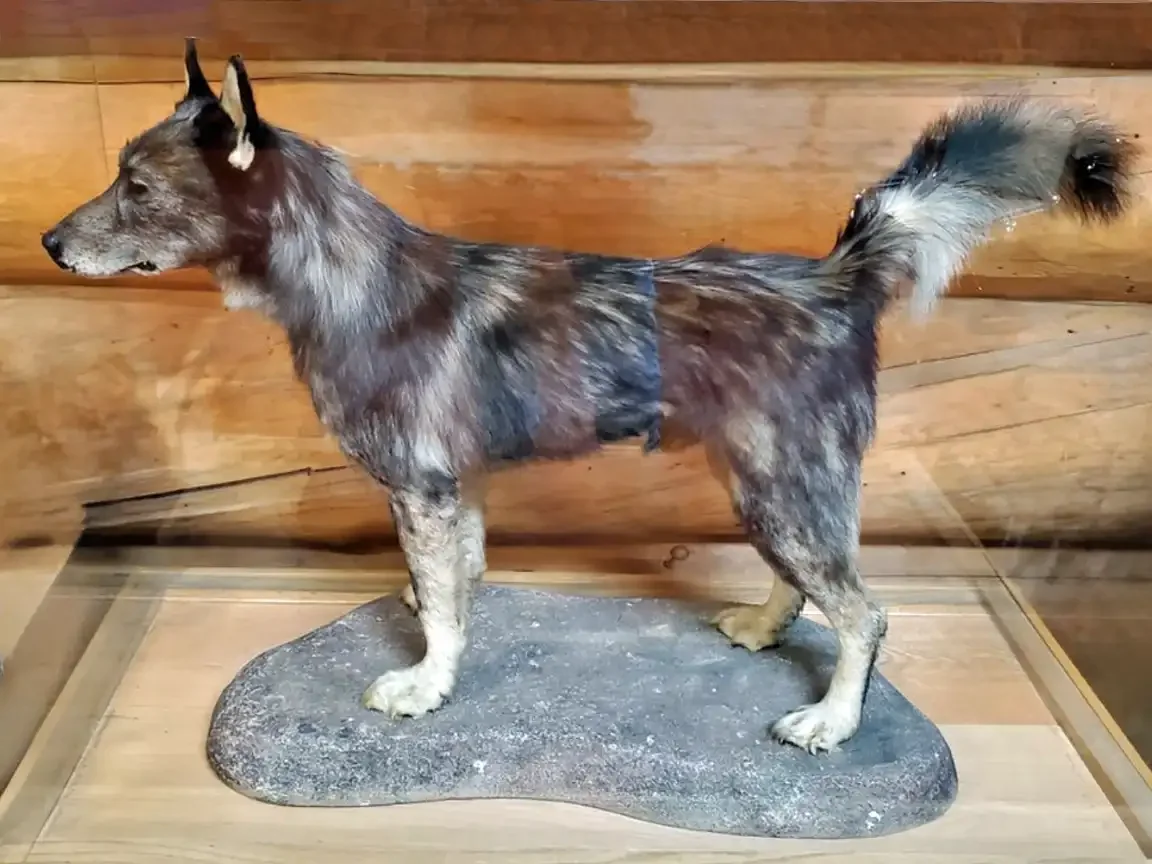
Togo's taxidermied body stands today at Iditarod Trail headquarters in Wasilla, a few hundred miles from the ice he actually crossed in 1925. Public doimain.
Seppala outlived them both and never pushed publicly to correct the record. The one time he wrote his real opinion down, it served as a better epitaph than anything cast in bronze: if any dog deserved special mention, he wrote, it was Togo.
Did You Know?
Seppala always insisted Kaasen’s real lead dog that night was not Balto but one named Fox — though no record shows Balto ever leading a team before or after, so the claim has never been resolved either way.
Togo was named for Admiral Heihachiro Togo, the Japanese naval commander who defeated Russia’s fleet in 1905 — an odd namesake for a dog who spent his life being underestimated by everyone except Seppala.
The Alaska Native mushers who ran roughly two-thirds of the relay’s total distance received almost no press coverage at the time; one later called the run “just an everyday occurrence as far as we were concerned.”
In the early 2020s, scientists extracted DNA from Balto’s century-old taxidermy mount at the Cleveland Museum of Natural History to study his ancestry, overcoming the degraded genetic material such preservation usually leaves behind.
Togo’s bloodline lives on in the modern Seppala Siberian Sled Dog, a working strain bred for racing rather than showing — named for the man who gave Togo away as a puppy.
Breed: Siberian Husky | Country of Origin: Russia (Chukchi Peninsula, far northeastern Siberia) | First Use: pull sledges and hunt reindeer | Origins: 10th century to 1st century BCE