Dogs Playing Poker’s Real Name
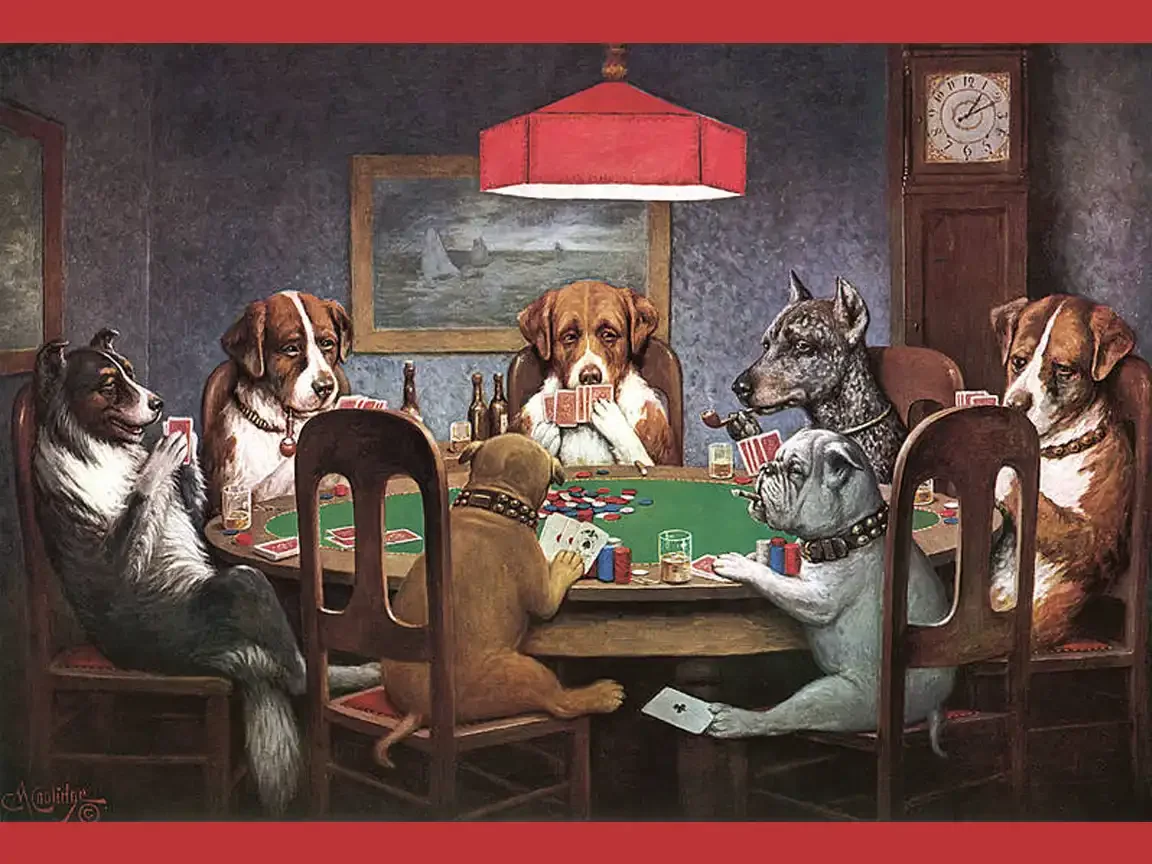
The image most people search for as “dogs playing poker” has an official title A Friend in Need. Its story runs through 19th-century advertising, mass reproduction, and the original painting that almost never gets seen.

A Friend In Need, 1903, Cassius Marcellus Coolidge, Public domain, via Wikimedia Commons
A Bulldog Cheats, America Laughs, and a Cigar Ad Becomes Legend
It usually starts the same way: a half-remembered picture and a search query dogs playing poker or maybe dogs smoking cigars painting. The internet delivers the familiar scene at once, part Americana, part joke.
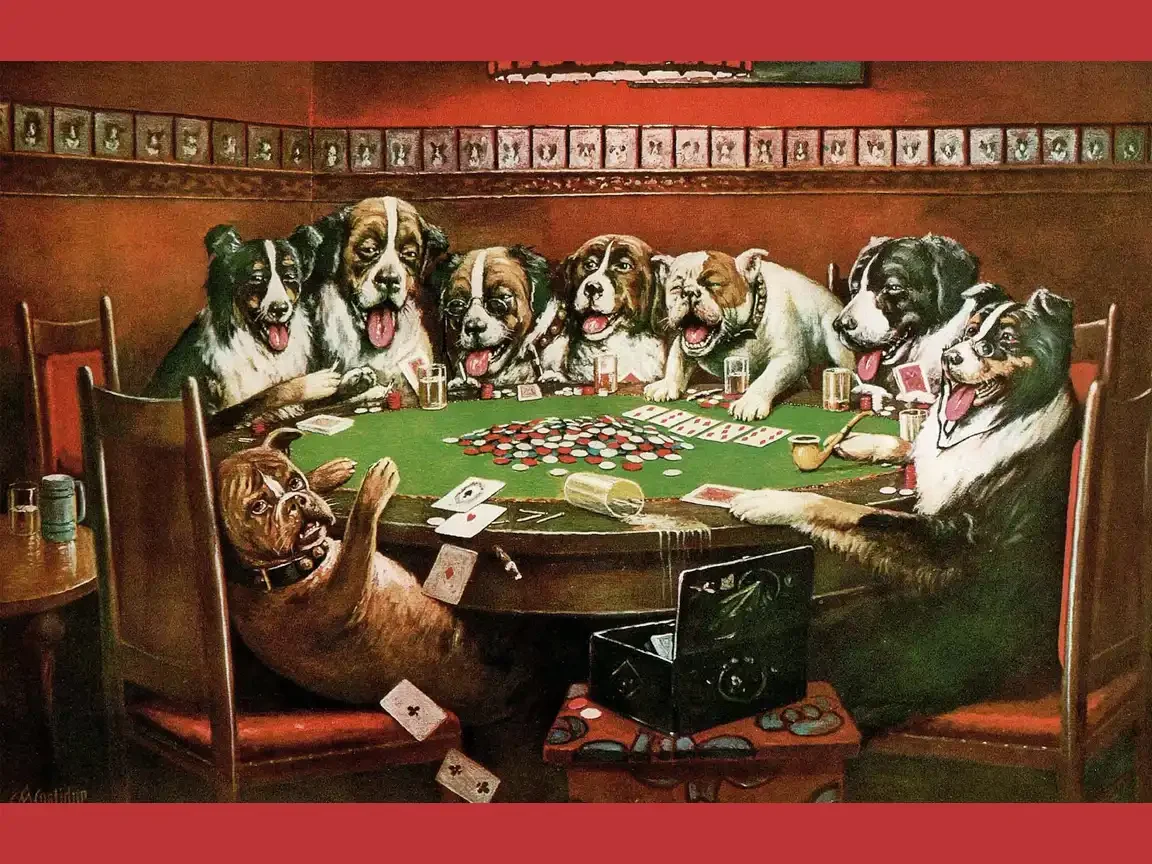
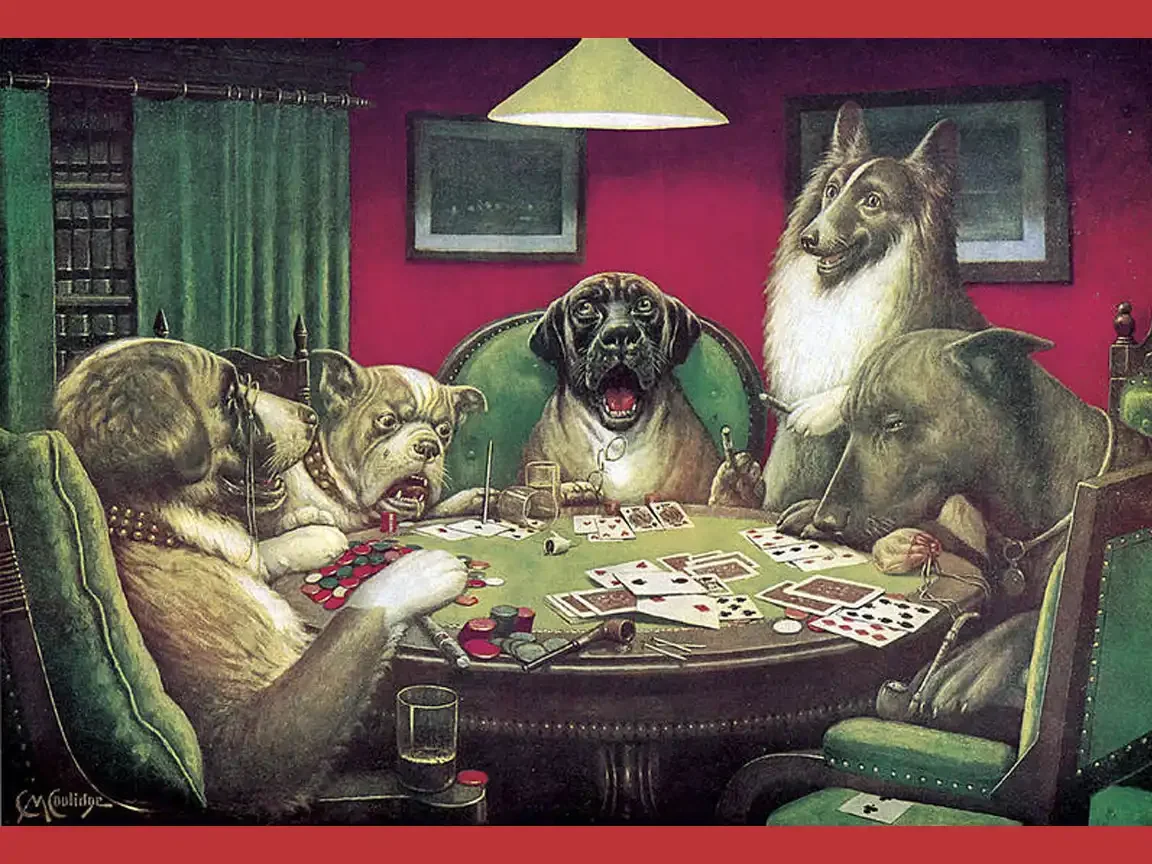
But the painting has a real name, and it is better than the search terms. A Friend in Need is the one with the bulldog cheating at cards—the paw, the ace, the quiet conspiracy under the table. Once that detail clicks, it stops being “that kitsch dog painting” and becomes a small narrative machine: a moment of loyalty, deceit, or comic timing, depending on the viewer’s mood.
Who is Cassius Marcellus Coolidge?
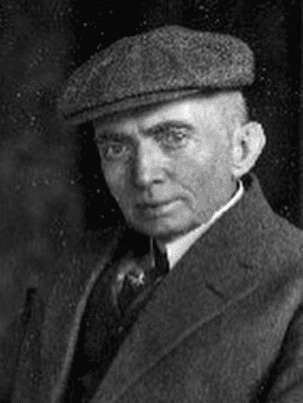
American artist Cassius Marcellus Coolidge (1844-1934). Public domain, via Wikimedia Commons
If the image is famous, the artist is oddly anonymous. Many people can recognize the scene in an instant yet never think to ask who painted it. The artist Cassius Marcellus Coolidge (September 18, 1844 – January 13, 1934) sounds like a name borrowed from a courthouse plaque rather than a painter of America’s most replayed canine farce.
Coolidge worked in a practical, commercial world where pictures earned their keep. His best-known works were not devised for a museum wall. They were designed for reproduction. Images that could live on calendars, prints, and promotional material, read quickly and remembered easily.
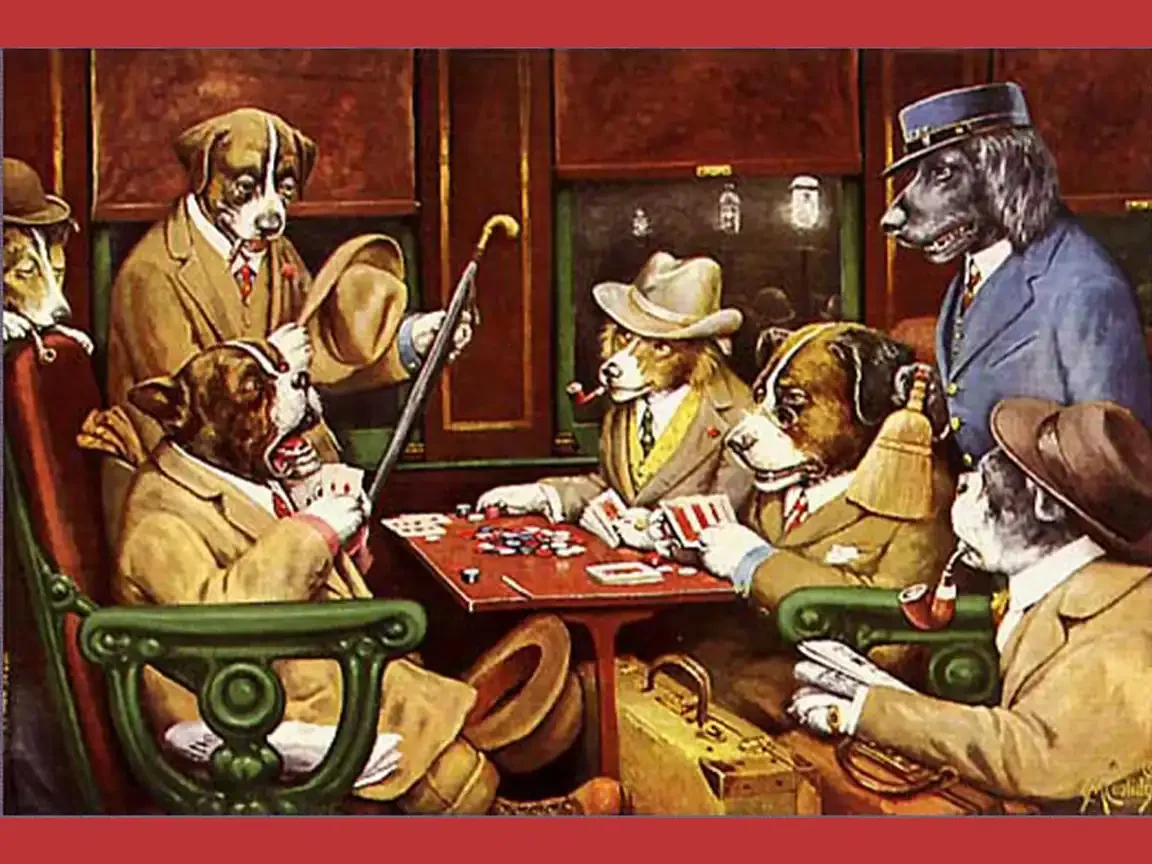
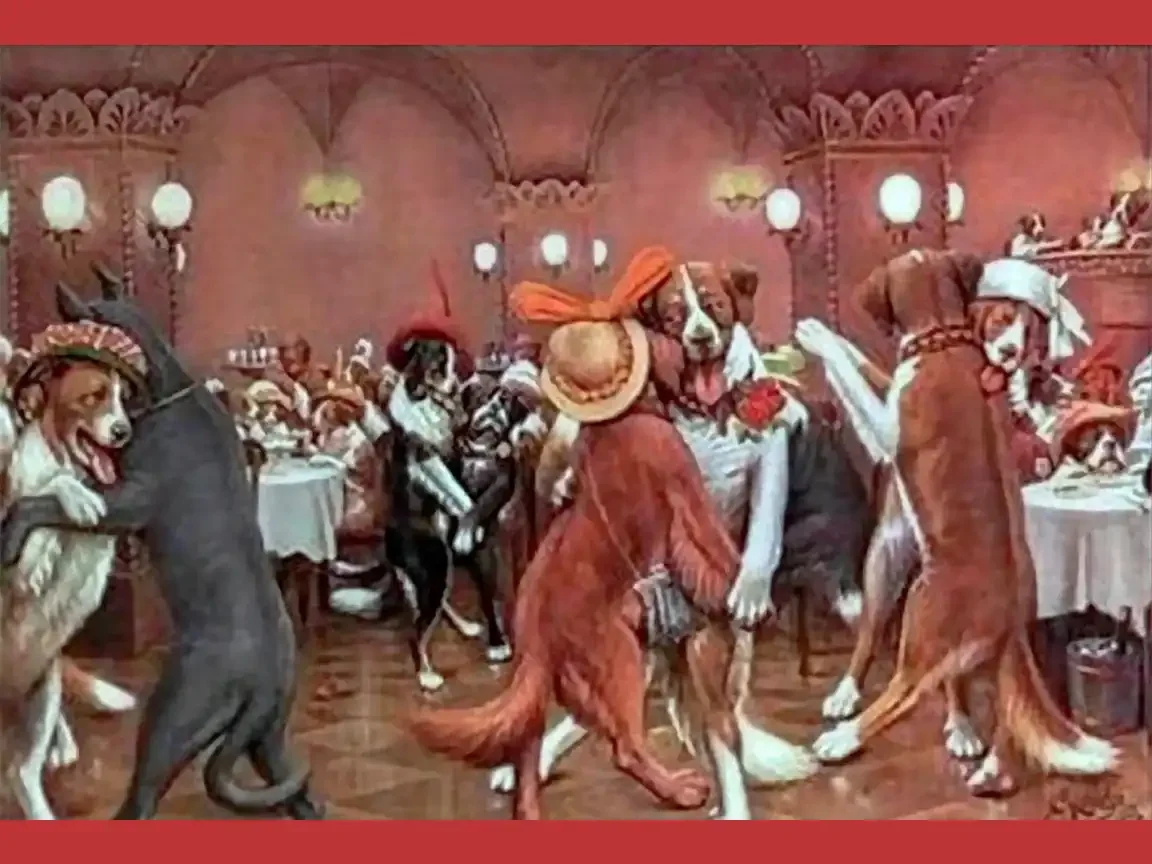
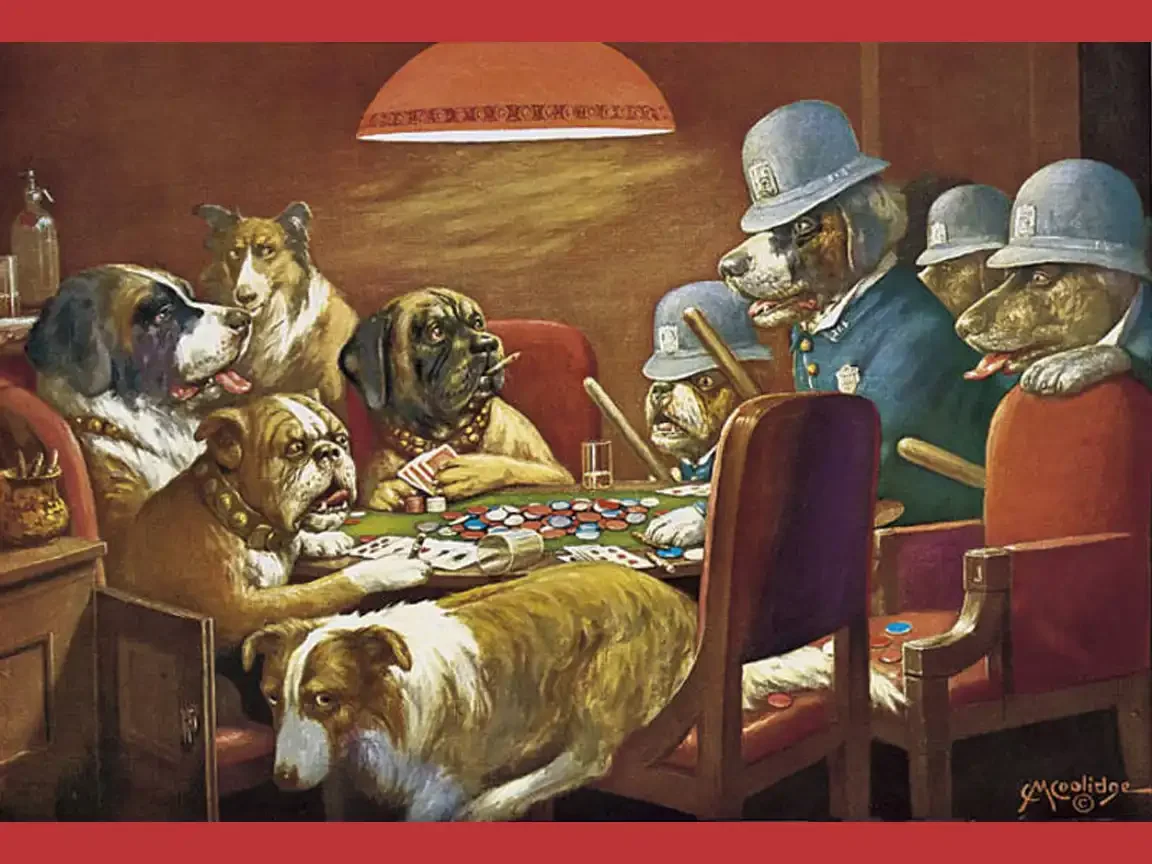
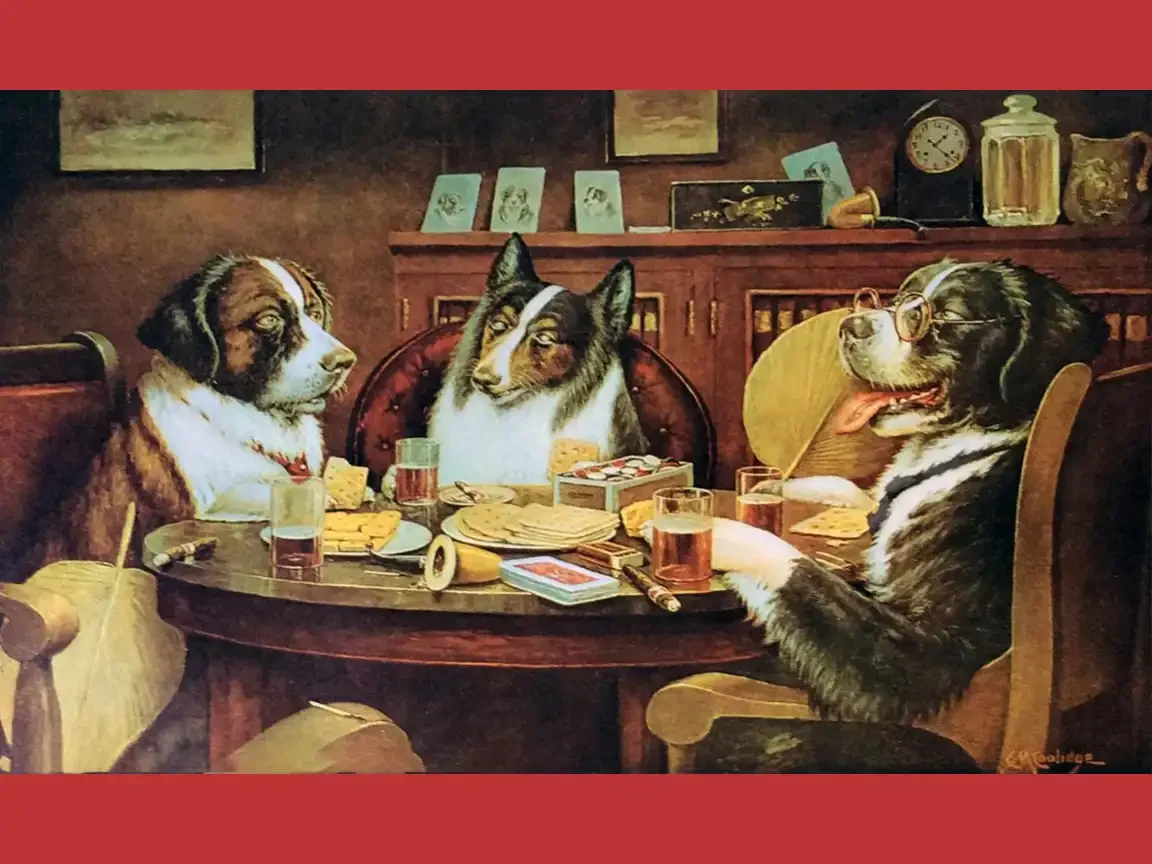
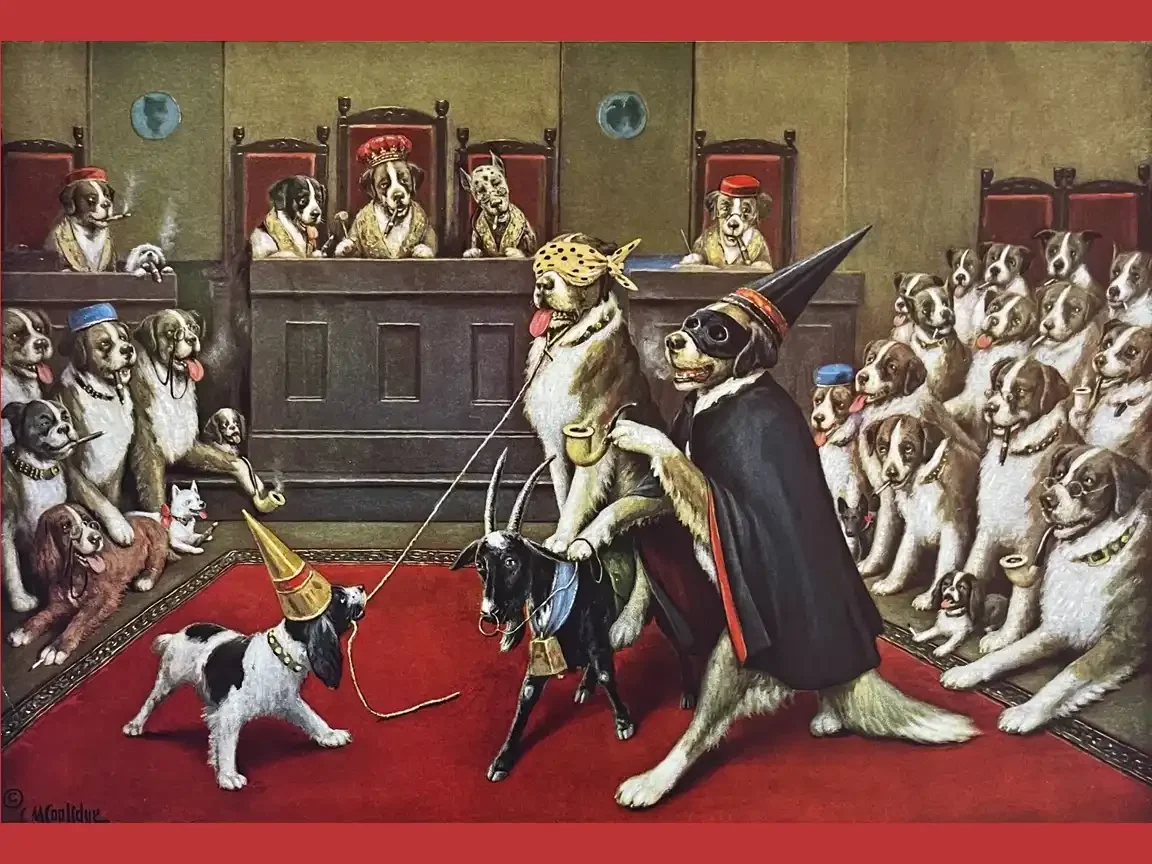
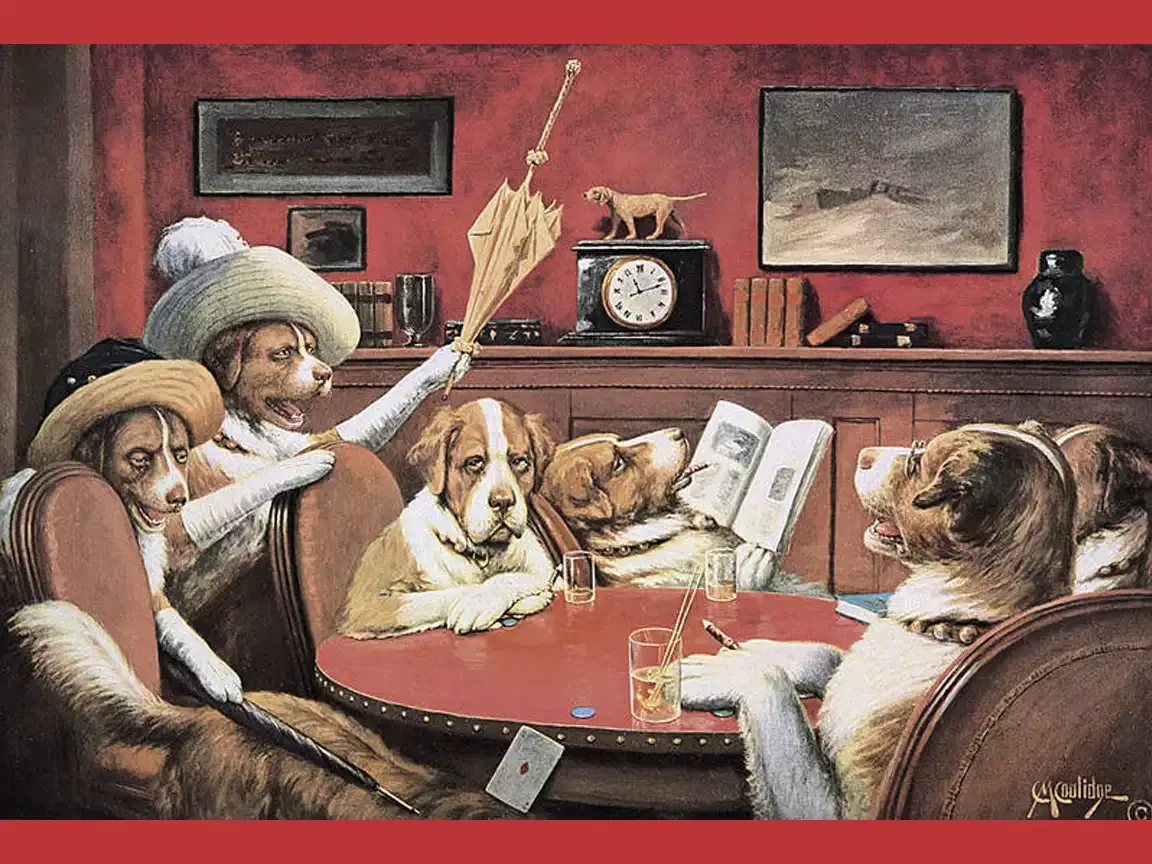
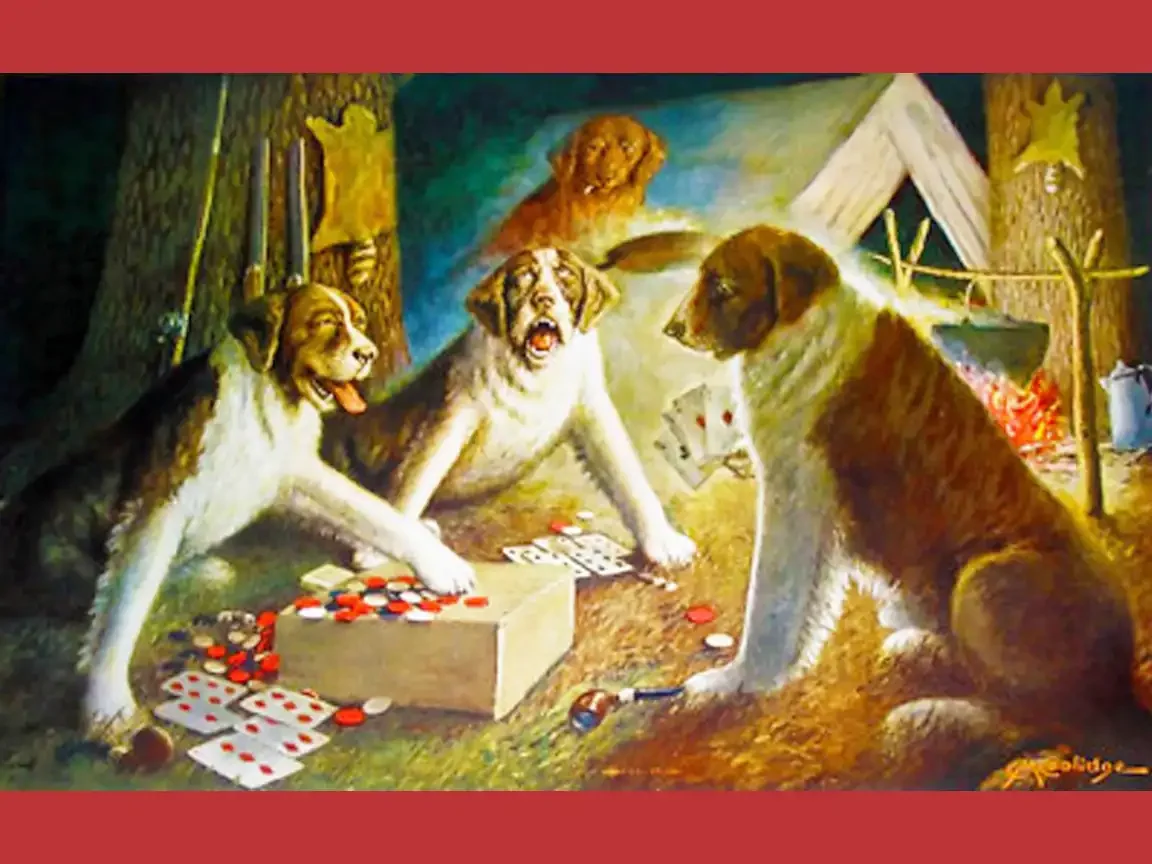
That’s the key in the story that changes how the painting feels. The poker dogs are not a lone oddity. A Friend in Need is one image out of sixteen in the series, commissioned for advertising. Which explains both the clean storytelling and the painting’s long afterlife as a piece of widely circulated visual culture rather than a guarded original.
And then comes the twist most people never hear. The paintings were originally created to help sell cigars. The dogs at the table, so often treated as purely decorative whimsy, arrived with a job description.
Dog Passing an Ace Under the Table: The Painting’s Plot Twist
Because the image is so widely reproduced, it’s worth being careful about what can be said without the original painting in view. What’s reliably documented in common reproductions is a group of dogs gathered around a poker game, posed with human-like intent and social awareness, the mood more serious than slapstick. Coolidge’s composition is meant to be read fast. So, it stays legible even when printed small and glanced at in passing.
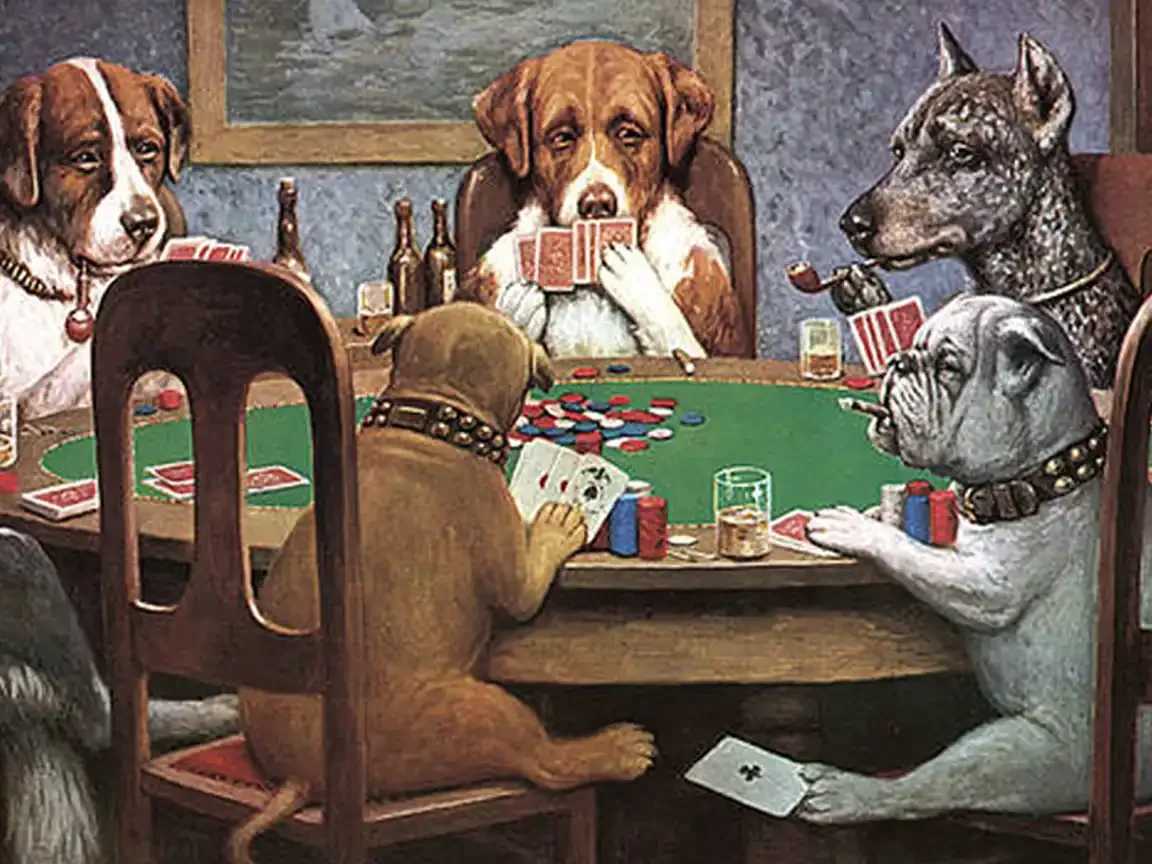
A Friend In Need, crop, 1903, Cassius Marcellus Coolidge, Public domain, via Wikimedia Commons
What makes this image outshine the other dogs playing poker paintings is the action. The bulldog passing an ace under the table. In a single, crisp gesture, the picture flips from tableau to plot. The viewer doesn’t need to know poker to understand the chain reaction—someone is helping, someone is benefiting, someone may be noticing—and suddenly the audience becomes a witness.
The bulldog’s role won’t settle into one meaning. It can be a loyal accomplice, seasoned operator, or perfectly timed comedian. However it’s read, the eye keeps cycling from paw to faces and back again. And the title seals the tone: A Friend in Need recasts the cheat as a favor, turning wrongdoing into camaraderie—playful tension, not moral crisis.
Cassius Marcellus Coolidge Poker Dogs: Made for the Marketplace
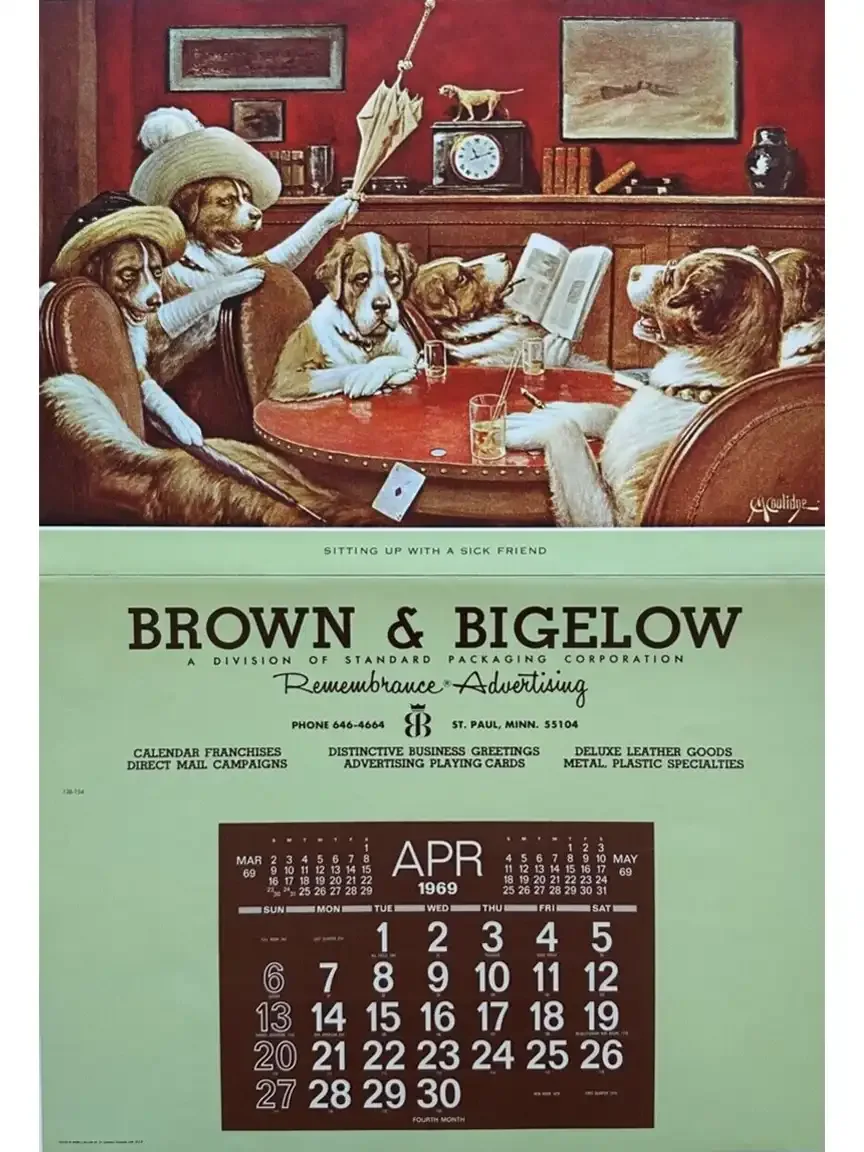
Sitting Up With A Sick Freind, Brown & Bigelow 1969 calendar. Public domain, via Wikimedia Commons.
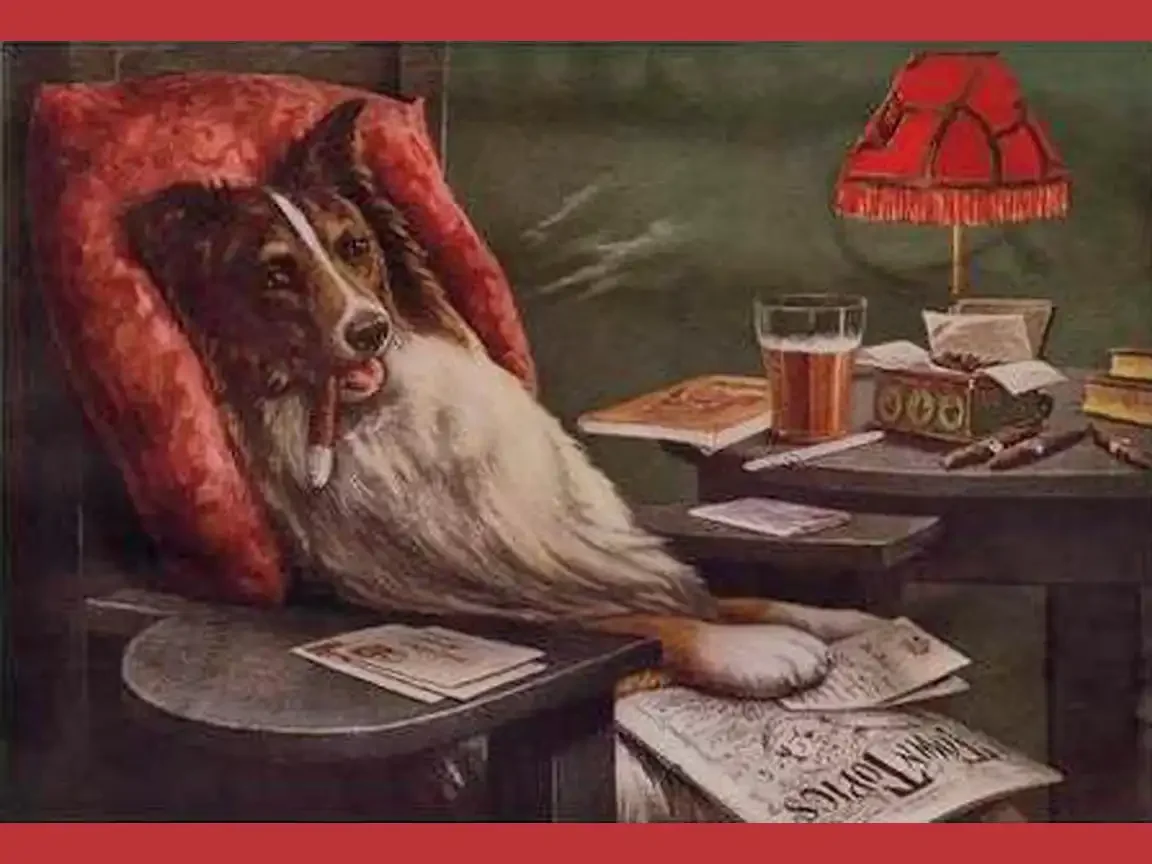
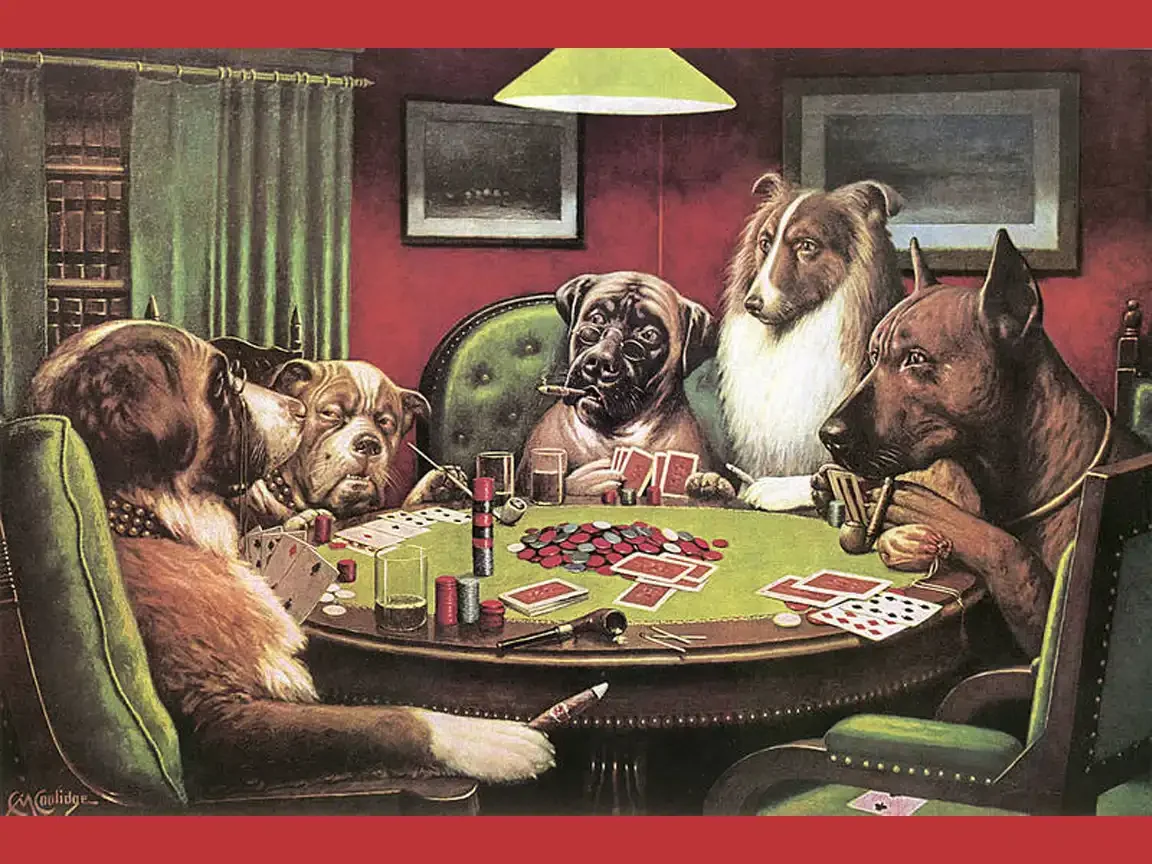
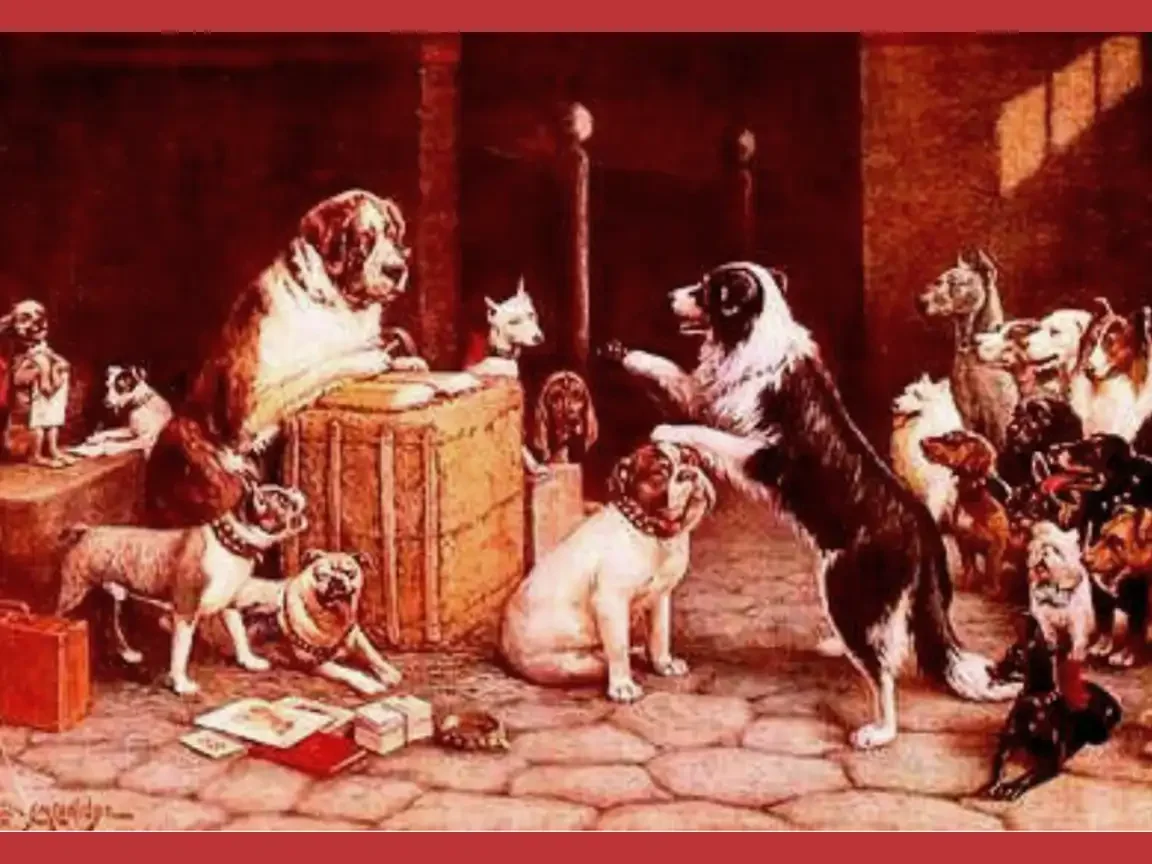
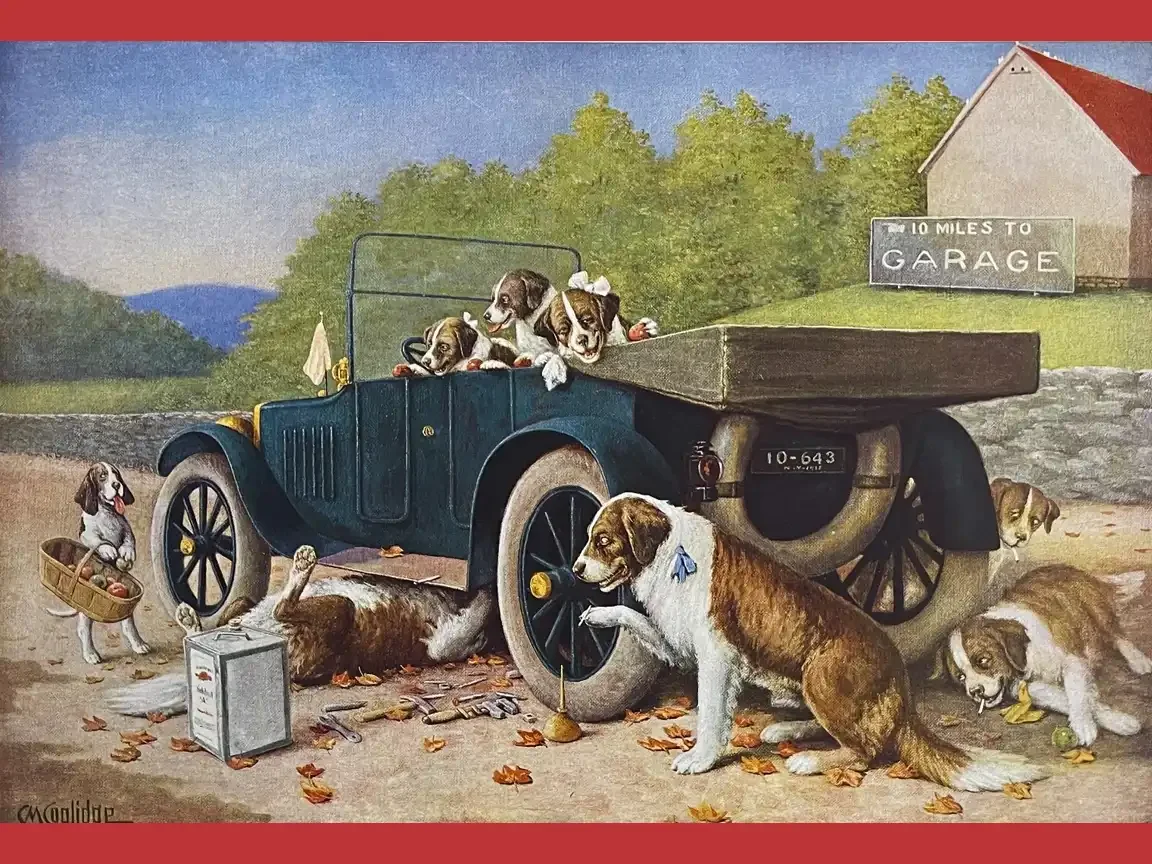
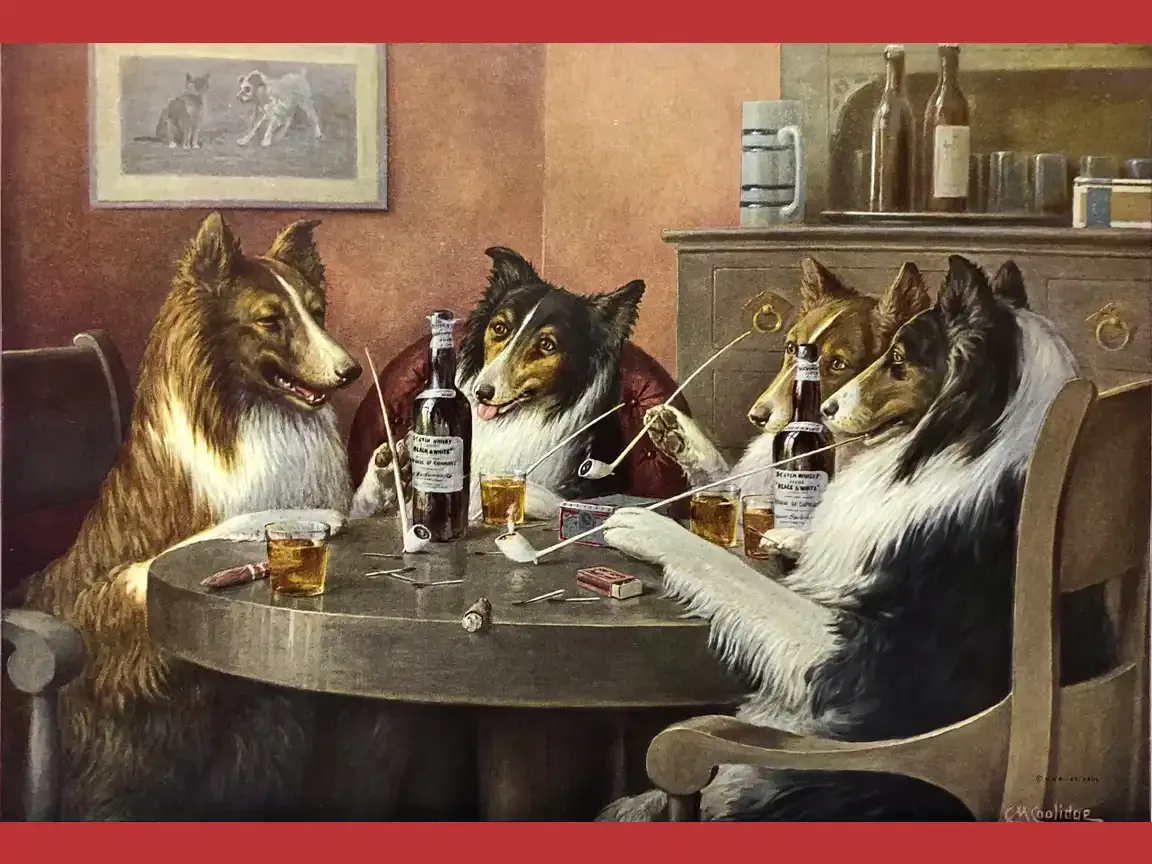
A Friend in Need wasn’t conceived as a one-off joke painting. It belongs to a commissioned series of sixteen oil paintings produced in 1903 for the advertising firm Brown & Bigelow, created specifically to promote cigars. The images were designed to be reproduced on calendars and prints, travel widely, and land in ordinary American interiors.
That commercial origin is a big part of its historical significance. The painting is an early example of advertising imagery becoming shared national iconography. The public knows the scene first, often as dogs playing poker, and only later (if ever) do they learn the official title, the artist, and the fact that it began as sales material rather than museum art.
Other American images have pulled off the same trick. Originally commissioned for mass circulation, they lose their commercial origins to become shared shorthand. Uncle Sam’s pointing finger, Smokey Bear, and Coca-Cola’s Santa all followed that path. So widely reproduced they begin to feel like cultural fixtures rather than campaigns.
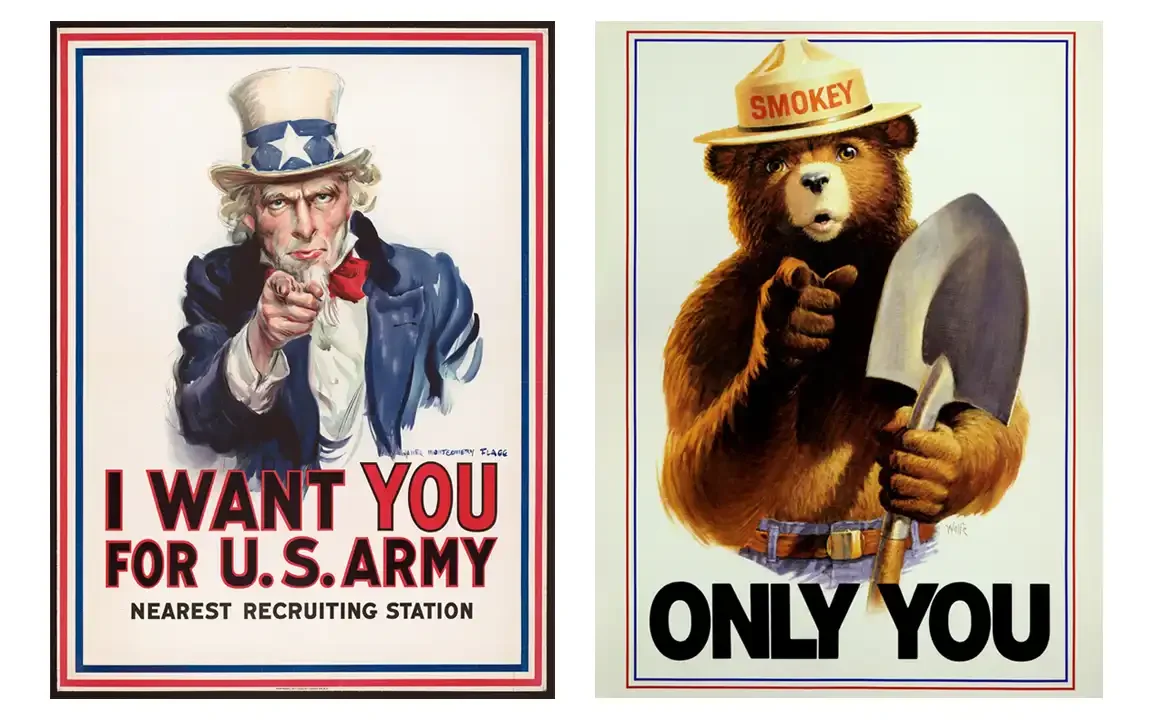
LEFT: J. M. Flagg's 1917 poster used to recruit soldiers for WWI and WWII into the US Army. RIGHT: Uncle Sam style Smokey Bear poster, 1989. Both images public domain, via Wikimedia Commons.
Kitsch Dog Painting: The Class Game Behind the Joke
Some people come to the image with affection. Others arrive through the side door of judgment and just see it as a kitsch dog painting. The label is often used to dismiss the work as lowbrow, mass-produced, and unserious.
Yet the endurance of A Friend in Need suggests something more complicated. The painting survives because it is legible across social boundaries. It doesn’t require specialized knowledge. It doesn’t ask the viewer to decode its meaning. It offers a scene people understand immediately: risk, bluff, loyalty, cheating, the small dramas of leisure.
Calling it kitsch can also function as a kind of defense. It lets viewers enjoy the image while keeping a polite distance, laughing at it, then hanging it on the wall anyway. The dogs, meanwhile, remain indifferent. They keep playing. They keep smoking. They keep passing the ace.
Coolidge’s poker dogs have become a kind of cultural shorthand. An instant visual cue for bluff, bad taste, and American nostalgia, depending on who’s looking. The Simpsons used the image as a quick-hit joke about domestic surrealism, treating dogs playing poker as so familiar it can tip from funny to faintly unnerving with a single cutaway. And in the 1999 remake of The Thomas Crown Affair, the painting Poker Sympathy becomes part of the film’s sleight-of-hand around authenticity and forgery.
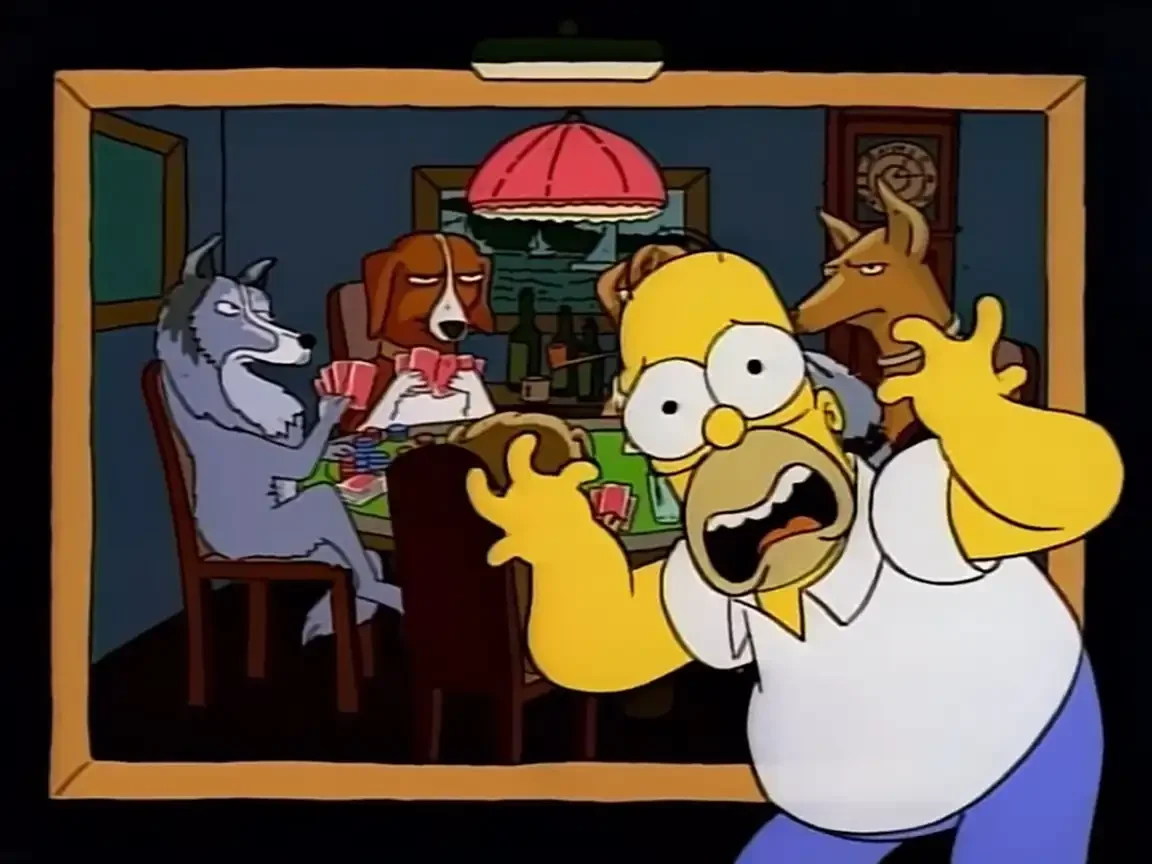
The Simpsons, still from episode Tree House of Horror IV—Season 5
Where Is the Original A Friend in Need painting?
For an image reproduced everywhere, the original oil painting is surprisingly elusive. Unlike other famous artworks, which are hung on museum walls, the whereabouts of A Friend in Need is unknown. It’s generally believed to be in a private collection.
That scarcity adds a strange layer to its fame. Most people know the painting only through reproduction. The image is culturally ubiquitous, while the physical object remains out of reach.
The most significant public activity involving the original paintings occurred in 2005, when two other works from the series, A Bold Bluff and Waterloo, were sold at Doyle New York for a record-breaking $590,400. Jeff Koons' Balloon Dog (Orange) is the most expensive piece of art featuring a dog ever sold. It fetched $58.4 million at auction in 2013.
Because A Friend in Need is considered the Mona Lisa of the series, its estimated value is significantly higher, but it remains tucked away in private hands. What can be said with confidence is the painting’s cultural value is enormous.
What is the significance of Dogs Playing Poker in art history?
In art history, A Friend in Need matters less as a technical breakthrough than as a breakthrough in how images live in the world. It sits at the moment when American visual culture was shifting toward mass reproduction, with pictures designed to be instantly readable, widely circulated, and at home on calendars and promotional prints as much as on walls. That it was commissioned for advertising helps explain why it still works, delivering a plot in a glance.
Its long afterlife, a century on, also makes it a classic case study in taste and kitsch. The painting is widely loved and widely repeated, yet often dismissed precisely because it is popular, humorous, and commercial. An object lesson in how cultural authority decides what counts as serious art.
The original may sit hidden away in private hands, but the picture itself is public property. It lives, endlessly, in the shared visual language of everyday America.
View all 16 paintings from the series