Hachikō, Tokyo’s Loyal Dog
At Tokyo’s busiest crossing, a bronze dog keeps watch on the crowds. The real Hachikō started the habit as a simple household routine— then outlasted the person he was waiting for. A true story of love and unwavering loyalty.
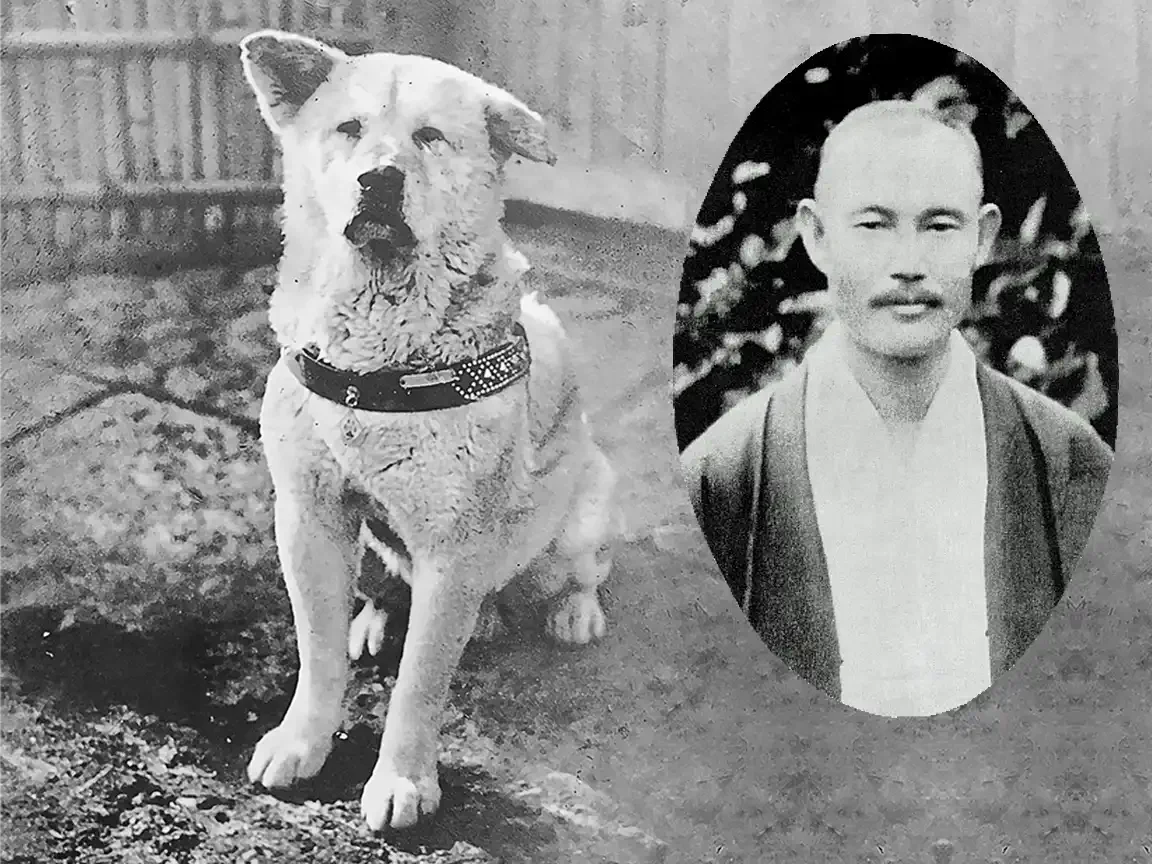
Hachikō. Inset photo: Professor Hidesaburō Ueno, 1923, Lombroso. Public domain, via Wikipedia Commons
A Dog’s Daily Routine That Became a National Story
Shibuya station does not pause for sentiment. It surges. Screens flashing, crossings filling, trains arriving with the steady certainty of a system and routines that have no interest in anyone’s private life. And yet, right there at the station’s edge a dog sits perfectly still while people treat him like a landmark.
It is easy to meet friends at “Hachikō” and never wonder who he was. But the story starts smaller than the statue suggests—an Akita named Hachikō, a professor with a timetable, and a daily reunion so consistent it barely counted as a story until it broke.
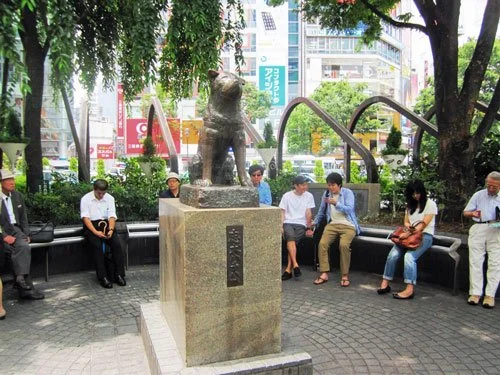
People waiting at Hachikō statue, Shibuya station, 2011. Photo by luna tan.
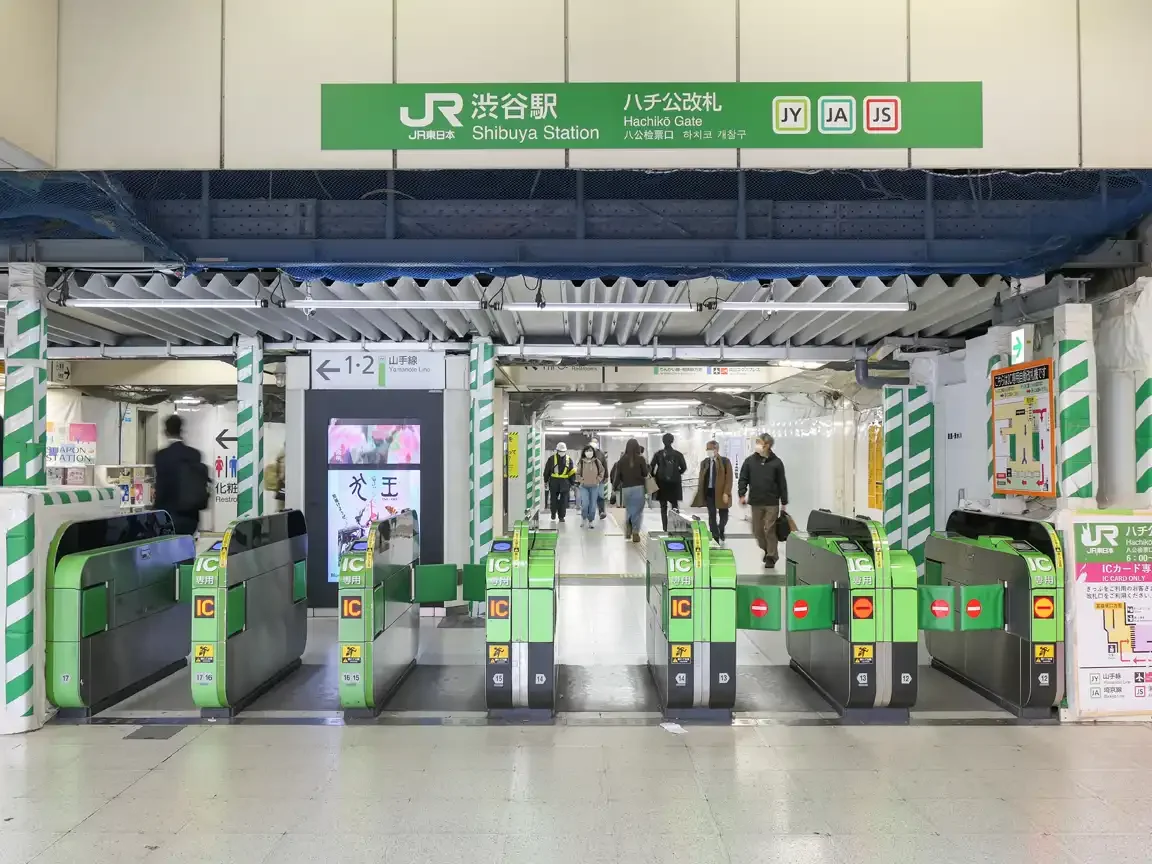
Hachiko ticket gate at JR East Shibuya station, 2022. Public domain, via Wikimedia Commons.
From Akita to Tokyo: Hachikō’s First Journey
Hachikō entered the world in northern Japan, in Akita Prefecture, in the autumn of 1923. He was an Akita—solidly built, thick-coated, and bred from a regional tradition that valued stamina and nerve. Long before the breed became an international emblem of Japanese dogs, Akitas were used by humans for demanding work, including hunting large game in rugged country. Hachikō’s earliest days belonged to that colder landscape, not the bright urban geometry of Tokyo.
In 1924, still young, he was brought south to the capital to live with Professor Hidesaburō Ueno, an agricultural scientist at Tokyo Imperial University (now the University of Tokyo), and his family. The name Hachikō (often called Hachi) is often linked to the number eight, though sources differ on exactly why it was chosen. Ueno doted on the dog, allowing Hachikō to sleep indoors and under his Western-style bed, raising him with affectionate care. The pair formed an inseparable bond, sharing a home and soon, a schedule.
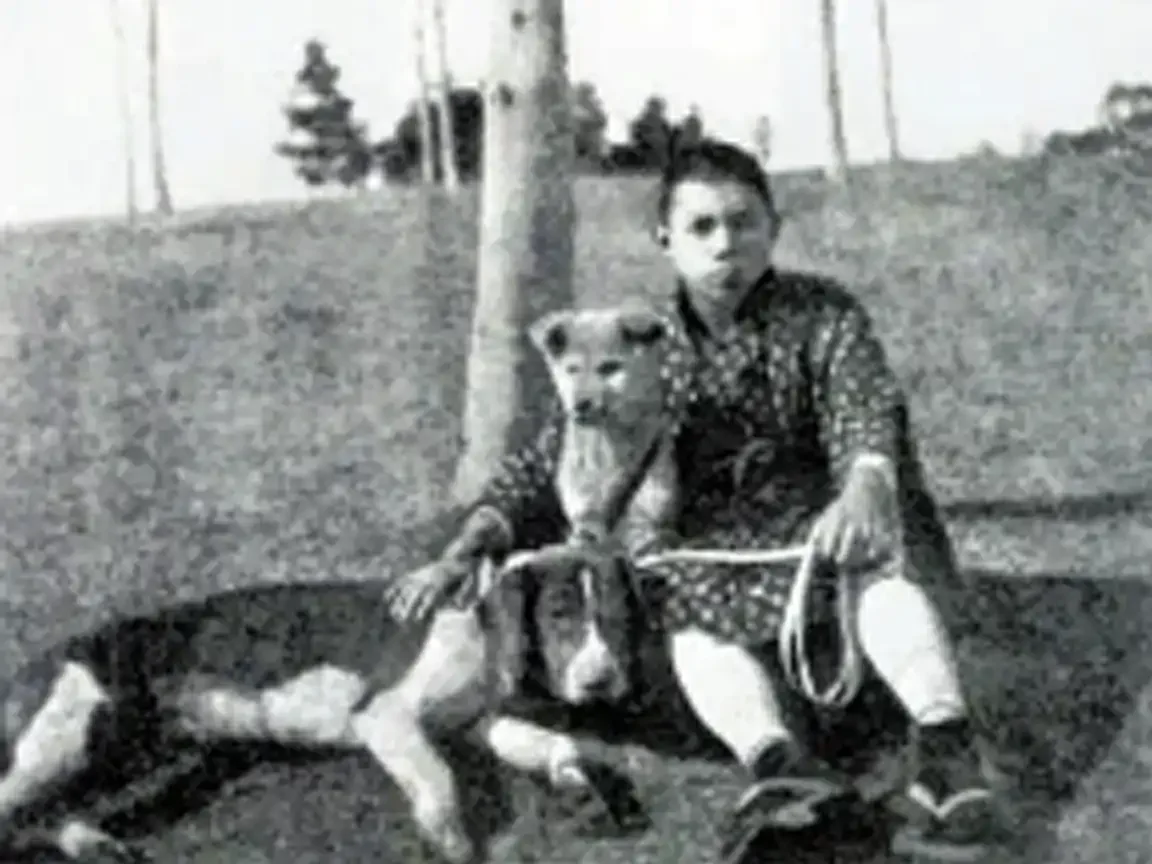
Hachi (puppy in center), with student-apprentice, Ozeki Saisuke, and John, Yoyogihara Field, spring 1924. Public domain, via Wikimedia Commons.
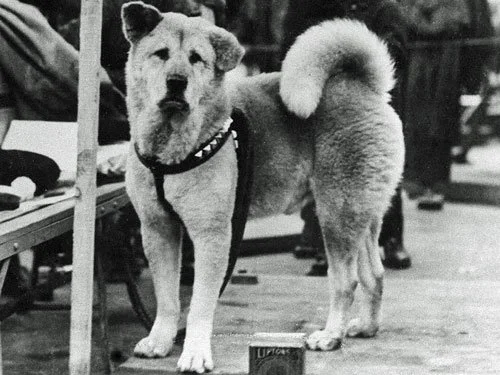
Hachiko at Shibuya Station. Public domain, via Wikimedia Commons.
Tokyo in the 1920s was becoming a city that ran on rails. Stations were not romantic backdrops. They were daily hinges—between home and work, private and public, morning and afternoon. The commuter system had a rhythm, and Hachikō learned it quickly. Dogs are natural students of routine. They notice the shoe-lacing, the coat taken from the hook, the particular quickness in a person’s movements when they are about to miss a train.
Hachikō’s life settled into an arrangement so simple it could be mistaken for instinct. He accompanied Ueno to Shibuya Station every morning and returned to greet him every evening.
The Routine Before the Legend
In the beginning, the story had no audience. There was only repetition.
Each morning, Hachikō would walk with Ueno to Shibuya, the station already busy with office workers and students, and watch him disappear into the system. Each afternoon, he would return around the time Ueno’s train typically arrived. He waited by the exit or nearby, scanning faces, reading the movement of crowds the way dogs do—by scent, by posture, by the sudden lift of recognition.
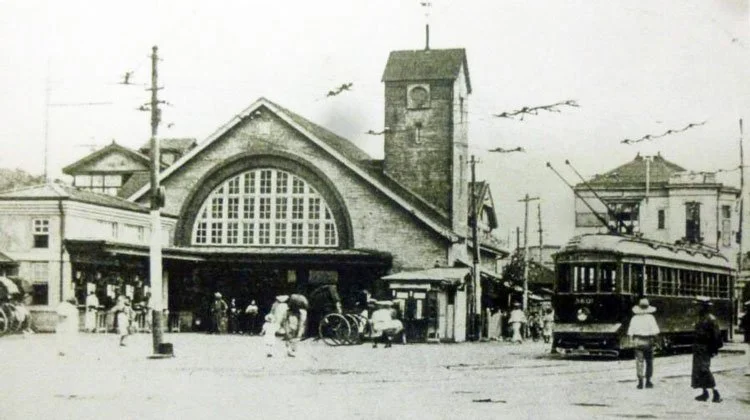
Shibuya Station in the 1920s, where Hachikō would meet Ueno. Public domain, via Wikimedia Commons.
For a while, nothing about this would have seemed extraordinary. Cities are full of small private rituals performed in public. A man buys a paper at the same kiosk. A woman stops at the same stall for a sweet. A dog waits in the same place for the same person. People notice, then stop noticing, because predictability is what makes a routine useful.
Then, on May 21, 1925, Professor Ueno died suddenly at the university. He did not return to Shibuya. Hachikō did.
The difference between an ordinary afternoon and the first afternoon without Ueno would have been almost invisible at first: the familiar time, the familiar crowd, the train doors opening. The absence arrives late, like a delayed announcement. The dog waited anyway. And then he came back the next day, and the next.
After Ueno: The Waiting Years at Shibuya
This is the moment the tale hardens into its defining shape. Hachikō’s waiting is often described as continuing for nearly a decade. Through seasons, through changes in the station, through a city shifting around him. It is easy to wrap that endurance in human language—devotion, grief, and fidelity because it looks like those things from the outside. But it also contains something more elemental: an animal’s steadfast attachment to a person, expressed through the only tool he had that could touch the world, a repeated return.
A dog returning daily to a crowded station does not automatically become cherished. In the early period after Ueno’s death, accounts suggest that Hachikō’s presence was not consistently welcomed. There were people who fed him, and people who pushed him away. The station was a workplace and a thoroughfare, and a large dog lingering near an entrance could be treated as a nuisance before anyone thought of him as a symbol.
Over time, familiarity did its quiet work. Station staff and regular commuters began to recognize Hachikō as a constant. He was not a stray drifting in and out of the city; he was a fixture with an unchanging purpose. Food appeared. Tolerance turned into protection. A routine that had started as private slowly became shared.
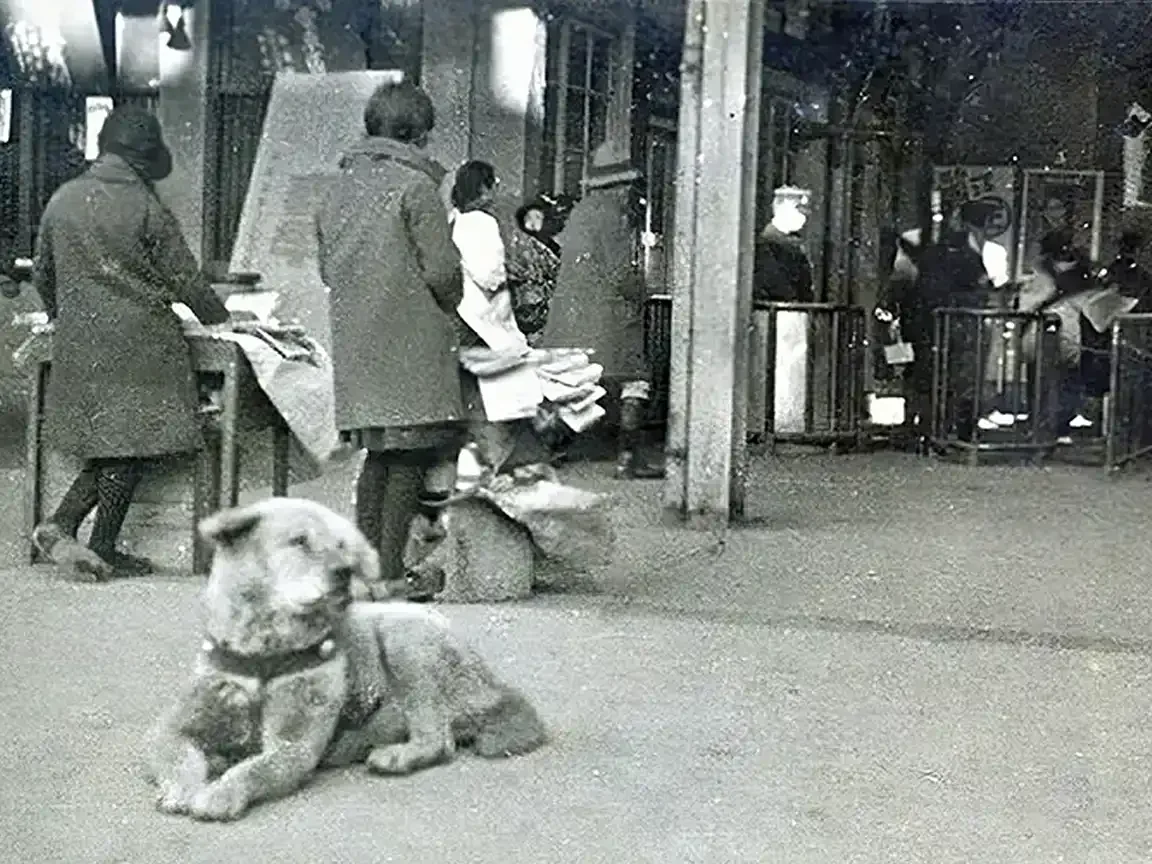
Hachikō waiting at Shibuya station circa 1933, Public domain Wikipedia Commons.
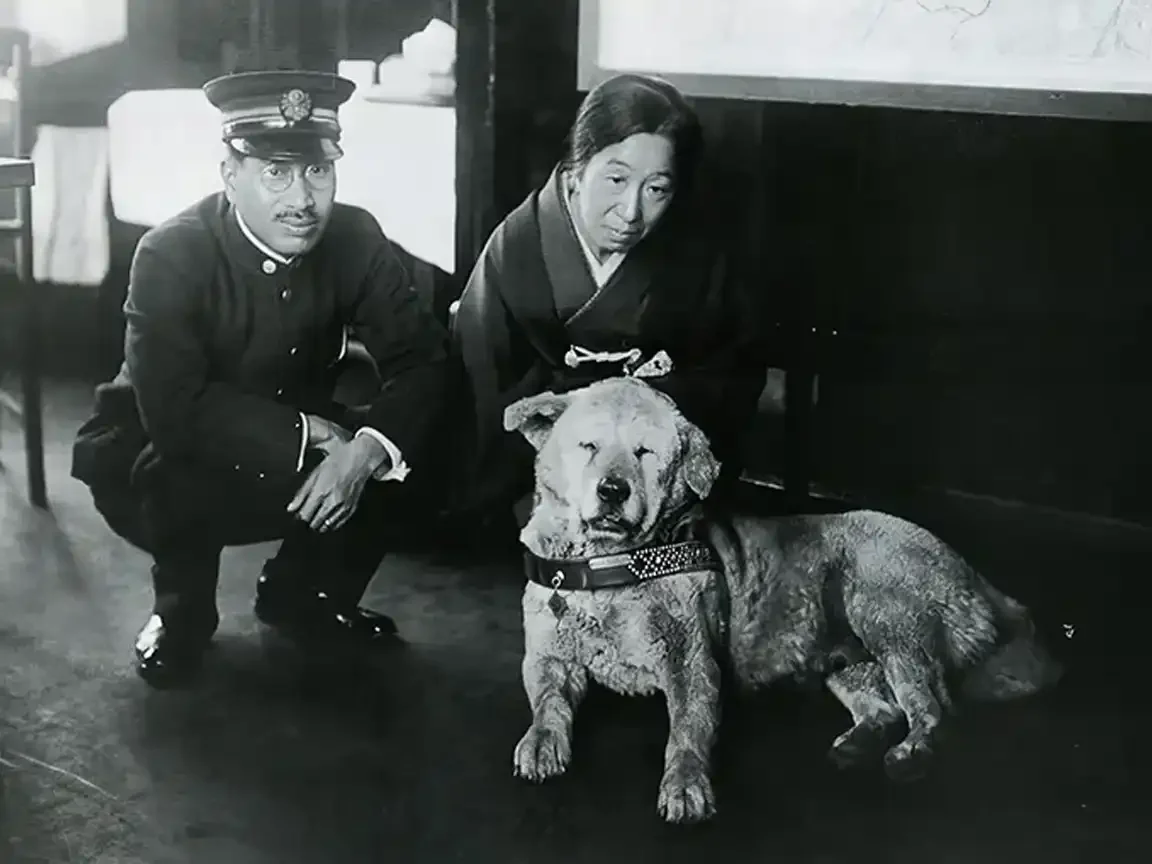
Station master and Yaeko (Ueno’s wife) with Hachiko at Shibuya Station around 1933. Public domain, via Wikimedia Commons.
The story’s wider fame is often traced to newspaper coverage in the early 1930s. An important step, because a loyal dog is not yet a national story until mass media decides it is. Once the tale circulated, people began arriving not only to travel, but to see Hachikō. To confirm whether the dog was real, whether he truly kept returning, whether the reports had exaggerated the scene.
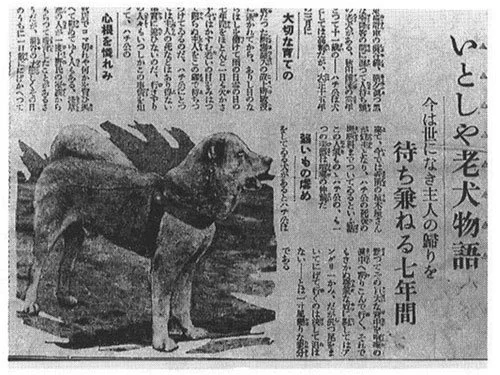
An article about Hachiko in The Tokyo Asahi Shimbun published on Oct. 4, 1932. Public domain.
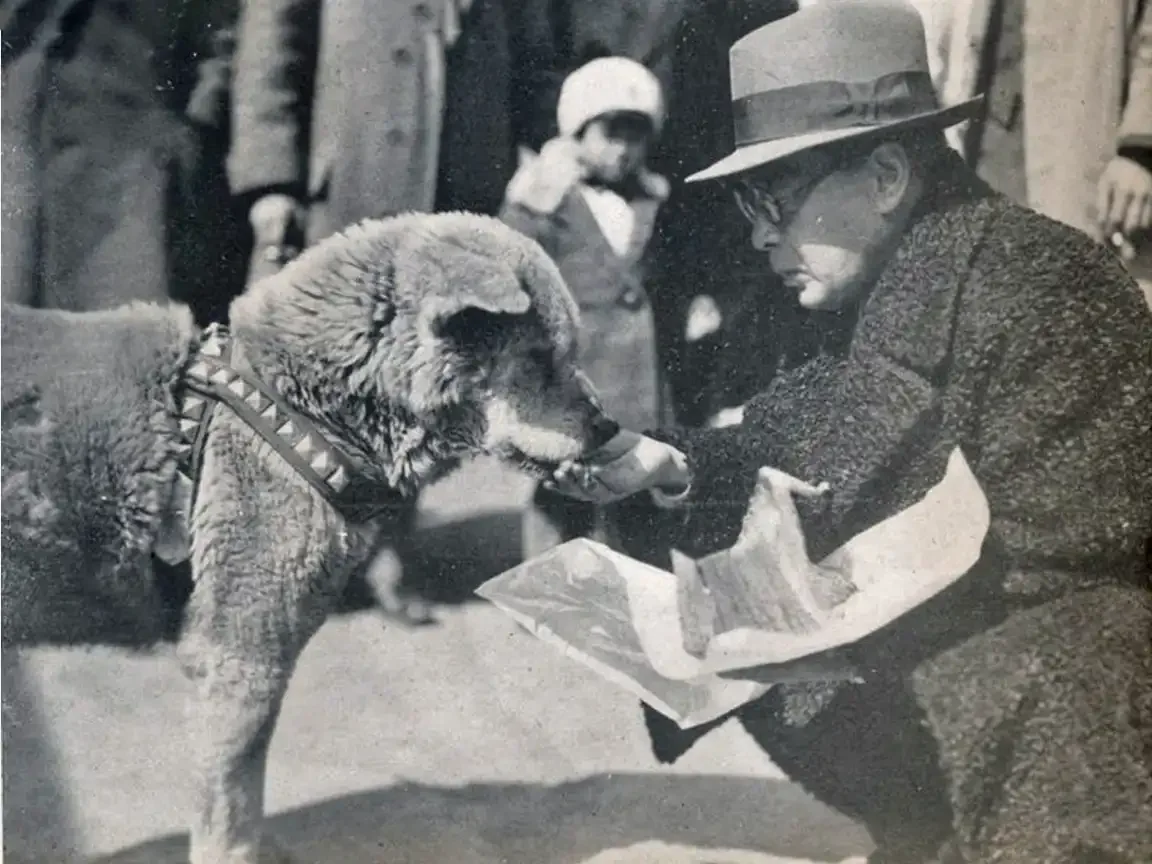
Masao Inoue (actor) feeding Hachikō. Inoue was reportedly notified when Hachikō died. Public domain, via Wikimedia Commons.
Public attention turned a private routine into a public scene. Hachikō was still doing what he had always done—waiting for one man—but now he was also waiting under observation. It changed the social environment around him, even if it did not change his purpose. Visitors came to Shibuya not to meet a train, but to meet a story.
In 1934, a bronze statue of Hachikō was unveiled at Shibuya Station, and he was reportedly present for the ceremony. The image is almost unbearable in its quietness: the living dog watching the city immortalize him for the act he continued to perform daily.
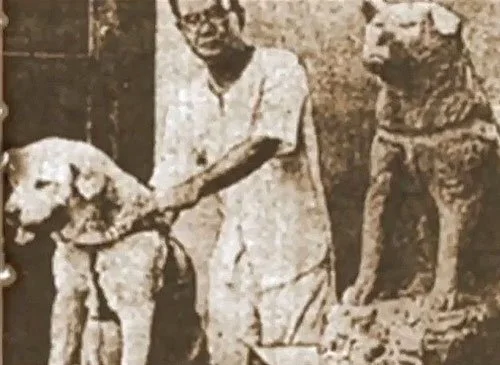
Artist Teru Ando with Hachi, to create his bronze statue, circa 1933. Public domain.
Artist Teru Ando with Hachi at Shibuya station, 1934. Public domain.
Hachikō died on March 8, 1935. His death did not end the story; it completed it. His ashes were placed beside Professor Ueno in Aoyama Cemetery, pulling the narrative back to its origin: not a station, not a crowd, not a headline, but a relationship. In a world that treats animals as temporary companions, the physical decision to reunite dog and owner in death made the bond official in the most literal way.
There is another fact that sits awkwardly beside the tenderness: Hachikō’s body was preserved and displayed in Tokyo at the National Museum of Nature and Science. Some readers find this unsettling. Others see it as part of how modern societies handle famous animals, both memorializing them and turning them into objects of public record. Either way, it shows the story’s reach. Hachikō was not merely mourned; he was archived.
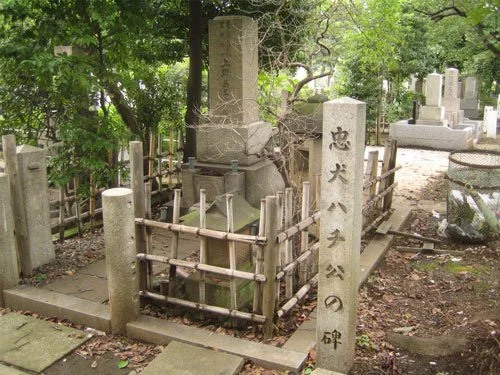
Grave of Hidesaburō Ueno and Hachikō, located at Aoyama Cemetery, Tokyo. Public domain, via Wikimedia Commons.
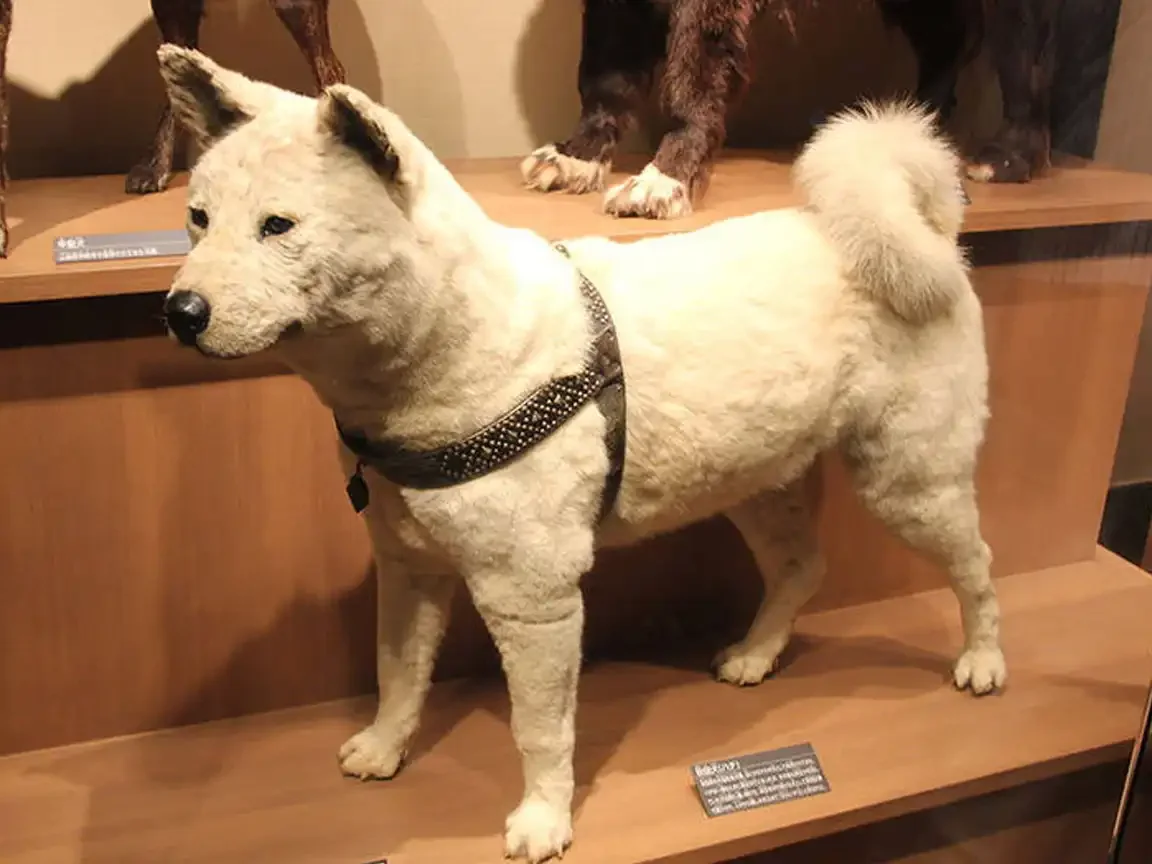
Stuffed replica of Hachikō on display at the National Science Museum of Japan, Tokyo. Public domain, via Wikimedia Commons.
Why Hachikō’s Loyalty Still Lands
The power of Hachikō is not that the story is complicated. It endures because its simplicity holds up every time it’s retold.
A dog learns a daily reunion. The reunion stops. The dog continues.
That action carries emotional weight across cultures because it is built on something most people understand without explanation: attachment expressed through repetition. Humans write love letters; dogs show up. Humans create memorials; dogs return to the place where the person used to be. Hachikō’s loyalty reads as pure partly because it is not performative. He did not rescue anyone from a burning building or do something that looks heroic on cue. He just kept the appointment.
There is also a particular poignancy in the setting. Shibuya is always in motion, where people are en route to somewhere else. Against that, Hachikō’s waiting becomes a kind of still point—an animal refusing, through habit and devotion, to accept the city’s demand that everyone must move on. The station is the perfect stage because it is designed for arrivals. Every train promises a return. Every afternoon contains the possibility of “maybe today.”
That is why the story is often told as a lesson in love and loyalty that endures beyond death and time. Hachikō could not comprehend death as a concept in the human sense. What he could comprehend was absence, and he answered it in the only language he had: persistence. People, watching, transformed that persistence into meaning. Into a reminder that devotion is not always dramatic, and that love often looks like patience practiced daily.
The story is also about the crowd. Once the tale spread, Shibuya did what cities do when a private act becomes public: it adopted it. Strangers fed Hachikō. The station made space for him. Later generations built a meeting place around his image. The dog’s loyalty became a shared civic emotion—an agreement that some bonds deserve to be remembered.
What Tokyo Built Around One Dog
Hachikō’s legacy is now physical, navigable, and impossible to avoid if you pass through Shibuya. People arrange their lives around him without thinking: “Meet at Hachikō.” It is both affectionate and practical, the highest compliment a city can offer any memorial—usefulness.
The original statue installed in the 1930s did not survive intact through the war years; it was later recycled for metal during World War II. That detail can sound harsh, but it is also revealing. Even cherished symbols are vulnerable to history’s blunt demands. After the war, Tokyo chose to restore Hachikō to his post. In 1948, a new statue was erected, made by Takeshi Andō, the son of the sculptor who created the original. The replacement was not merely a reconstruction. It was an act of recommitment: a city deciding that the story still mattered.
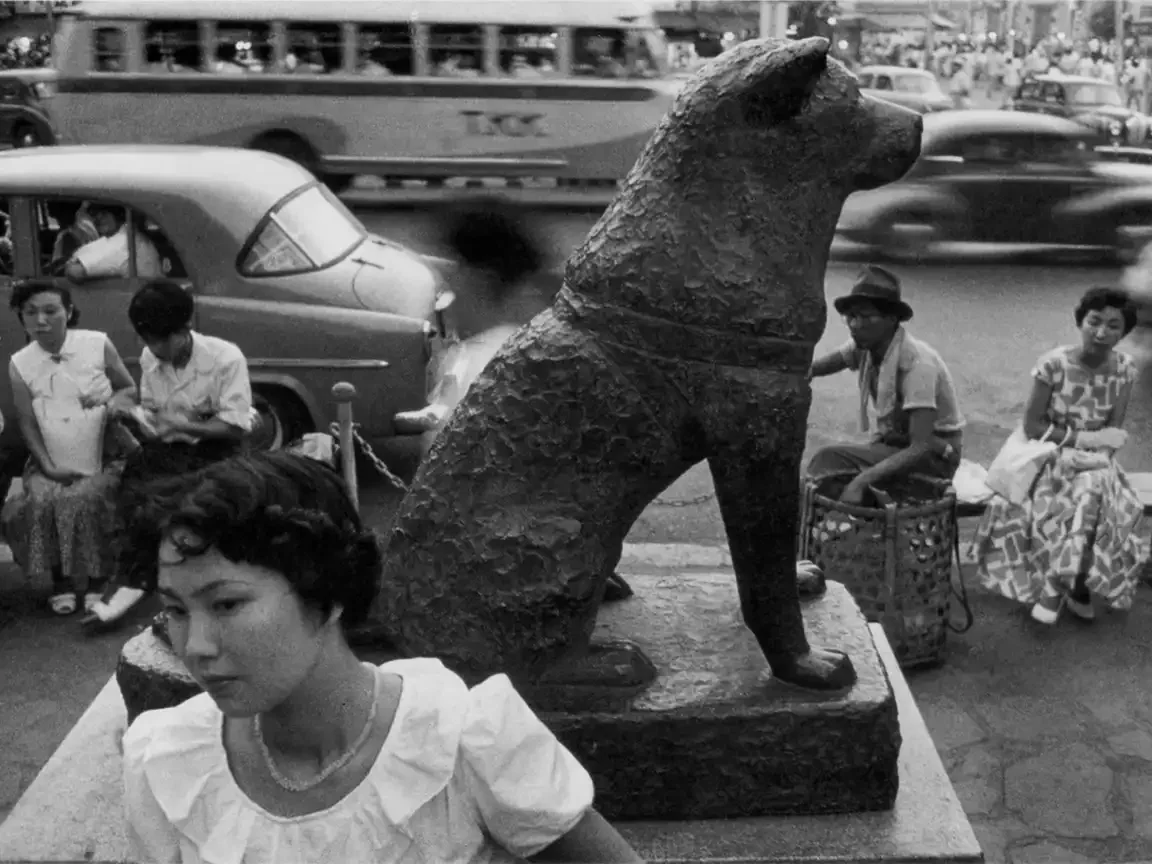
Statue of Hachiko, 1954. Public domain, via Wikimedia Commons.
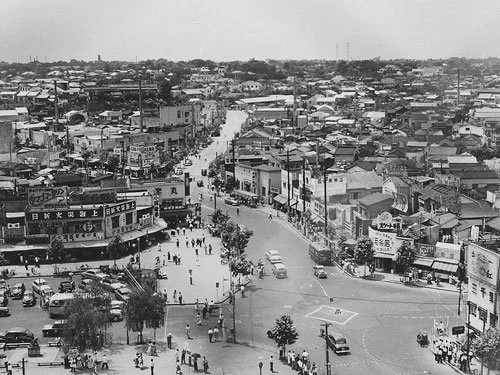
Shibuya Scramble crossing, 1952, in the lower left corner is the statue of Hachiko surrounded by benches. Public domain, via Wikimedia Commons.
From there, Hachikō traveled outward through film and adaptation. Japan’s Hachikō Monogatari (1987) told the story for a modern domestic audience, while the American film Hachi: A Dog’s Tale (2009) relocated the premise to the United States, demonstrating how easily the emotional architecture crosses borders. Change the station, change the language, change the coat color of the crowd—keep the waiting, and the story still works.
Hachikō’s influence even touched the breed’s international profile. During a 1937 visit to Japan, Helen Keller learned about Hachikō and later received an Akita puppy, a moment often cited in accounts of the breed’s early presence in the United States. The path from station legend to overseas dog ownership is not as strange as it sounds. Stories travel. Curiosity follows. Symbols become requests.
And in Shibuya, the crossing keeps filling, emptying, and filling again. People continue to take photos with a dog who never moved, because the city decided the stillness was worth keeping.
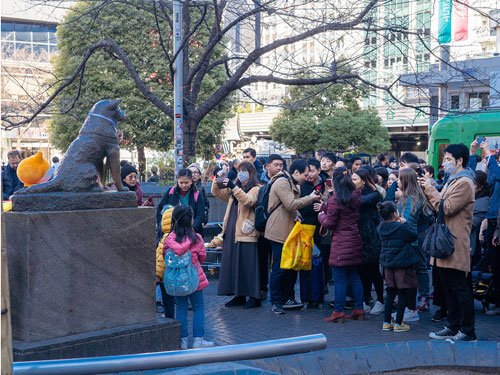
Hachikō statue at Shibuya station, 2020. Photo by Dick Thomas Johnson from Tokyo, Japan, CC BY 2.0, via Wikimedia Commons.
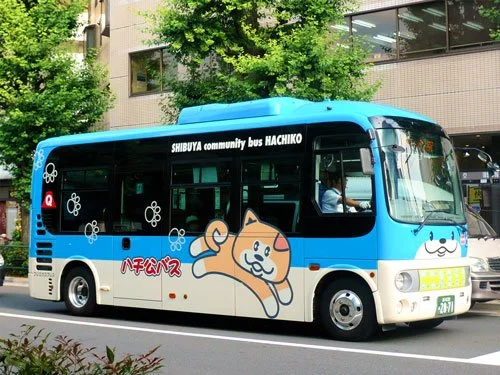
Shibuya community bus Hachikō. Photo by Stéfan, CC BY-SA 2.0, via Wikimedia Commons.
The Promise of Return
At Shibuya Station, trains still arrive with their daily promise: someone you know might step off. Hachikō’s story endures because he treated that promise as sacred—returning again and again, not for spectacle, but for love. And in doing so left the world a permanent image of loyalty that does not expire.
It highlights the profound, selfless bond between humans and pets, teaching that dedication, patience, and devotion are valuable, and that one should never forget those they love.
Did You Know?
Hachikō (often called Hachi) was later widely known as “Chūken Hachikō,” meaning “faithful dog Hachikō”.
People also stole Hachikō’s ID tag, because it was considered a good-luck charm for safe childbirth.
There are two modern types of Akita recognized in different places: the Japanese Akita Inu and the American Akita, which developed along somewhat separate lines after World War II.
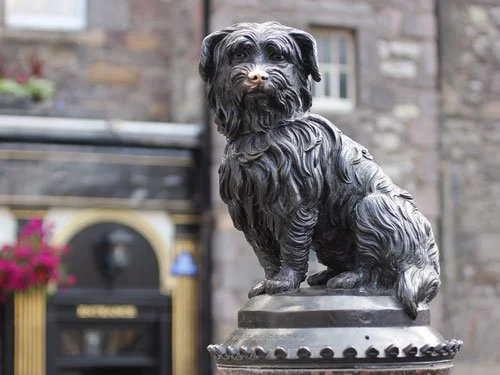
Hachikō’s loyalty has a close Scottish cousin in Greyfriars Bobby. Another dog remembered for staying loyal to his owner long after death, this time at a graveside in Edinburgh.
Like Hachikō, Sergeant Stubby was preserved by taxidermy and is on display at the Smithsonian’s National Museum of American History. Another famous dog turned into a museum artifact.
Breed: Akita | Country of origin: Japan | First use: Large game hunting, such as wild boar and bear, and guard dogs | Origins: 17th century