Why Victorians Dressed Dogs Like Humans
A top hat, a pipe, and a dog with the composure of a minor political figure or civil servant: Victorian Britain loved pets made briefly human. These portraits were more than gags—they were mirrors of class, modernity, and the uneasy thrill of seeing ourselves in fur.
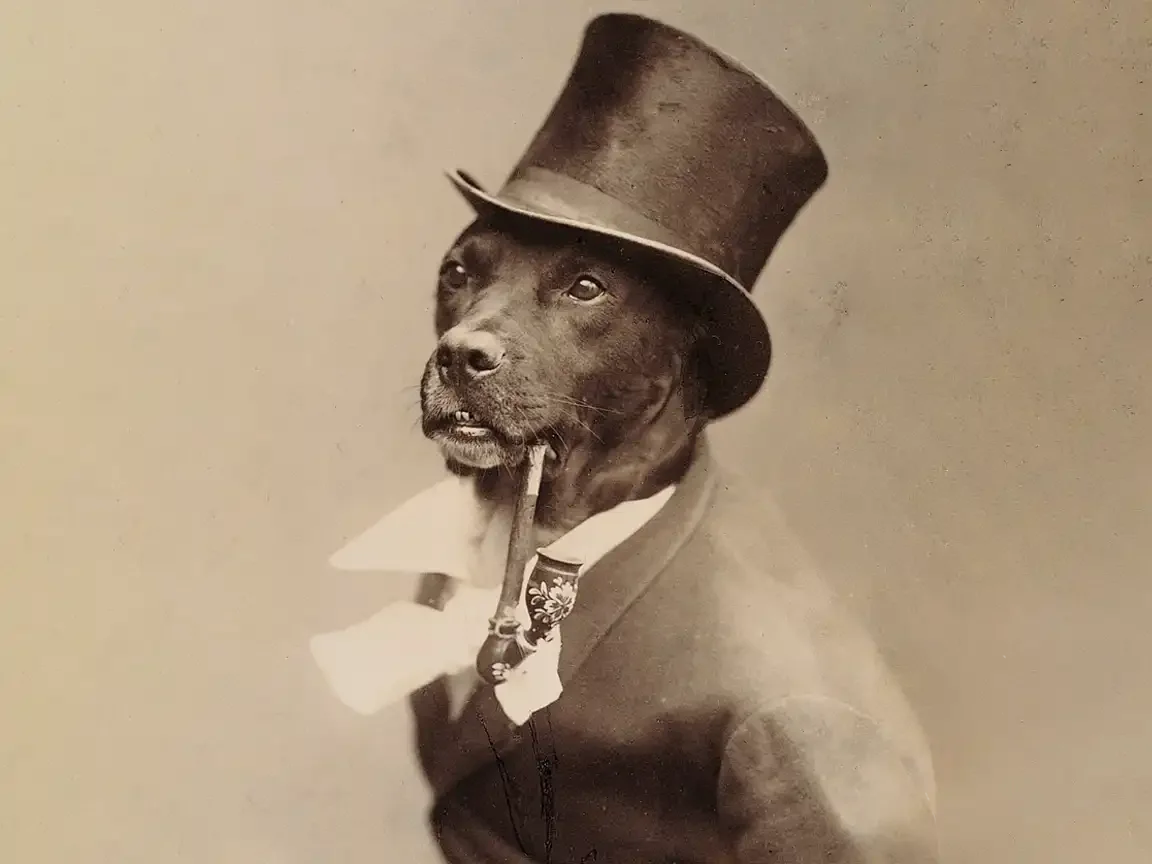
Bonque & Kindermann photographers, Hamburg, Germany, 1894. Public domain, via Wikimedia Commons.
The Gentleman Dog and the Age of Anthropomorphic Pets
The dog sits upright, composed, and faintly solemn. A tall top hat rests on his head, slightly askew, lending him the air of a respectable Victorian gentleman who has paused, perhaps, between appointments. A clay pipe protrudes from his mouth, held with just enough intention to suggest thought rather than accident. He does not grin. He does not plead. He looks, instead, as though he understands the rules of the room and has agreed to abide by them.
At first glance, the photograph invites a smile. At second glance, it asks something more searching. Why did someone decide that this dog should be dressed this way, posed like this, and preserved on photographic paper? What cultural made such an image not merely amusing, but desirable?
This portrait, produced in the late nineteenth century, belongs to a brief but revealing moment in photographic history. When Victorians delighted in seeing animals behave like people, and found in their pets both comedy and comfort. Anthropomorphic pet photography was not a novelty sideshow; it was a mainstream visual language, shared through cartes de visite, cabinet cards, postcards, and family albums. Dogs were not merely companions. They were characters.
To understand this photograph is to understand a period that was grappling, often anxiously, with modernity, identity, and the shifting boundaries between the human and animal worlds.
The Dog at the Centre of the Frame
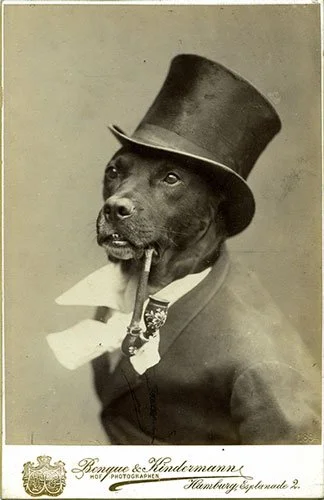
Bonque & Kindermann photographers, Hamburg, Germany, 1894. Public domain, via Wikimedia Commons.
The subject of the photograph is anonymous, as most animal sitters of the era were. His breed is not precisely identifiable, though he appears to be a Staffordshire Terrier or black Labrador. Chosen less for pedigree than for temperament. He is sturdy, calm, and alert. These qualities mattered.
His costume is theatrical but restrained. The top hat, a potent Victorian symbol of respectability and masculine adulthood, signals class aspiration rather than satire alone. The pipe, too, carries connotations of leisure, contemplation, and masculine ritual. Together, they place the dog firmly within the visual grammar of the nineteenth-century gentleman.
Yet the photograph resists turning the dog into a mere joke. The lighting is soft. The background is plain. The framing is formal. This is a portrait, not a gag. The dog is not shown in motion or chaos, but in stillness. He is asked to perform with dignity.
That balance between humor and seriousness lies at the heart of anthropomorphic pet photography.
Cultural Context: Why Victorians Loved Human-Like Animals
Victorian Britain and Europe were societies in transition. Industrialization reshaped cities. Scientific discoveries unsettled religious certainties. Charles Darwin’s theories blurred the once-rigid boundary between humans and animals, suggesting continuity rather than hierarchy.
At the same time, domestic life took on new importance. The home became a moral refuge from the chaos of the modern world, and pets, especially dogs, became emotional anchors within it. They were loyal, readable, and seemingly sincere in an age increasingly marked by social performance.
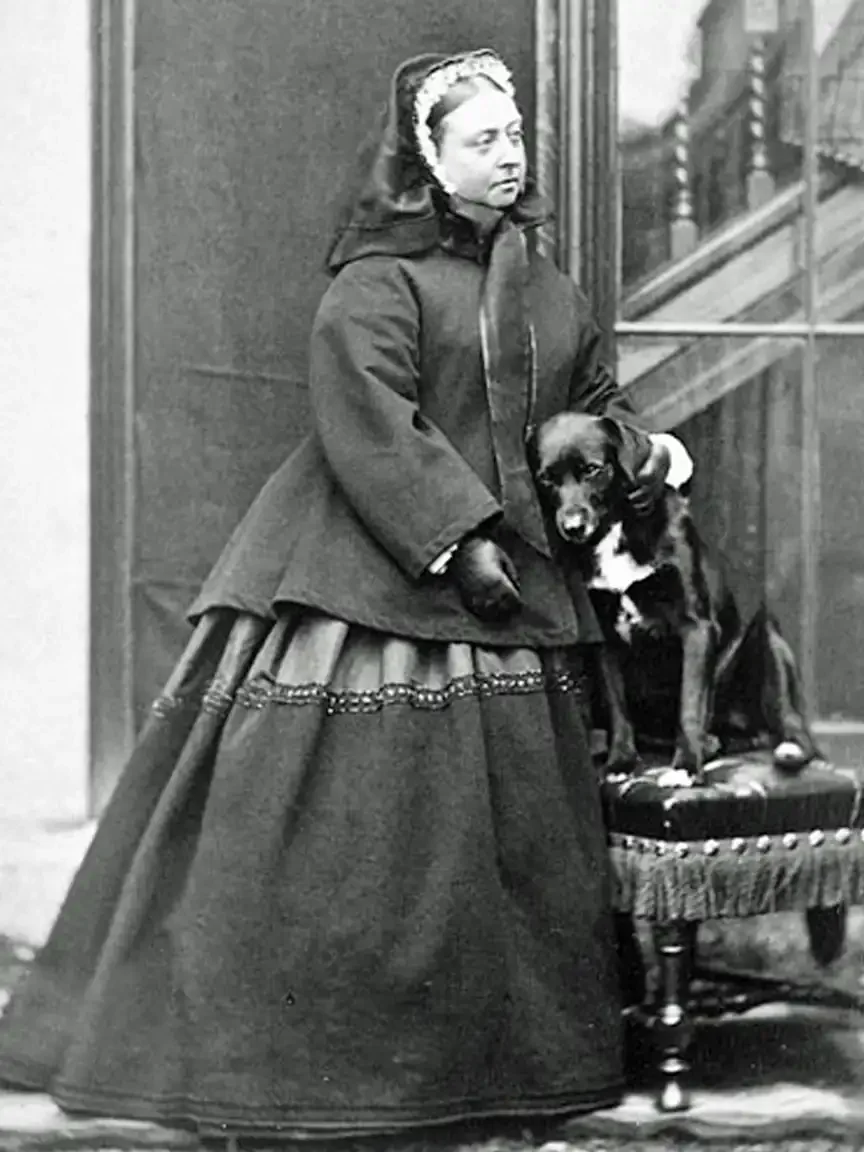
Queen Victoria with her dog Sharp, the Border Collie, taken at Balmoral Castle, 1867. Public domain, via Wikimedia Commons.
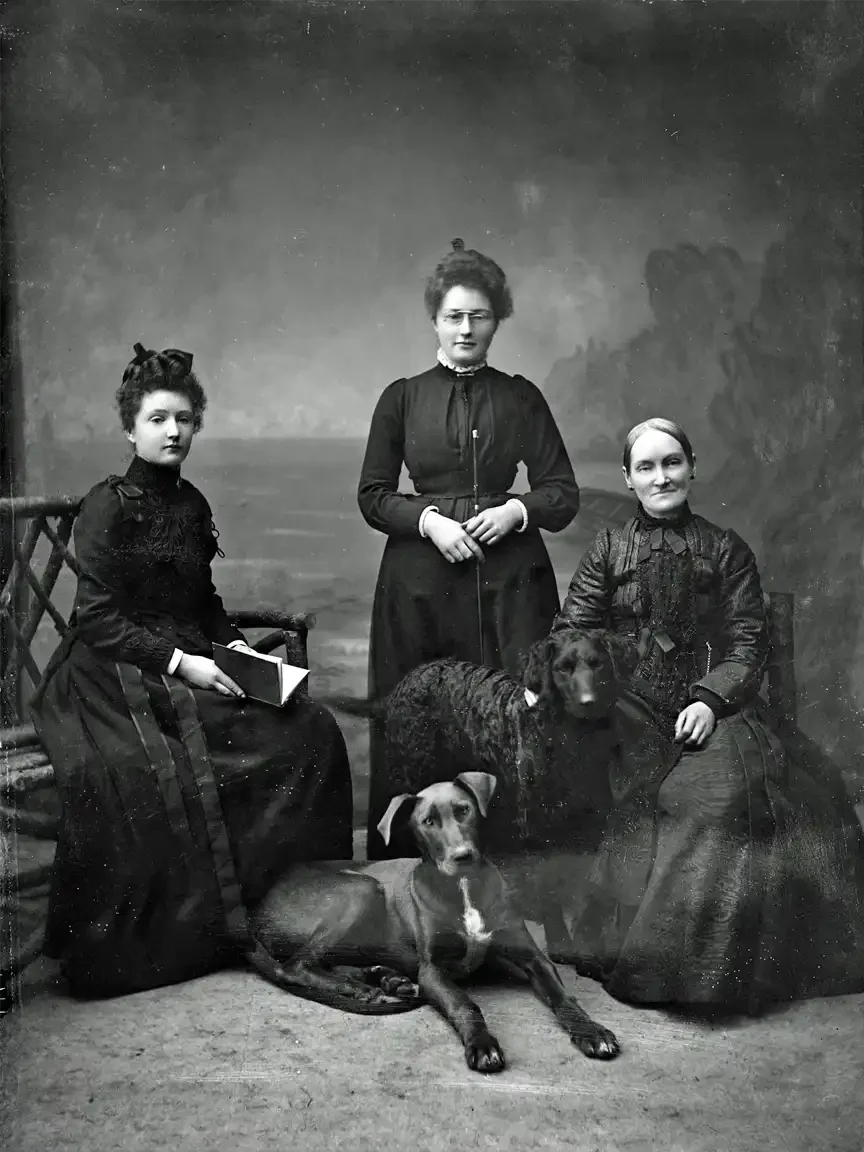
Miss Dobbyn ordered the photograph, ca 1892, National Library of Ireland. Public domain via Wikimedia Commons
Anthropomorphic imagery allowed Victorians to explore these tensions safely. By dressing animals as people, they could laugh at human pretensions while reaffirming social norms. A dog in a top hat was amusing precisely because he did not truly belong there, yet his presence suggested that gentility itself might be, at least in part, a costume.
Children’s books, satirical magazines, and theatrical entertainments of the era were full of animals behaving badly or wisely, standing in for human types. Photography, newly accessible and culturally powerful, simply extended this tradition into the visual record.
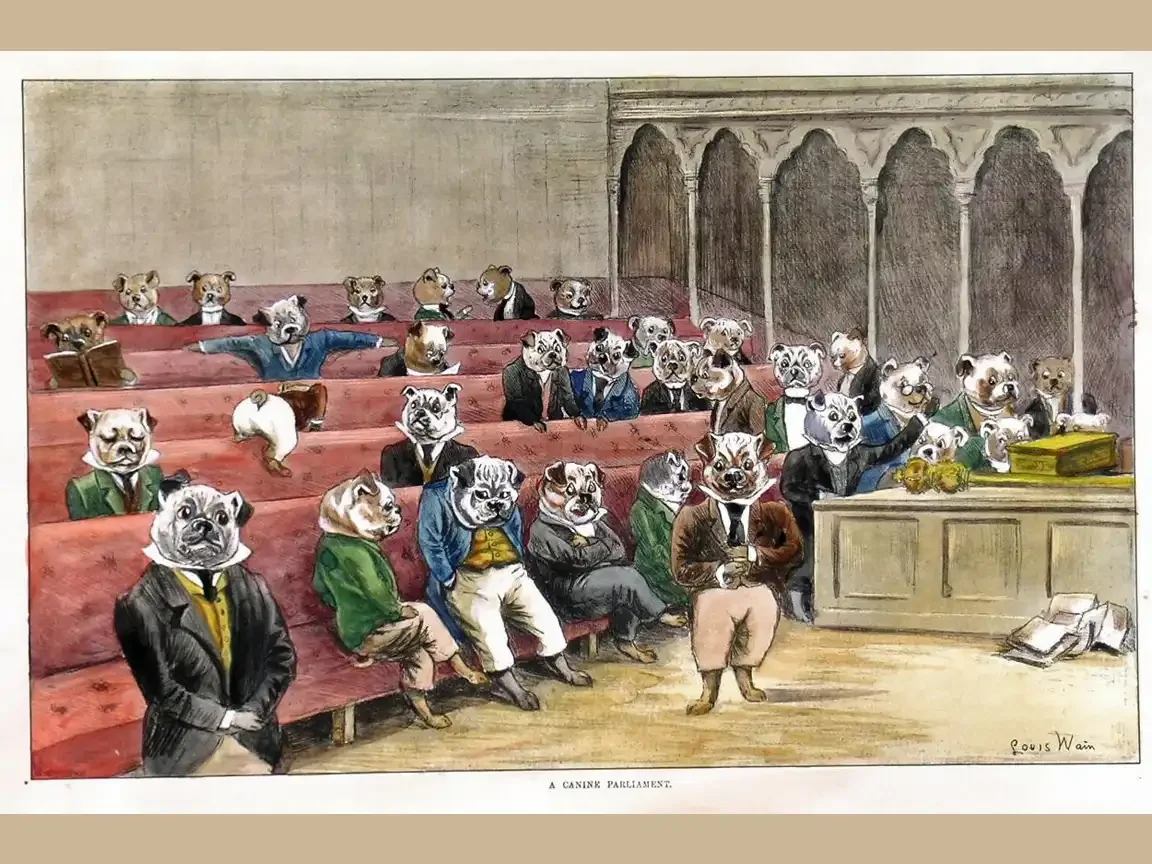
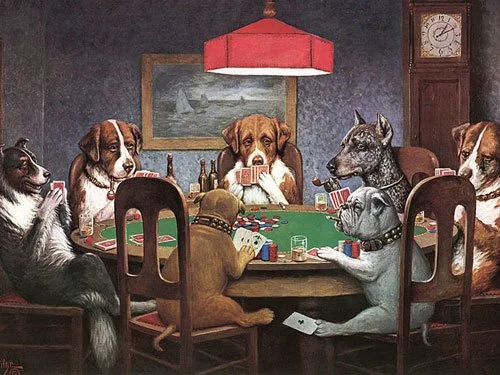
A Canine Parliament, 1892, Joseph Swain. Public domain.
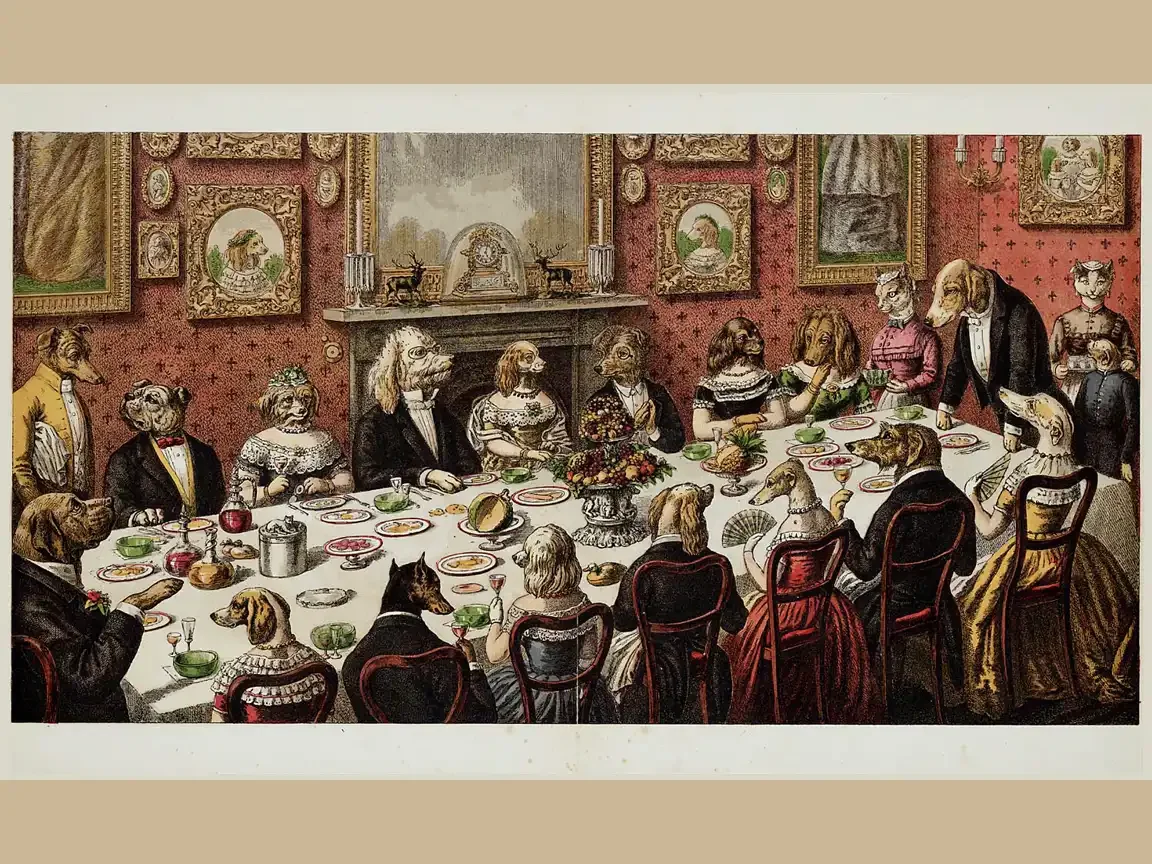
The Dogs' Dinner Party, 1893, Harrison Weir. Public domain.
Characteristics and Visual Style
Anthropomorphic pet photographs followed a recognizable aesthetic. Subjects were usually shown against neutral studio backdrops, with minimal props beyond clothing or small accessories. The focus was on the animal’s face and posture, elements that could suggest personality.
Dogs were favored over other animals because of their expressive faces and trainability. Cats appeared too, but less frequently, and often with more chaotic energy. Dogs could be taught to sit upright, hold objects, and remain still for the long exposures required by early photographic processes.
Clothing was carefully selected. Human fashion was scaled down but not exaggerated. Hats, jackets, collars, spectacles, and pipes were common. The goal was recognition, not absurdity. Viewers were meant to recognize a type, the gentleman, the scholar, the soldier, rather than marvel at the costume itself.
The resulting images hovered between realism and fantasy, inviting viewers to project narratives onto their animal subjects.
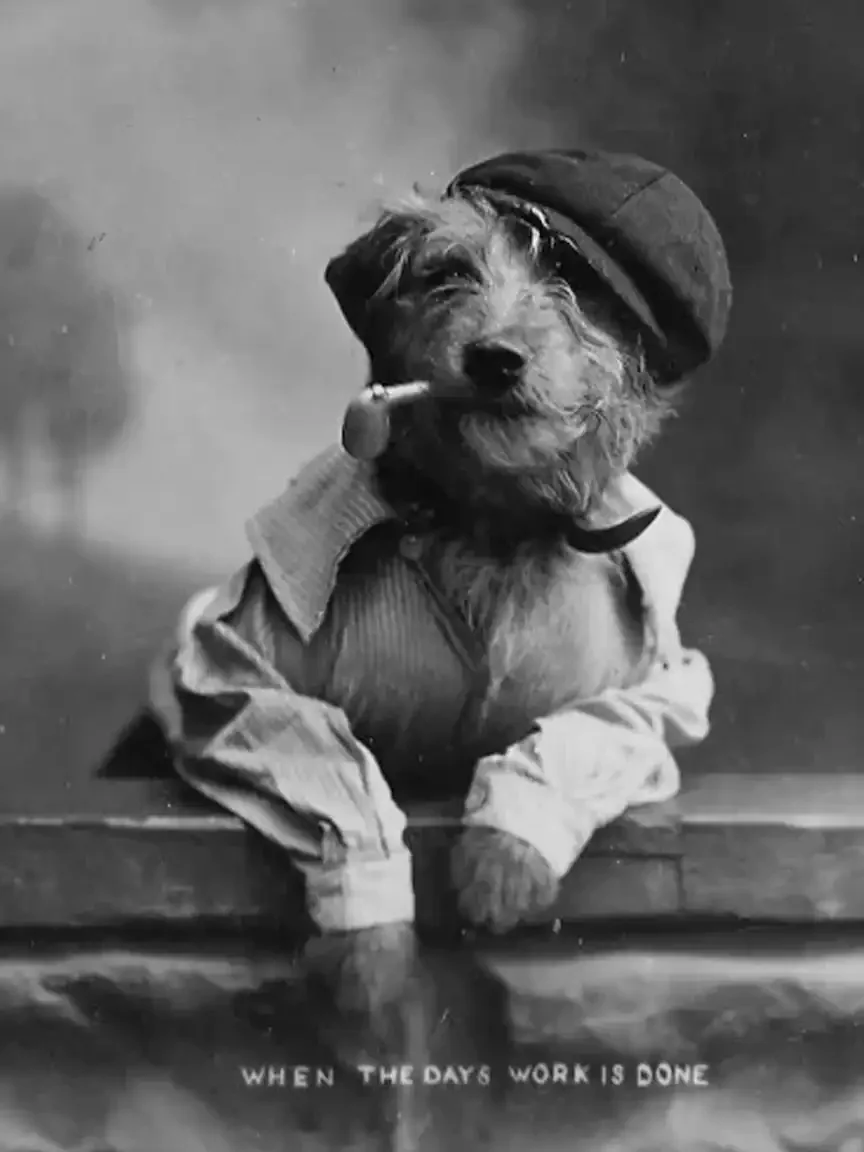
Vintage postcard. Public domain.
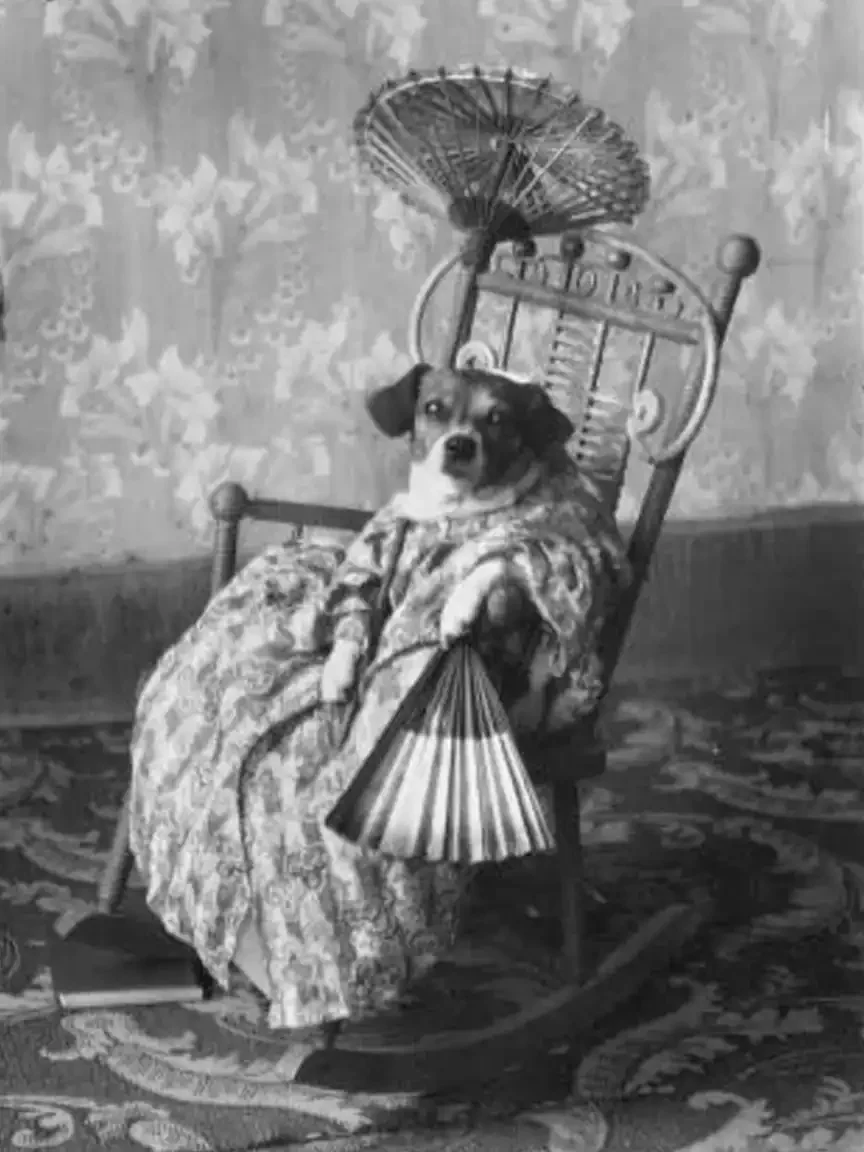
Miss Tootsie Kiyi. Public domain.
How the Dogs Were Made to Pose
The technical challenge of photographing animals in the nineteenth century cannot be overstated. Exposure times, though improving, were still long by modern standards. In practical terms, Victorian subjects had to hold still 100 to 1,000 times longer than a modern subject does today. A successful portrait required patience, training, and no small amount of ingenuity.
Dogs were selected for temperament first. Calm, obedient animals were far more likely to cooperate. Many belonged to professional trainers or studios that specialized in animal photography. Some photographers worked closely with handlers who used familiar commands, gentle restraint, and positive reinforcement.
Hidden supports were common. Posing stands, similar to those used for human sitters, could be concealed beneath clothing. Treats and whistles helped direct attention. In some cases, mild physical supports were used, though evidence suggests that photographers were careful not to distress their subjects; a frightened dog rarely produced a usable image.
The pipe seen in this photograph, for instance, was likely held briefly rather than clenched. Timing mattered. The shutter was released at the precise moment when dog, costume, and posture aligned.
What remains striking is not that the dog was made to pose, but that he appears willing to do so.
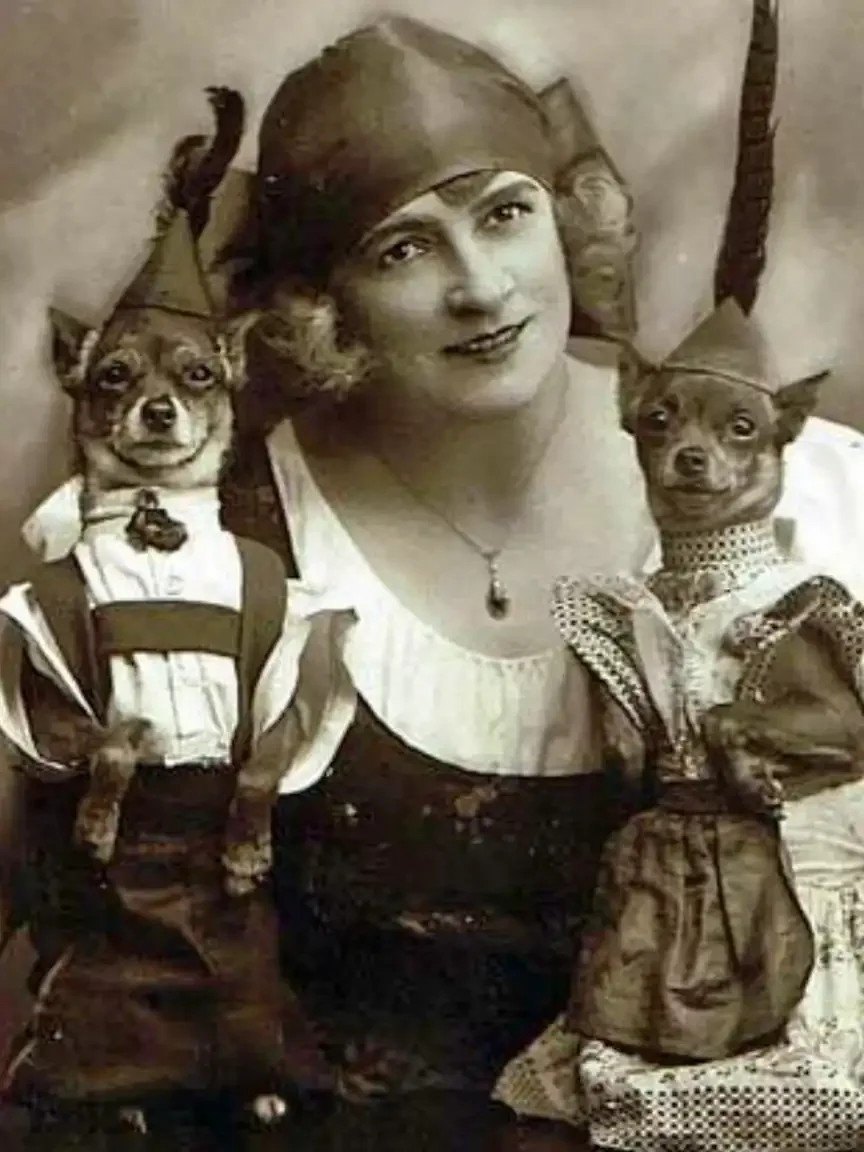
Postcard ca 1905, R. Windsch in Leipzig, Public domain.
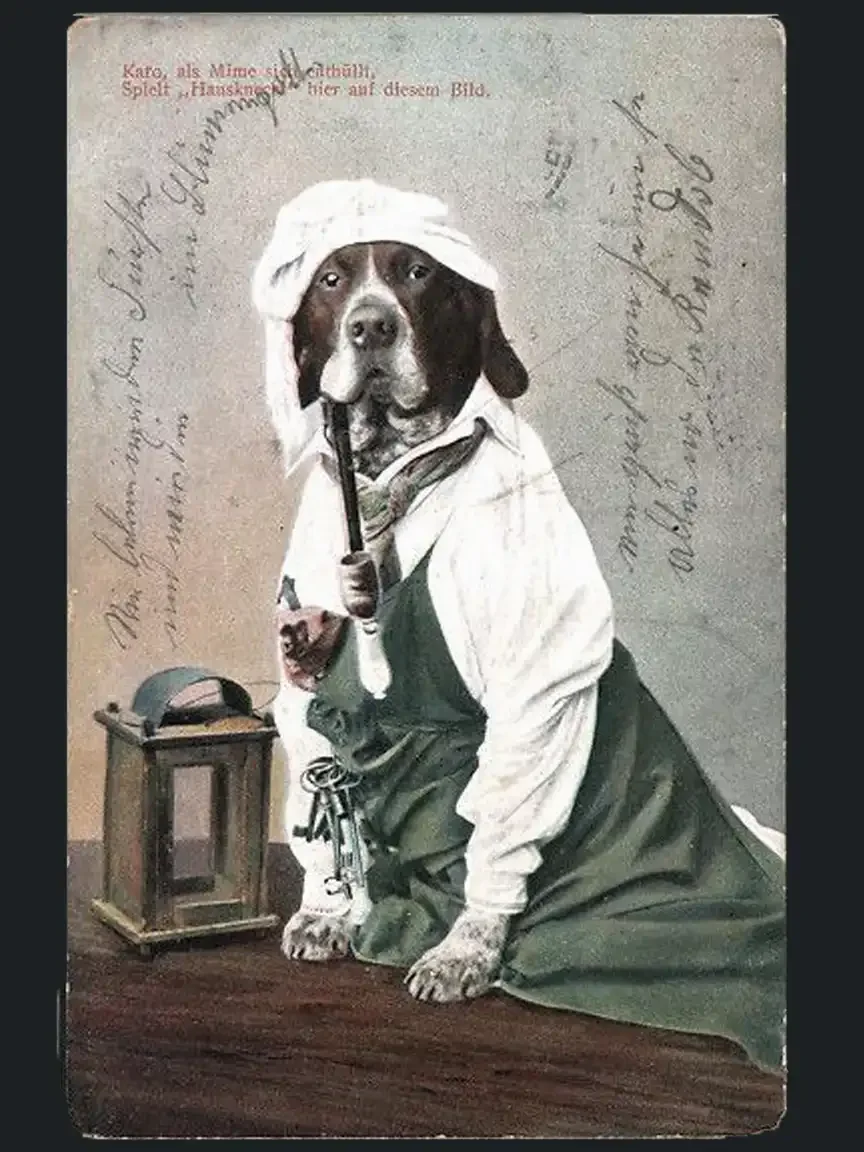
Vintage postcard, Public domain.
The Purpose of Anthropomorphic Pet Photography
These photographs served multiple purposes. They were souvenirs, conversation pieces, and emotional artefacts. Families displayed them in albums alongside human relatives, blurring the line between pet and kin.
They were also commercial products. Studios sold animal portraits to a growing middle class eager for novelty and self-expression. Sending a postcard of a dog dressed as a gentleman was both humorous and culturally literate, a shared joke encoded in visual form.
On a deeper level, these images allowed Victorians to rehearse ideas about identity. By projecting human roles onto animals, they tested the stability of those roles. If a dog could look convincing as a gentleman, what did that say about gentility itself?
The photographs reassured even as they questioned. The animal was human-like, but never human. Order was preserved.
Photography Comes of Age
The rise of anthropomorphic pet photography coincided with photography’s transition from technical marvel to everyday medium. By the late nineteenth century, studios were commonplace, and portraits were no longer reserved for elites but had entered ordinary urban life.
This democratisation encouraged experimentation. Photographers sought new subjects to distinguish themselves in crowded markets, and animals—once difficult to capture—became viable sitters as exposure times shortened. Dogs, in particular, combined trainability with expressiveness, satisfying both technical demands and public curiosity.
International exchange mattered too. Studios such as Benque & Kindermann worked within a European network of innovation, sharing techniques and visual styles across borders. What appeared in Hamburg might soon be echoed in London or Paris, reinforcing a shared visual language of staged animal portraiture.
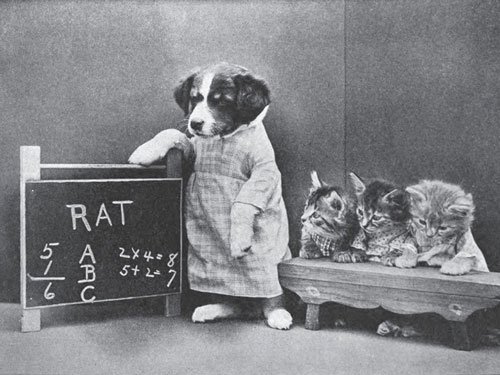
By the early twentieth century, photographers like Harry Whittier Frees refined the form, using faster cameras to stage kittens and puppies in carefully constructed human scenes. Widely circulated as postcards, magazine illustrations, and children’s books, his images shifted the genre toward a more playful, narrative mode, while remaining rooted in the same impulse to see animals through human roles.
Together, these photographs helped establish a visual culture of humour and sentiment that continues to shape how animals are pictured today.
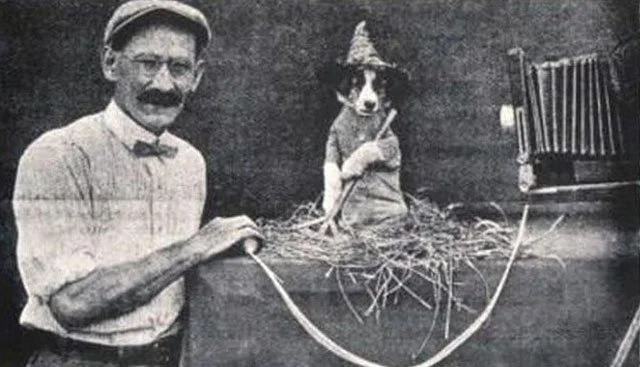
Photographer Harry Whittier Frees poses beside a costumed puppy on a studio set. Public domain, via Wikipedia Commons.
The 21st-Century Equivalent
Modern pet photography owes an obvious debt to its Victorian predecessor. Today’s dogs wear costumes for social media rather than sitting beneath studio skylights, but the underlying impulse remains the same. Pets are dressed, posed, and photographed as extensions of human identity, their images shared not as curiosities but as reflections of taste, humour, and belonging.
Instagram accounts devoted to dogs in outfits, pets working in offices, or animals reenacting everyday human routines now attract millions of followers. The humour remains gentle rather than satirical, and the appeal still lies in recognition.
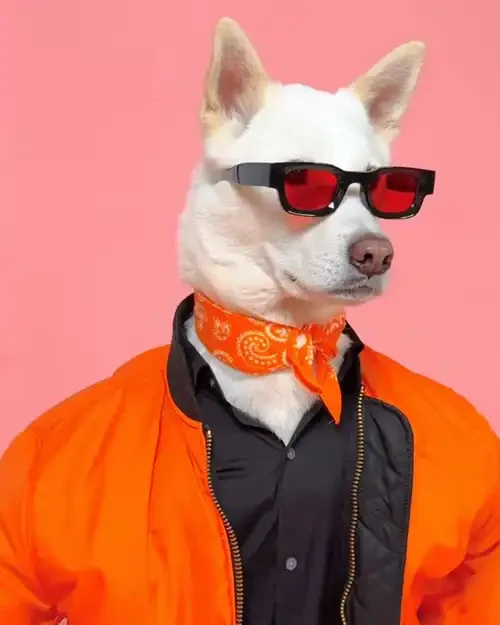
@mensweardog Instagram
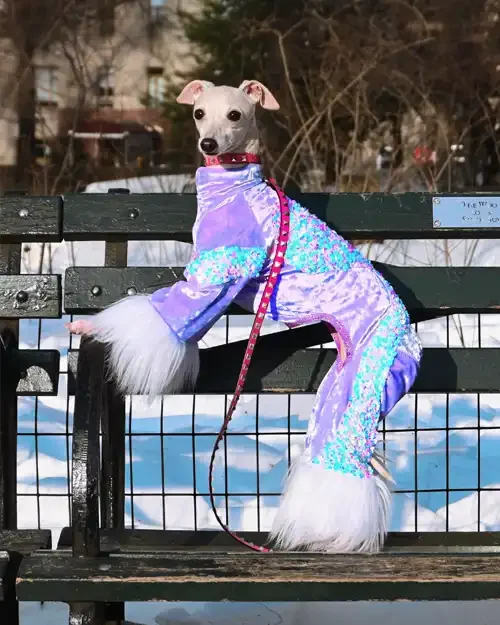
@tikatheiggy Instagram
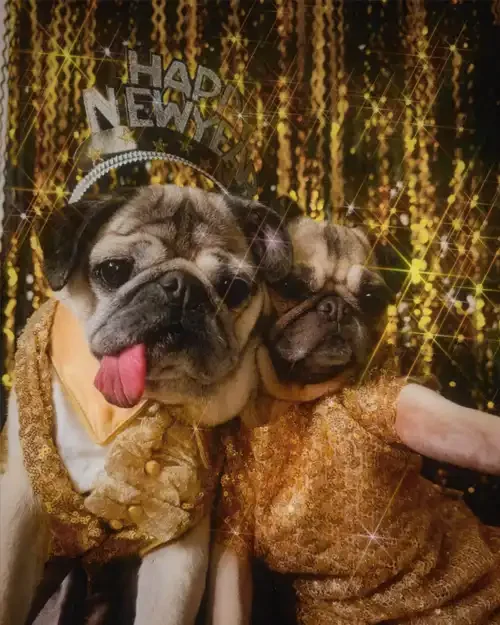
@itsdougthepug Instagram
Publications such as Dogue push this idea further, borrowing the visual language of high fashion and celebrity culture to present dogs as stylised avatars of contemporary aspiration.
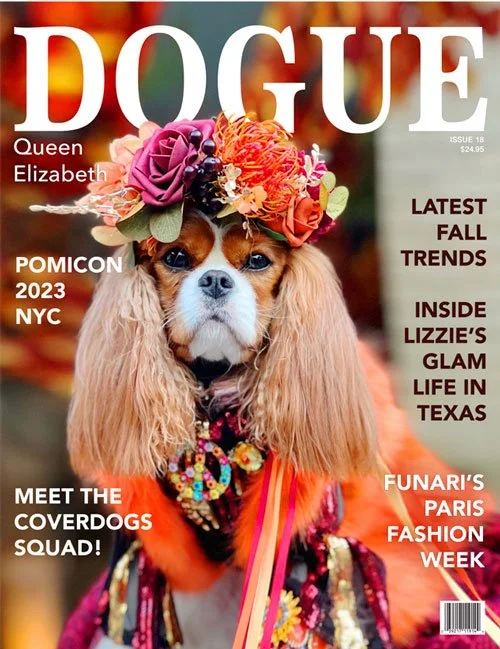
Dogue magazine cover issue 18
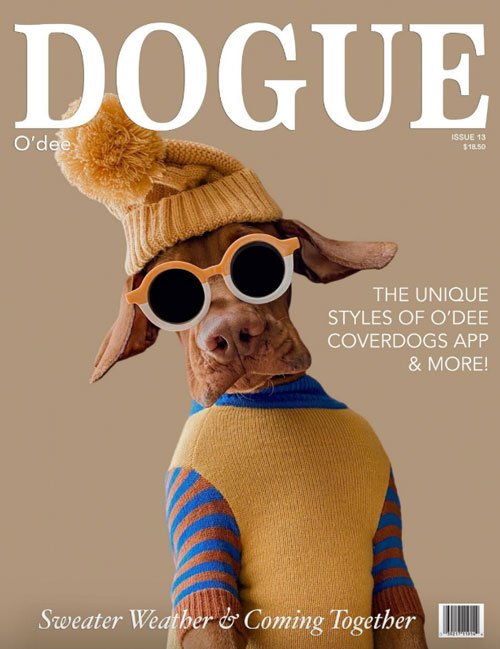
Dogue magazine cover issue 13
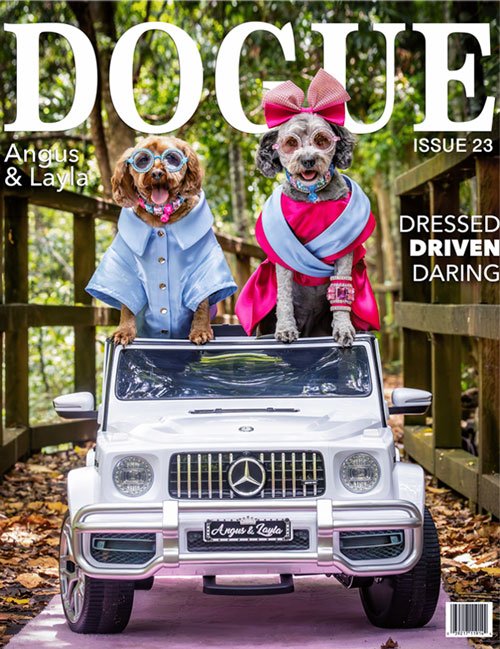
Dogue magazine cover issue 23
What has changed most dramatically is speed and scale. Where Victorian animal portraits were carefully staged and slowly circulated, modern images are produced and consumed almost instantly, shared across global platforms within seconds. The barrier to entry has effectively vanished; everyone with a phone is now a pet photographer.
Yet beneath the filters and hashtags, the fascination endures. The pleasure of seeing ourselves reflected in animal form, once captured in long exposures and stiff poses, remains a constant, merely updated for a digital age.
Anthropomorphism in the Age of Artificial Intelligence
Artificial intelligence is accelerating this tradition in unexpected ways. Image-generation tools can now produce convincing portraits of animals in human roles without a living subject ever entering a studio. Dogs can be imagined as astronauts, supermodels, or gladiators with a few lines of text.
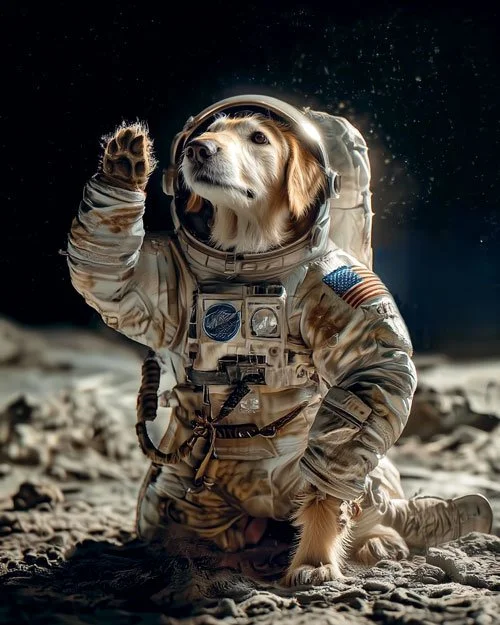
Photo by Dogs in History.
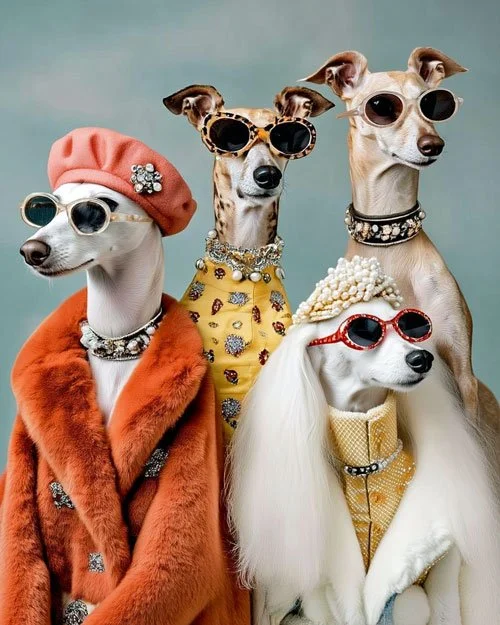
Photo by Dogs in History.
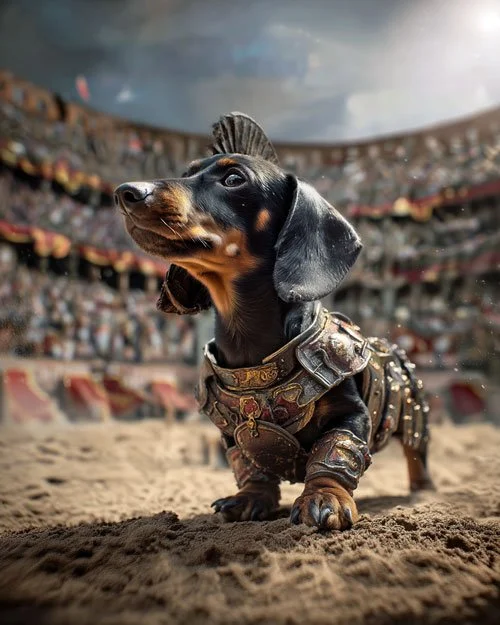
Photo by Dogs in History.
This raises new questions. Victorian anthropomorphic photography relied on real animals performing real acts, however staged. AI imagery removes that physical collaboration. The dog becomes a concept rather than a participant.
At the same time, AI extends the Victorian impulse toward fantasy. It reveals how deeply ingrained anthropomorphism is in visual culture, and how readily technology serves it.
Whether this represents an evolution or a departure depends on perspective. What is clear is that the Victorian gentleman dog has descendants, and their place in modern visual culture is still being defined.
A Dog, a Hat, and a Mirror
The dog in the top hat remains, more than a century later, quietly compelling. He does not bark or beg for attention. He simply looks back, meeting the viewer halfway.
In doing so, he reminds us that photography has always been about more than documentation. It is about desire. About how people wish to see themselves, and what they choose to project onto others, human or otherwise.
Victorian anthropomorphic pet photography may appear quaint, even absurd, but it captures a truth that still holds. We look to animals not just for companionship, but for reflection. Sometimes, in a well-placed hat and stylish coat, we recognize ourselves.
Did You Know?
The Victorian era lasted from 1837 to 1901. It began when Queen Victoria ascended the throne in 1837 and ended with her death in 1901.
Victorian studios sometimes specialized exclusively in animal portraiture.
Dogs were preferred over cats because they could hold poses longer.
Many anthropomorphic pet photographs were sold as postcards.
Posing stands used for humans were adapted for dogs.
The genre declined as candid photography became more popular.
Meet Harry Whittier Frees Edwardian pups that were striking poses in costumes over 100 years ago, long before hashtags were a thing.