Laika: The Space Dog Who Passed the Test
The Soviet space program did not pick Laika at random. It tested a group of Moscow strays for patience, and she was the one who complained least. Nobody told her what passing meant.
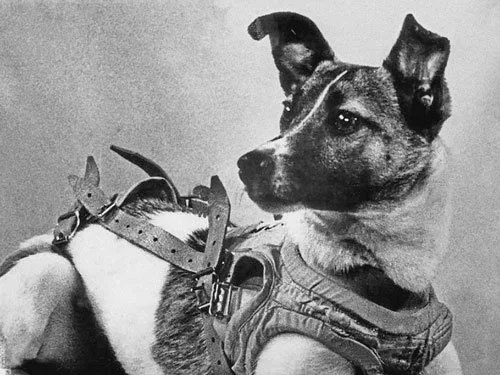
The flight harness was fitted weeks ahead of the launch, and Laika was chosen partly because she let them put it on her without protest. Public domain via Wikimedia Commons.
Laika sat still. In a box that got smaller every week, in a centrifuge that shook her hard enough to triple her pulse, in a chamber piped with the recorded roar of a rocket engine, the small stray sat still and did not complain. Two other dogs were doing the same tests beside her. She was better at it than they were, and in the autumn of 1957 that turned out to be a fatal thing to be good at.
The Test She Passed
The Soviet space program did not find Laika. It audited her.
Dogs were caught in the streets around the Institute of Aviation Medicine in Moscow, the military body that ran the animal side of the space effort. Strays were preferred to laboratory stock on the reasoning that a dog which had already survived a Moscow winter would take badly built hardware in its stride. They had to be small: no more than about six kilograms, no taller than thirty-five centimeters at the shoulder, because the pressurized cabin being welded together for them was eighty centimeters long. And they had to be female, for a reason of pure plumbing. A dog that does not lift a leg is much easier to fit with a waste-collection harness.
Laika met the specification. Accounts put her at five or six kilograms and around three years old. But size was only the entry requirement.
The test was patience. Candidates were shut in progressively smaller cages for stretches of up to twenty days. They were spun in centrifuges, strapped into the sanitation gear they hated, and played recordings of launch noise. The confinement made them restless, stopped them urinating, and ran their condition down. What the scientists were watching for was which dog objected least.
Laika objected least. Vladimir Yazdovsky, who ran the training, described her as quiet and charming, which is the only surviving assessment of her character and also the reason she was chosen. There was one dog in the group with a better record.
The Backup With Puppies
Albina had already been up twice on suborbital rockets and come down alive, which made her the most experienced animal in the building. On paper the seat was hers. She had also recently had a litter.
Yazdovsky would not send her. The reason he gave was not a scientific one. He thought it too cruel to take a mother away from her puppies for a flight nobody was coming back from. Albina was made the backup. The third dog, Mushka, stayed on the ground as a control, testing the life-support hardware while the other two were assessed.
So, the seat went to the dog with no puppies and no objections. This is the part usually left out, and it is the part that decides everything. Laika was not chosen because she was expendable, or because nobody cared which dog it was. She was chosen from three animals the same men had spent weeks handling, on the only criteria they had: temperament, biology, and the accident of who had recently given birth. Ten days before launch the decision was made. Then Yazdovsky took her home.
Home to His Children
He put her in his car, drove her to his flat, and let her spend an afternoon playing with his children. He wrote about it afterward. He had wanted, he said, to do something nice for her, because he knew how little time she had.
It is worth being precise about what that scene means. Everyone on the program knew Sputnik 2 had no way of coming down. The technology to bring a spacecraft back through the atmosphere did not exist yet, and nobody inside the building pretended otherwise. The people training Laika were not deceived about the ending. They were preparing a dog they liked for a death they had scheduled, and one of them decided the last useful thing he could give her was an afternoon with his kids.
Then they took her out to Tyuratam, the launch site on the Kazakh steppe that the world would later be told was called Baikonur.
On 31 October, three days before liftoff, Laika was sealed into the capsule. Late autumn on the steppe is severely cold and the cabin had no heating of its own on the pad, so the ground crew ran a hose from a heater into her container and left it there. Two assistants were assigned to watch her around the clock. On the morning of the launch her fur was sponged with a weak alcohol solution and combed, and iodine was painted onto the places where the sensors would go. One of the technicians who closed the hatch remembered that they kissed her nose and wished her bon voyage, knowing she would not survive.
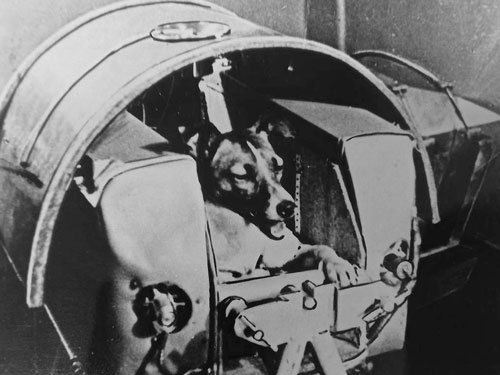
Laika in the cylinder she was sealed into on 31 October, three days before launch, warmed by a hose run from a heater on the freezing pad. Public domain via Wikimedia Commons.
Four Orbits, or Nine
Sputnik 2 lifted off at about half past five in the morning, Moscow time, on 3 November 1957. Laika's heart rate went from 103 beats a minute to 240. Her breathing tripled. Then, in orbit, the numbers began to come down again, more slowly than they had after the centrifuge runs on the ground, but coming down. She was settling.
The spacecraft was not. The nose cone separated as designed, but part of the core stage failed to come away, and a section of thermal insulation tore loose. Sputnik 2 could not shed heat. The temperature inside Laika's compartment climbed past forty degrees Celsius, a hundred and four Fahrenheit, and kept climbing.
Accounts of what happened next differ, and the difference is worth stating rather than smoothing over. The telemetry released in 2002 by Dimitri Malashenkov, who worked on the mission, puts her death five to seven hours after launch, on the fourth orbit. Adilya Kotovskaya, the biologist who had run much of her training and said goodbye to her at the hatch, said in 2017 that Laika completed nine. Both agree she died of heat within hours of leaving the ground, in a padded cylinder eighty centimeters long, and that the satellite carried on without her. It stayed up another five months and 2,570 orbits before it came down and burned on 14 April 1958.
The Lie That Held
Radio Moscow reported her comfortable and eating. For years the official account had her alive in orbit for about a week and then dying humanely, in some versions by a planned injection, in others when her oxygen ran out. Newspapers around the world printed it. It was not corrected until 2002, when Malashenkov presented the flight data at a space congress in Houston. Forty-five years is a long time to keep a dog alive on paper.
The protest did not wait for the truth. The RSPCA was fielding complaints before Radio Moscow had finished announcing the launch, and in Britain the National Canine Defence League asked dog owners to observe a minute's silence on every day Laika remained in space. This is sometimes described as the moment animal welfare entered public argument, which gets it backwards. The League had been going since 1891 and the RSPCA since 1824. The response came that fast because the machinery for it was already in place. The silences went on for as long as the Soviets said she was alive. She had been dead since the first day.
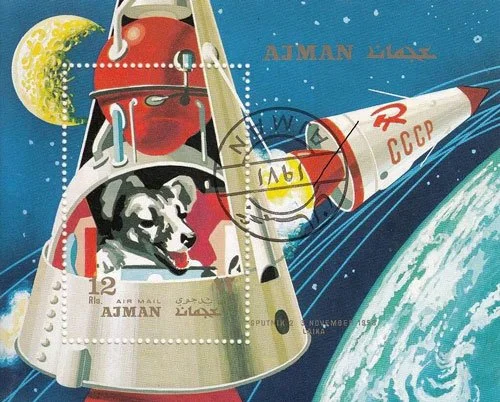
Ajman, a Gulf emirate with no space program of its own, issued this Laika sheet in 1971 — thirty-one years before the Soviet account of her death was corrected. Public domain via Wikimedia Commons.
The Hand in Moscow
Laika was commemorated early, in the way states commemorate things. Her likeness went onto the Monument to the Conquerors of Space when it was unveiled in Moscow in 1964, worked into the bronze relief at the base among the cosmonauts and engineers. She appears again in a corner of the plaque to fallen cosmonauts installed at Star City in November 1997. In both she is a supporting figure in somebody else's memorial.
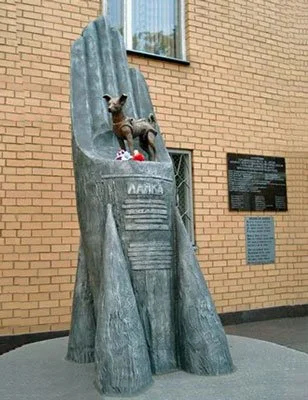
The 2008 memorial stands on the ground where Laika was trained; the rocket opens near the top into a cupped hand, and she stands in the palm. Public domain via Wikimedia Commons.
It took until 2008 for her to get one of her own. On 11 April that year, a two-meter monument was unveiled outside the Institute of Military Medicine in Moscow, on the ground where she had been trained. It was made by the sculptor Pavel Medvedev to a design by the artist Sergey Pakhomov, and it is not a rocket with a dog on top of it. It is a rocket that opens, near the top, into a cupped human hand. Laika stands in the palm at life size, ears up. People leave flowers on it.
Oleg Gazenko, one of the scientists on the program, said in 1998 that the more time passed, the sorrier he was about it. What they had learned, he said, did not justify killing the dog.
The monument gets the mechanics right. The hand is not launching her. It is holding her out, palm up, which is close to what actually happened. Laika was not thrown away by people who did not care. She was handed over by people who had spent weeks establishing, very carefully, exactly how much she would put up with.
Did You Know?
Strelka's daughter Pushinka was given to the Kennedys. Strelka orbited three years after Laika and came home alive; in 1961 Khrushchev sent one of her puppies to Caroline Kennedy, where it later had a litter the White House staff called the pupniks.
A patch of Martian soil carries her name. On 9 March 2005 the Opportunity rover team informally named a spot near Vostok Crater in Meridiani Planum "Laika," and photographed it with the microscopic imager on the mission's 400th Martian day.
Cosmo the Spacedog is not Laika, but exists because of her. Marvel writers Dan Abnett and Andy Lanning created the telepathic Soviet space dog in 2008 as a reference to her; the films later switched the character from male to female as a further nod.
American reporters called her Muttnik. Her handlers had already worked through several names before Laika reached the newspapers, among them Limonchik — Little Lemon.
Her face was used to sell cigarettes. Soviet manufacturers put Laika on packs of cigarettes and matchboxes in the years after the flight, and collectors still trade the packaging at auction.
Meet More Dogs Who Shaped History…
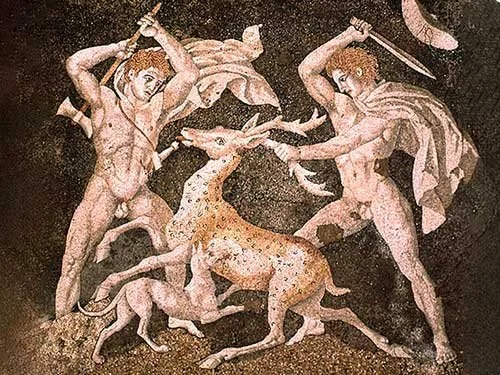
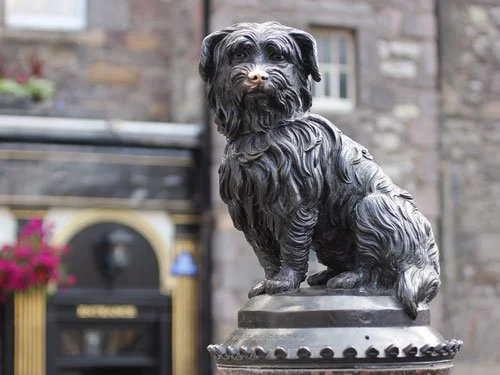
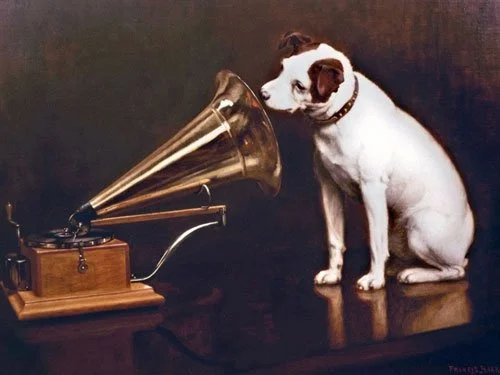
The official version of Laika's death lasted for forty-five years. Other dogs' official stories were also revised: a terrier whose painting was altered before the company bought it, a graveyard celebrity who may have been two dogs, and a hound Alexander the Great may never have owned.