Dulux: How a Sheepdog Became a Household Name
Since 1961, the Dulux dog—an Old English Sheepdog with the air of a dependable sofa—has wandered through British adverts and into the language itself. From an accidental on-set cameo to show-ring royalty, he became paint’s fluffiest guarantee.
An Icon in Britain’s Living Rooms
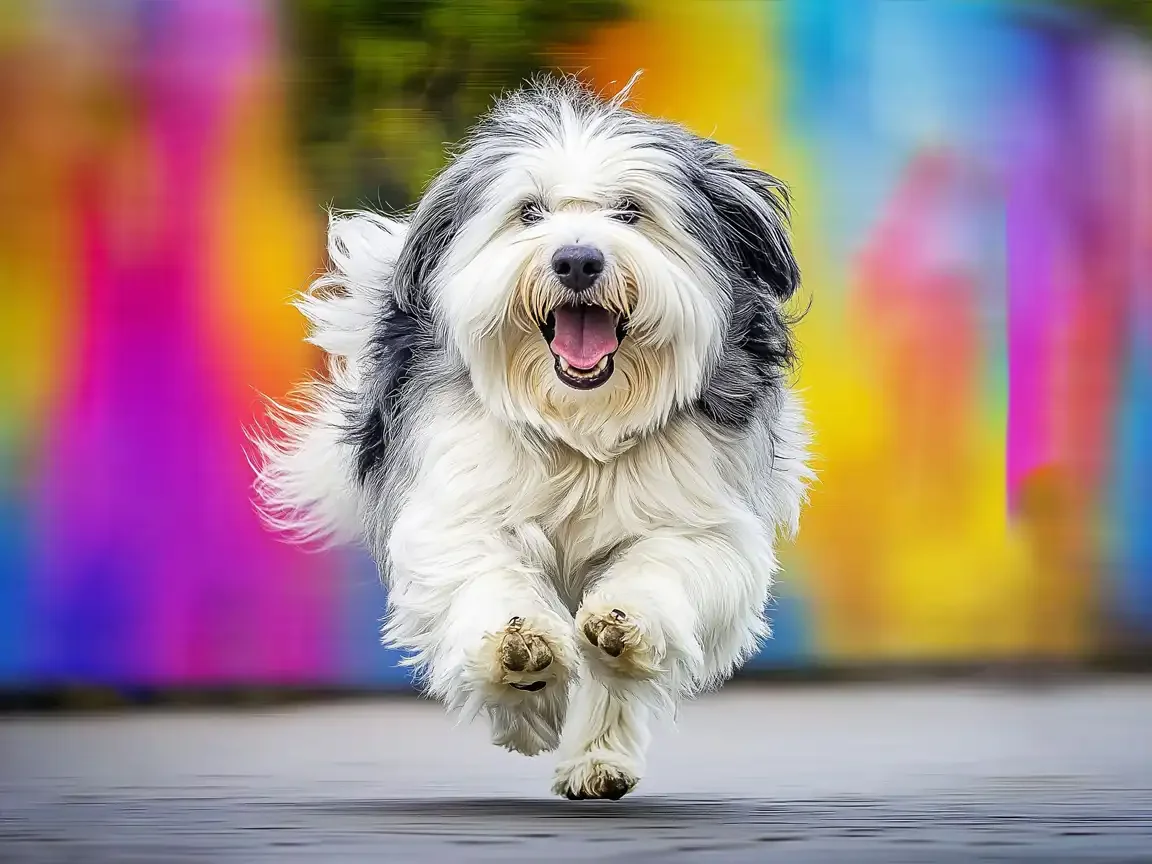
For more than sixty years, a large, shaggy Old English Sheepdog has padded calmly through Britain’s living rooms — not in person, but on screen — becoming as familiar as the sofa, the decorations and the freshly painted walls The Dulux dog did not bark slogans or demand attention. He simply appeared: steady, unhurried, reassuring. Over time, that presence became something larger than advertising.
What began in 1961 as a fortunate interruption on a television set evolved into one of the most enduring brand associations in British commercial history. The sheepdog was not merely a mascot; he became shorthand for reliability, warmth and domestic renewal. So complete was the transformation that many people came to refer to the breed itself simply as the “Dulux dog”, and still do.
In an industry defined by reinvention, few symbols endure for decades. Yet through changing fashions, evolving media and shifting tastes, the Dulux dog has remained constant — a familiar character against the backdrop of modern Britain.
This is the story of those dogs: their origins, their grooming rituals, their film-set training, and how a sheepdog from rural Britain became the custodian of domestic aspiration.
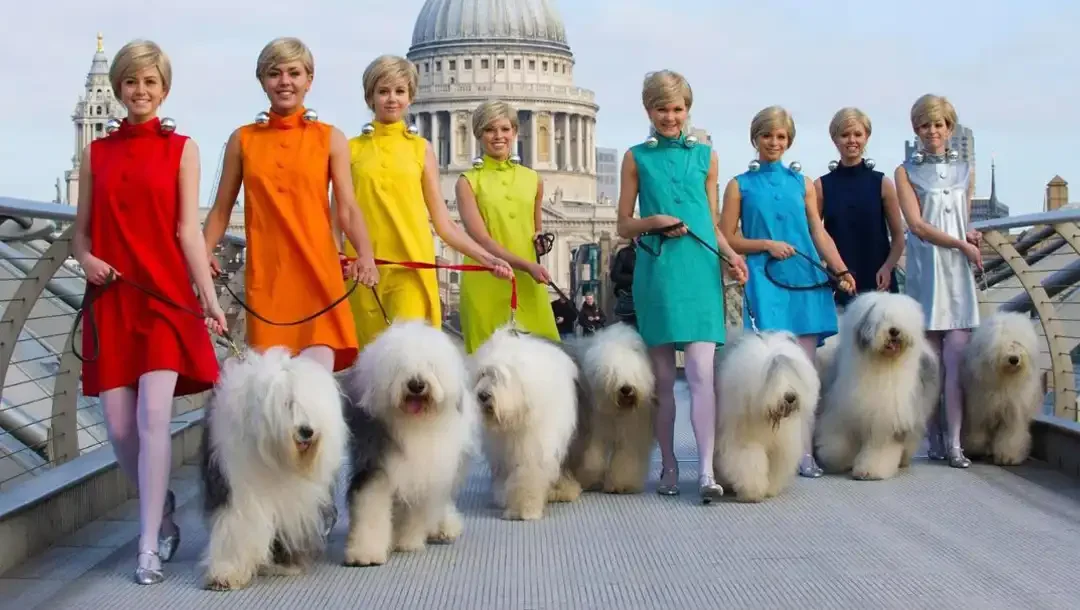
Dulux was named number 8 in the list of 500 top superbrands for 2012. They celebrated with eight models, each accessorized with a Dulux dog, and took to the streets of London.
The Breed Behind the Brand: Origins of the Old English Sheepdog
Long before television studios and whitening shampoos, the Old English Sheepdog was a working animal of the English countryside. Despite its name, the breed is not as ancient as folklore suggests. Developed in the West Country during the eighteenth and nineteenth centuries, these dogs were drovers, tasked with moving cattle and sheep to market.
Their distinctive coat served practical purposes. The thick, double layer protected against cold weather and bites from livestock. The hair that falls across the eyes, often romanticized today, shielded against wind and rain. Beneath the fluff lies a muscular, agile worker with a surprisingly athletic gait.
The breed was formally recognized by the Kennel Club in the late nineteenth century and quickly became a show favorite. Its theatrical appearance — all fringe and bounce — made it a natural spectacle.
When Dash first appeared in 1961, Dulux inadvertently tapped into this dual symbolism: dependable rural graft wrapped in an unforgettable character. Reliability and warmth, with a hint of British eccentricity.
1961: The Accidental Film Debut
To understand how a working sheepdog became a household name, it is necessary to return to the moment it all began: a film set in 1961, and a dog who refused to stay out of shot.
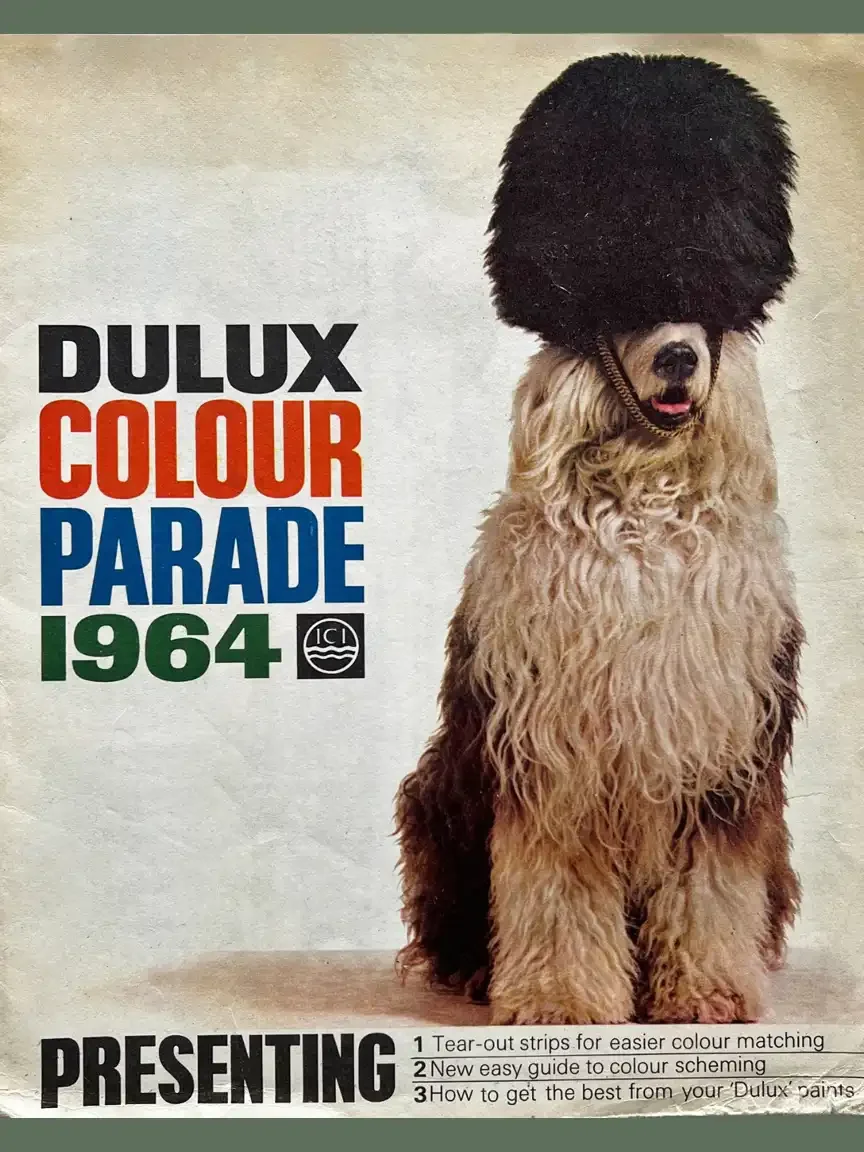
Dulux advert 1964 featuring Dash.
The first Dulux dog was not selected through a competition or focus group. He belonged to the advertisement’s director. During filming, Dash repeatedly interrupted scenes, drawn to the children on set. Instead of reshooting, the production team recognized that the dog added warmth and charm to what might otherwise have been a functional paint advert.
Dash remained in the campaign for the better part of the 1960s. His presence coincided with a dramatic expansion of the brand’s market share, rising from approximately 3 per cent to 33 per cent during the campaign’s early success. It would be simplistic to attribute this entirely to a dog, yet few deny his impact.
The Search for a Star
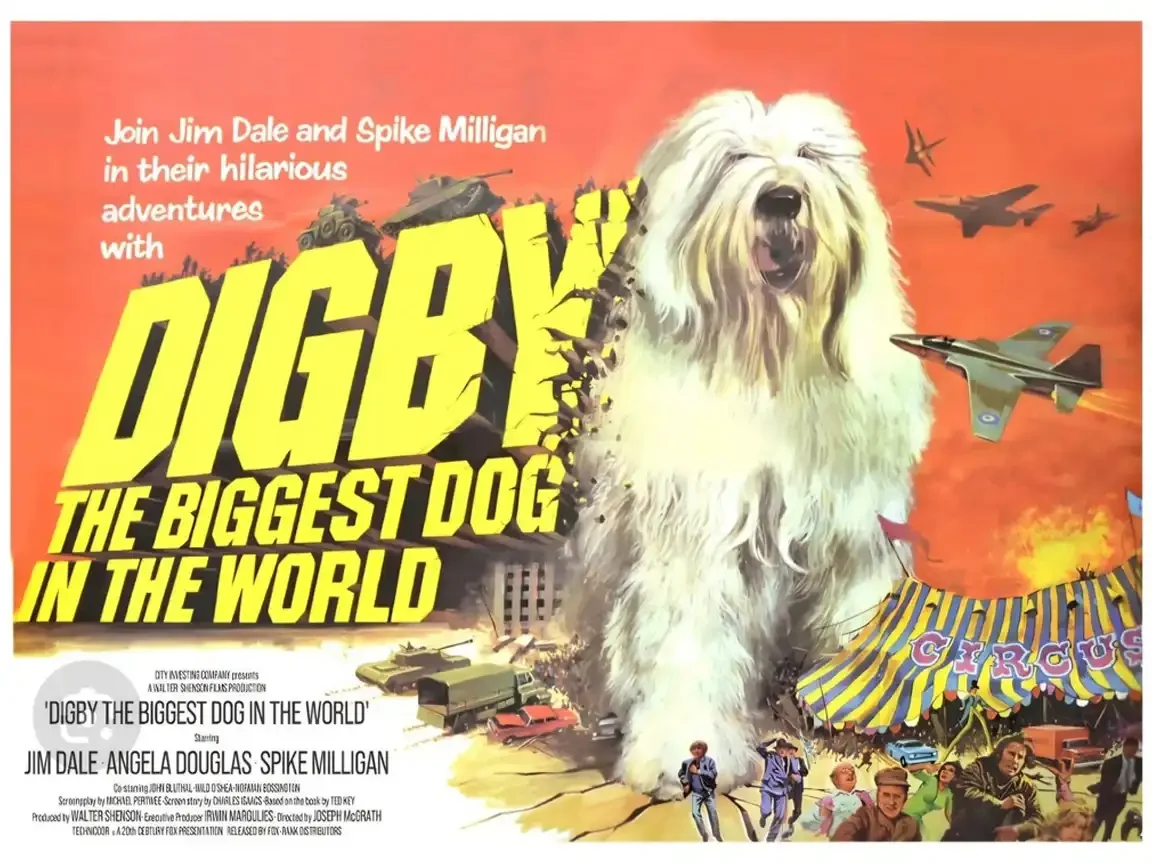
Digby, the Biggest Dog in the World film poster 1973
When Dash retired, Dulux did not abandon the concept. Instead, it professionalized it. A nationwide search reportedly drew 450 entries. From this canine casting call emerged one of the most famous Dulux dogs of all: Fernville Lord Digby.
Digby would go on to star not only in Dulux campaigns but also in the 1973 family film Digby, the Biggest Dog in the World.
For a paint mascot to transition into cinematic celebrity remains unusual. Digby embodied the brand’s genial confidence at a time when television advertising was becoming more ambitious.
After Digby, the succession became more formalized. Every Dulux dog from the second onward has been a champion show dog, many with “Best in Show” titles. The mascot was no longer a happy accident. It was an elite appointment.
Notable Dulux Dogs: 1961 to Present
There have been 14 different Dulux dogs since 1961 and many of them had regal-sounding names. Among them were:
Dash (Shepton Daphnis Horsa) – the original Dulux dog from 1961 and held the role for eight years.
Digby (Fernville Lord Digby) – the most famous successor in the 1970s. His starred in the 1973 British comedy film Digby, the Biggest Dog in the World. Barbara Woodhouse, the famous British dog trainer, was employed to train Digby and his stunt doubles, who were used whenever specific tricks or actions needed to be filmed.
King Hotspur of Amblegait –appeared in over fifty television programs as well as his public appearances from 1974 to 1979.
Thomas – selected after defeating 150 competitors in a televised Search for a Star in 1996.
Pickle (Dreamweaver Lorien's Lament) – starred as the brand mascot in both television and print adverts.
Duke - used in advertising campaigns during the early 1980s, including a famous gypsy costume campaign.
Dillon – launched a search for a new star in the early 1990s.
Mash – a familiar face during the Easycare era and held the position between 1995–2002.
Willow - acted as the mascot in the early 2000s and featured in the Dulux Easycare campaign.
Spud –tenure ran from 2007 until 2014, making him one of the longest-serving dogs in the role. He famously returned for a special 50th-anniversary campaign in 2011 after the brand's original TV ads paused in 2003.
Madison (Fernflower Madison Avenue) – an 8-year-old from Lincolnshire became the Dulux dog in 2011, marking a return for the breed after a 15-year absence. Known for skateboarding in the Simply Refresh campaign.
Olivia – daughter of Madison and current figurehead, whose 2023 litter of seven puppies was greeted as headline news.
How the Dulux Dogs Get Camera-Ready
Preparing a Dulux dog for a high-profile commercial involves a rigorous regime that blends professional show-dog grooming with specialized film-set training. Because these dogs are the face of a global brand, their appearance and behavior must be flawless.
Hair and Makeup: The Four-Hour Rule
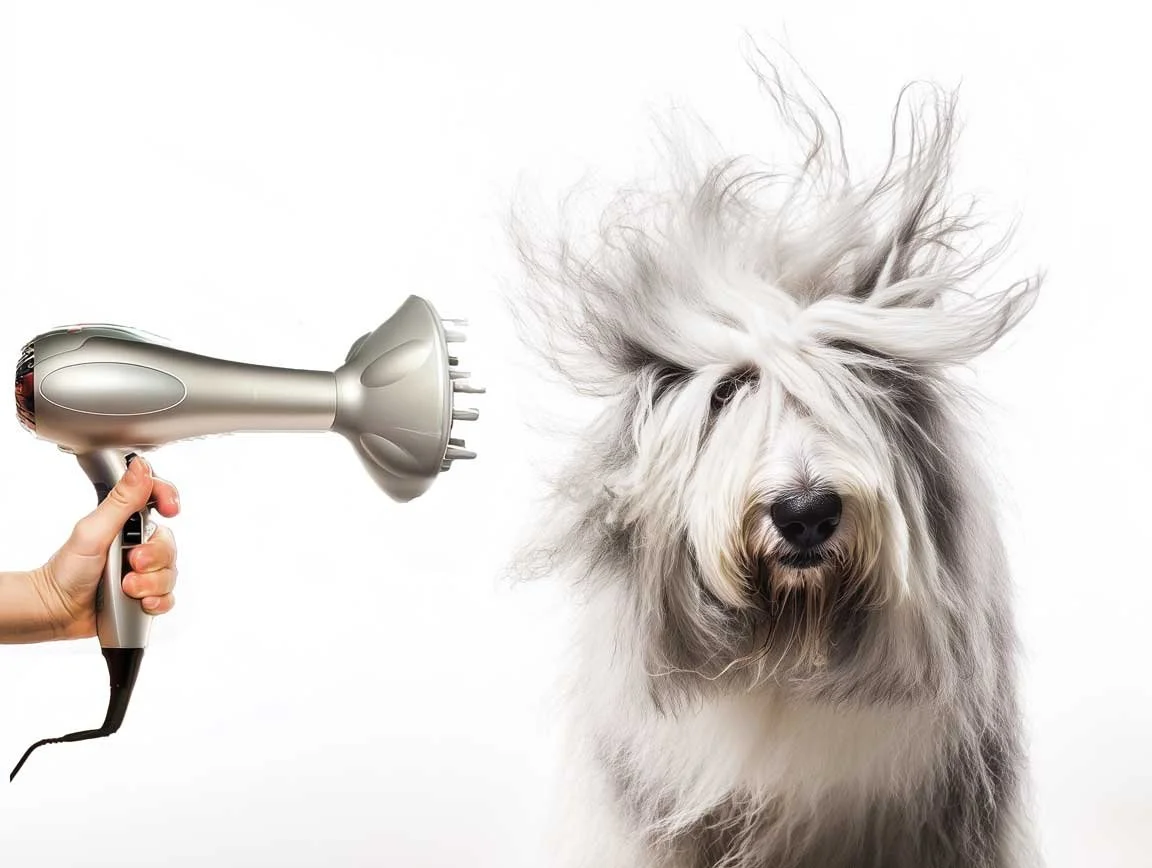
For an Old English Sheepdog, preparation is an art form. Before any major shoot the dog undergoes roughly four hours of grooming. This includes:
Deep brushing to the skin to prevent matting.
Professional bathing with specialist whitening shampoos.
High-velocity blow-drying to achieve maximum volume.
Subtle trimming or pinning of fringe to reveal the eyes.
Under studio lights, even minor tangles show. Groomers remain on set with slicker brushes and wide-tooth combs for constant touch-ups. Saliva marks around the muzzle are cleaned between takes.
It is “makeup” in the literal sense — not cosmetic alteration but enhancement of what is already there. The Dulux dog must look immaculate yet natural, fluffy yet controlled.
Training the Canine Actors
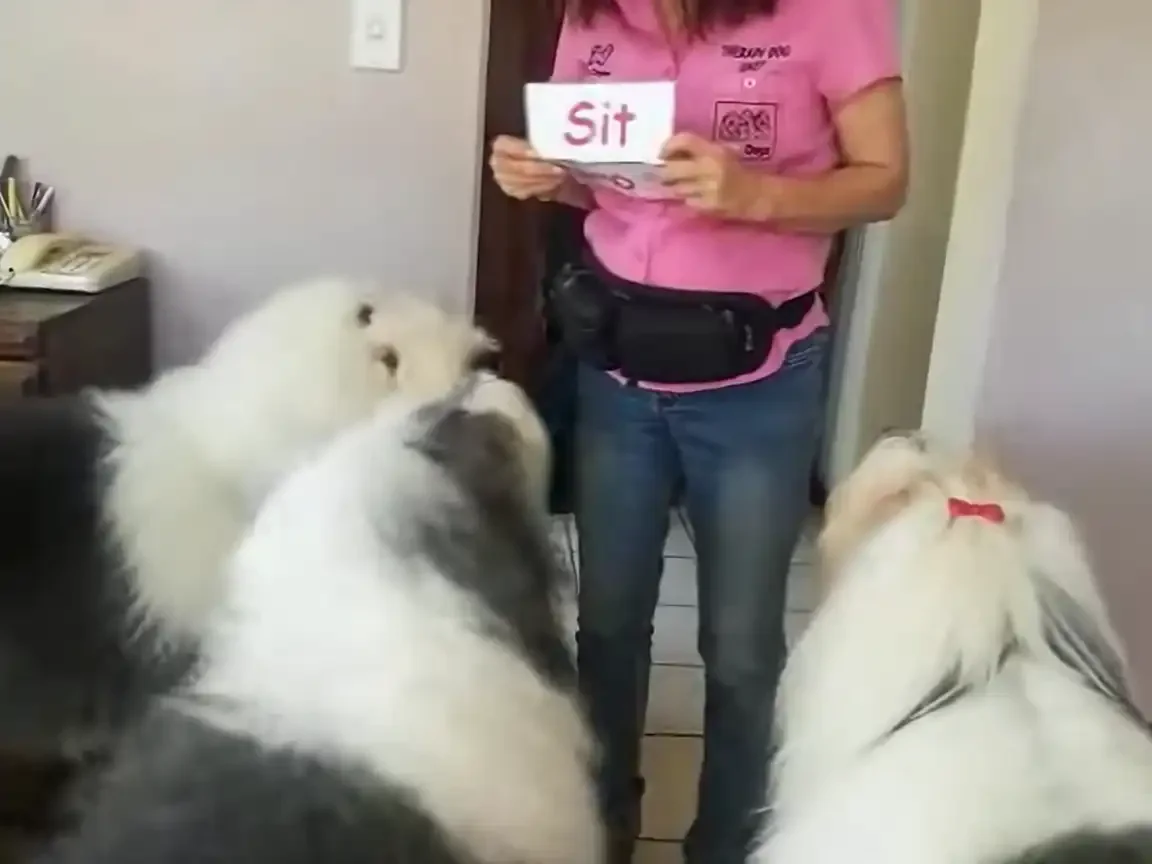
SIT still from A tribute to Oscar, training video. Oscar was a Dulux dog in South Africa.
Behind the serene expression lies disciplined training. Dulux dogs are schooled to “hit their mark” — stopping precisely on a discreet X or prop. Because audio is recorded on set, trainers use silent hand signals. The dog must maintain eye contact with an actor while receiving instructions from off camera.
Recent campaigns have demanded more complex tasks. Madison famously rode a custom skateboard. No stunt double. No digital trickery. Just patient, reward-based training.
Modern handlers rely on positive reinforcement and clicker methods. The dogs must associate filming with play and reward. Stress is carefully monitored; Old English Sheepdogs, with their dense coats, are susceptible to overheating, so sets are temperature controlled.
The Diva Lifestyle
To keep the dogs stress-free and camera-ready, they are treated with extreme care. The term “doggy diva” is often used affectionately within the production world. Official Dulux dogs travel in air-conditioned vehicles to protect their coats. Their handlers monitor diet, hydration and rest meticulously.
Public appearances, such as store openings, charity events, meet-and-greets, form part of their duties. In some eras, understudies have been maintained in case of fatigue or scheduling conflicts.
They are not pets dressed up for a cameo. They are brand ambassadors.
International Reach
Although most strongly associated with the United Kingdom, the Dulux dog has appeared in Australia, South Africa and other markets. In Australia, partnerships with the Old English Sheepdog Club of Victoria help maintain welfare standards and breed promotion.
In the United States, ownership changes in 2012 led to variations in branding, yet the Sheepdog silhouette remains internationally recognizable.
When a Mascot Becomes a Breed
Few brands manage to fuse product and animal so completely that the breed itself acquires a nickname. Dulux dog has become a colloquial synonym for the Old English Sheepdog.
This association has brought both visibility and responsibility. In 2020, when the breed appeared on the Kennel Club’s Vulnerable Native Breeds list, Dulux supported rescue and welfare initiatives. A mascot carries influence.
The campaign’s emotional resonance lies in symbolism. Paint is not merely decorative; it is domestic renewal. The Sheepdog embodies steadiness, trust and warmth. In a nation wary of corporate abstraction, the dog provides a reassuring presence.
Six Decades of Paint and Paws
Advertising trends shift. Jingles fade. Logos evolve. Yet the Dulux dog persists.
From the grainy optimism of 1960s television to the crisp high-definition landscapes of contemporary campaigns, the Sheepdog has remained visually constant while the world around it changes.
That continuity builds trust. A brand that keeps its mascot for sixty years suggests permanence.
In the end, the Dulux dog’s success lies in restraint. He does not bark slogans or perform slapstick routines. He pads quietly across freshly painted rooms, embodying the promise that the work has been done well.
Through Dash’s playful interruption, Digby’s cinematic turn, Madison’s skateboard and Olivia’s recent motherhood, the Sheepdog has remained a steady presence in Britain’s domestic imagination.
A mascot breed, when handled with care, can transcend commerce. It can shape perception, influence breed recognition, and become a cultural touchstone. The Dulux dog is no longer merely an advert. It is a shared memory — fluffy, faithful and faintly paint-scented.

Dulux® product banner.
Did you know?
If the Dulux dog has become a household name, the story behind it can almost be told in figures — each number marking a moment in advertising history.
Digby required 6 stunt doubles for more demanding scenes in the movie.
Five champion Dulux dog’s have won “Best in Show” titles.
Dulux ranked No.51 in Channel 4’s 100 Greatest TV Adverts, a reminder that some commercials outlive the products they promote.
There have been other famous dog breeds used in advertising, such as the Labrador Retriever known as the Andrex Puppy in the UK, the Basset Hound historically used by Flying A service stations as Axelrod and the footwear brand Hush Puppies, and the Bull Terrier known as Bullseye has been the official Target mascot since 1999.
Breed: Old English Sheepdog | Country of origin: Great Britain | First use: Driving cattle and sheep to market| Origins: 18th century