Dog Sniffed at Lesion: The Note That Started a Science
A junior dermatologist reviewing twenty years of melanoma files found a single line nobody had followed up. What he did next launched a field of medicine — and left him watching it from the outside.
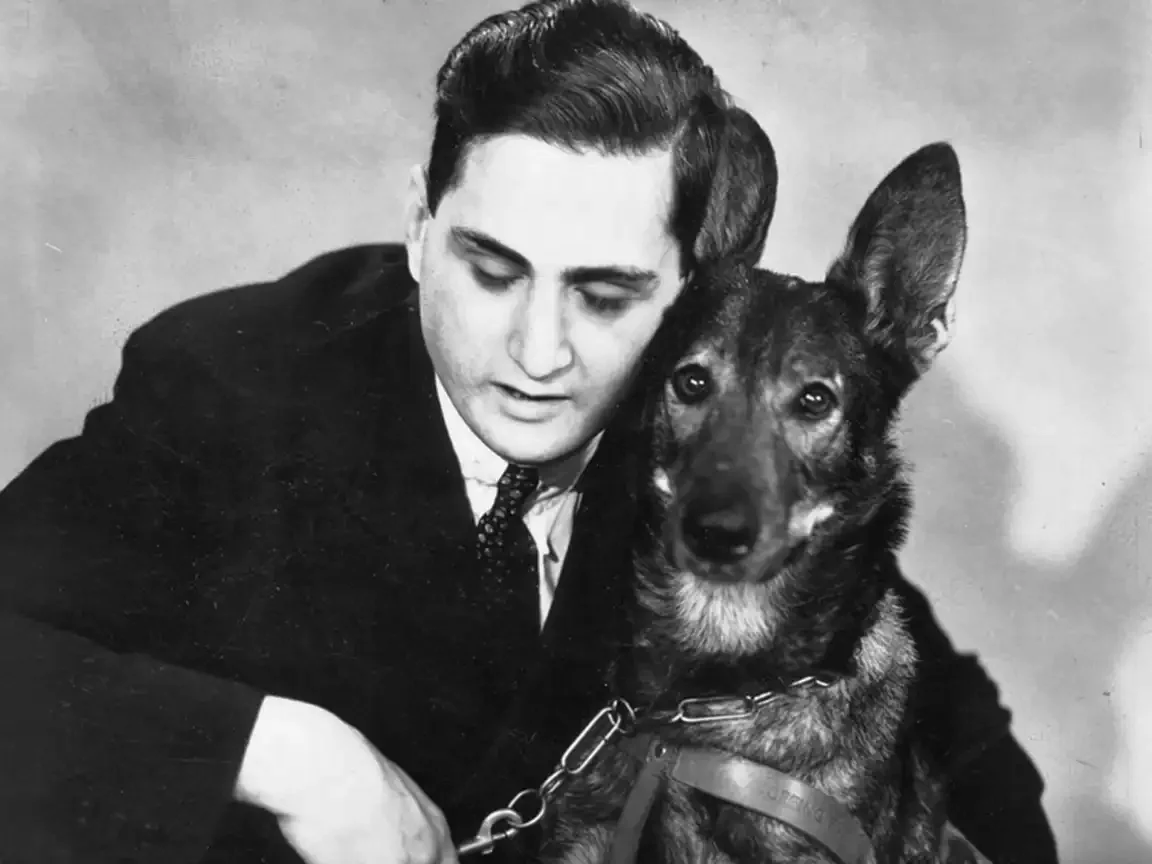
For months the dog did this, ignoring every other mole on her body. Neither she nor her dog was ever named in the medical literature. AI-generated illustration.
The entry was a single line in a patient’s file, and the dermatologist who found it has recalled it the same way ever since: dog sniffed at lesion. It was the late 1980s at King’s College Hospital in London, and he had been set an unglamorous task — a review of the case notes and histology of every melanoma patient of the previous twenty years.
One Line in a File
Hywel Williams was working through the notes at the suggestion of his consultant, Dr. du Vivier. The task was routine: melanoma diagnoses over twenty years, notes and slides, patterns and outcomes. Somewhere in that stack was a woman whose file recorded that her dog had taken an interest in her skin, and then recorded nothing else about it.
Nobody had asked. In the late 1980s there was no reason to. The idea that a dog might smell a tumor was not a marginal hypothesis in dermatology; it was not a hypothesis at all. There was no literature to check it against, no framework that would make the observation mean anything, and no obvious way to tell a meaningful animal behavior from a coincidence involving a household pet. The line had been written down by someone conscientious enough to record what the patient said, and then left alone by everyone who read it afterward.
Williams picked up the phone.
The Dog Who Tried to Bite the Melanoma Off
The woman was forty-four. She had a mole on her left thigh that did not itch, did not hurt, and did not worry her. Her dog, a female Border Collie and Doberman cross, had decided otherwise.
For months the dog had sniffed at that one mole. Not at the woman’s other moles, of which there were several; at that mole, for several minutes at a stretch, day after day. She did it through the fabric of the woman’s trousers, which meant she was not responding to the sight of anything. The behavior escalated. One day, with the woman in shorts, the dog tried to bite the lesion off her leg.
That was what sent her to the clinic. The excision came back as a superficial spreading malignant melanoma, still thin. Thin melanoma is survivable; thick melanoma frequently is not. Caught at that stage, her outlook was excellent.
Williams and his colleague Andres Pembroke wrote the case up in a letter to The Lancet, published on the first of April 1989 titled Sniffer Dogs In The Melanoma Clinic?. It ran to fewer than three hundred words. They described what the dog had done, noted that she had ignored the patient’s other moles, and suggested — carefully, as a hypothesis rather than a finding — that malignant tissue might give off volatile compounds imperceptible to people and obvious to dogs. Their conclusion was modest and turned out to be the most quoted sentence in the field: the dog may have saved her owner’s life by prompting her to seek treatment while the lesion was still thin and curable.
Williams expected nothing to come of it. What came of it was worldwide press coverage that has not entirely stopped since.
Neither the woman nor the dog is named anywhere in the record.
The Dog, the Doctor, and the Bandages
Four years later, in Tallahassee, a dermatologist named Armand Cognetta was worrying about a number. Roughly one melanoma in five was going undetected. Diagnosis rested on how a lesion looked, and a significant fraction of them did not look like anything.
Accounts of what prompted him vary in the retelling, but the version Cognetta gave was that he heard a radio report about police searching a lake for a body — not with divers or grapples, but with a dog standing in the bow of a boat, sniffing the air. He went to the medical literature afterward and found the letter from King’s College Hospital.
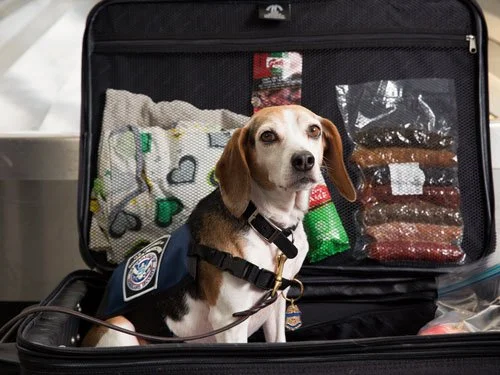
George, the bomb-detection dog retrained in a Florida living room to find melanoma, was a standard schnauzer like this one. AI-generated illustration.
He needed someone who could train a dog, so he approached Duane Pickel, formerly head of the Tallahassee police K-9 unit, who had spent decades training dogs to find land mines, narcotics, and smuggled wildlife. Pickel’s answer, by his own account, was that a dog can be trained to find whatever you want it to find. He volunteered his own: George, a standard schnauzer who had worked bomb detection and won close to four hundred obedience awards.
The training was domestic in the most literal sense. George began by finding a test tube of melanoma tissue hidden around a house. He progressed to picking the right tube from ten holes in a box. Then Kim Edwards, a nurse at Tallahassee Memorial who had joined the effort because of a family history of skin cancer, began taping bandages to her body — sometimes over a tissue sample, sometimes over nothing — and letting the schnauzer work out which was which.
The press reported George’s accuracy at ninety-nine percent and better. Those were training figures. When George was finally tested against actual patients, the sample was seven people suspected of melanoma, and he identified four, possibly five, depending on how the ambiguous case is counted. It was not a controlled study and was never published as one. In 2001, John Church and Hywel Williams sent The Lancet a second letter relaying George’s results alongside a further case: a man whose dog kept sniffing at what everyone had taken for a patch of eczema on his leg, which on excision proved to be a basal cell carcinoma.
Twelve years after the first letter, this was still the state of the evidence. A retired police handler, a family pet, a nurse in bandages, and a handful of patients.
From Anecdote to Evidence
The experiment that changed the standing of the whole idea was published in the BMJ in September 2004, from the dermatology department at Amersham Hospital. Carolyn Willis and her colleagues — among them Claire Guest and the trainer Andrew Cook, working with Hearing Dogs for Deaf People — took six dogs of various breeds with no scent-detection background and spent seven months teaching them to tell bladder cancer urine from urine that came from healthy people and from people with other bladder conditions. The distinction mattered: blood, inflammation, and infection all change how urine smells, and a dog alerting to any of those would be useless.
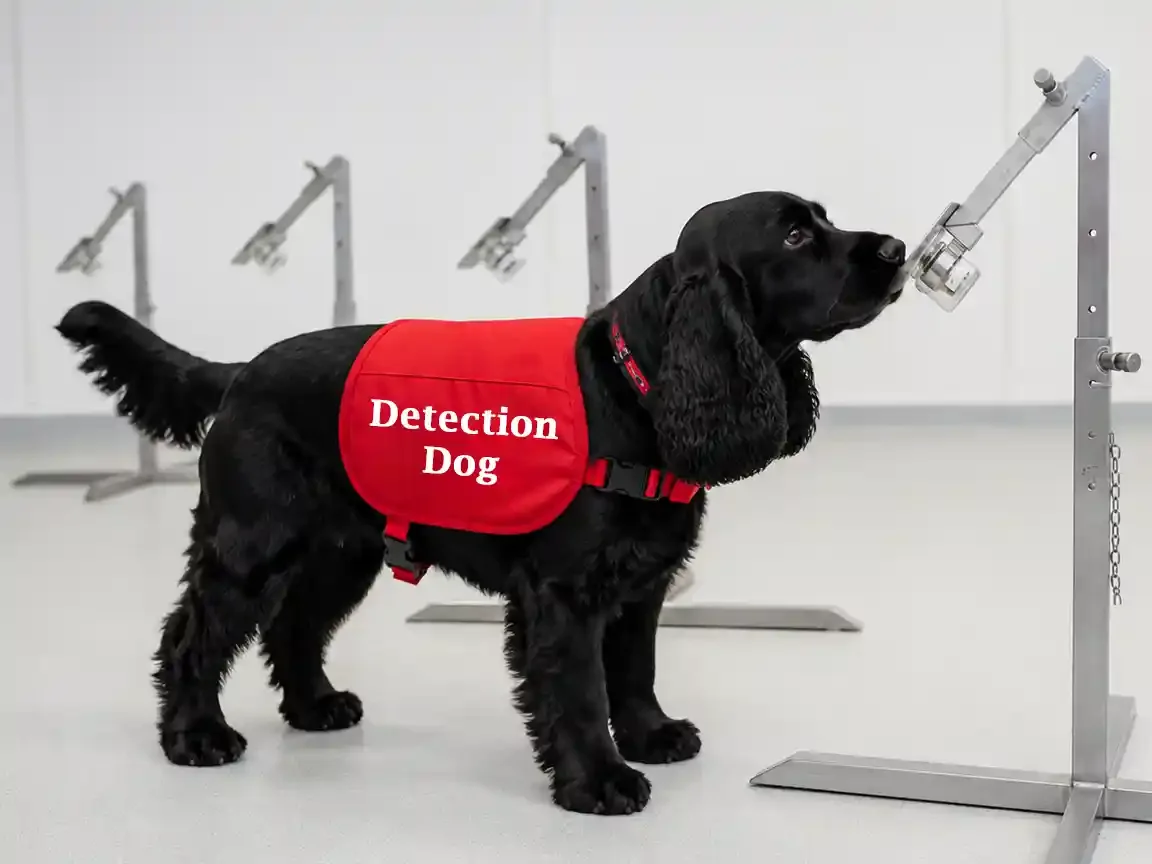
The stands hold samples and only one is cancer; the dog must ignore blood, infection and inflammation to find it. AI-generated illustration.
The test was deliberately hard. Seven dishes, one from a cancer patient, six controls, presented by someone who did not know which was which. The dog had to lie down in front of the right one.
Across fifty-four trials the dogs were correct twenty-two times. Forty-one percent, against the fourteen percent that chance alone would deliver. Two cocker spaniels, Tangle and Biddy, led the group at around fifty-six percent. Willis was straightforward about what this did and did not show: dogs were performing well above chance, and nowhere near well enough to diagnose anybody. Nobody involved imagined dogs replacing doctors.
The moment that mattered most was not in the results table. During training, all six dogs repeatedly went to the urine of one man in the control group. His laboratory tests were normal. He had no bladder cancer and no reason to be in the cancer column. One of the investigators was uneasy enough about the pattern to push for further tests, and the tests found a tumor on his right kidney.
That is the point where fifteen years of anecdote became something else. A dog insisting on a mole can always be explained away afterward. Six dogs, working blind, agreeing on a sample that the laboratory had cleared, cannot.
The Dog Who Found Her Handler’s Cancer
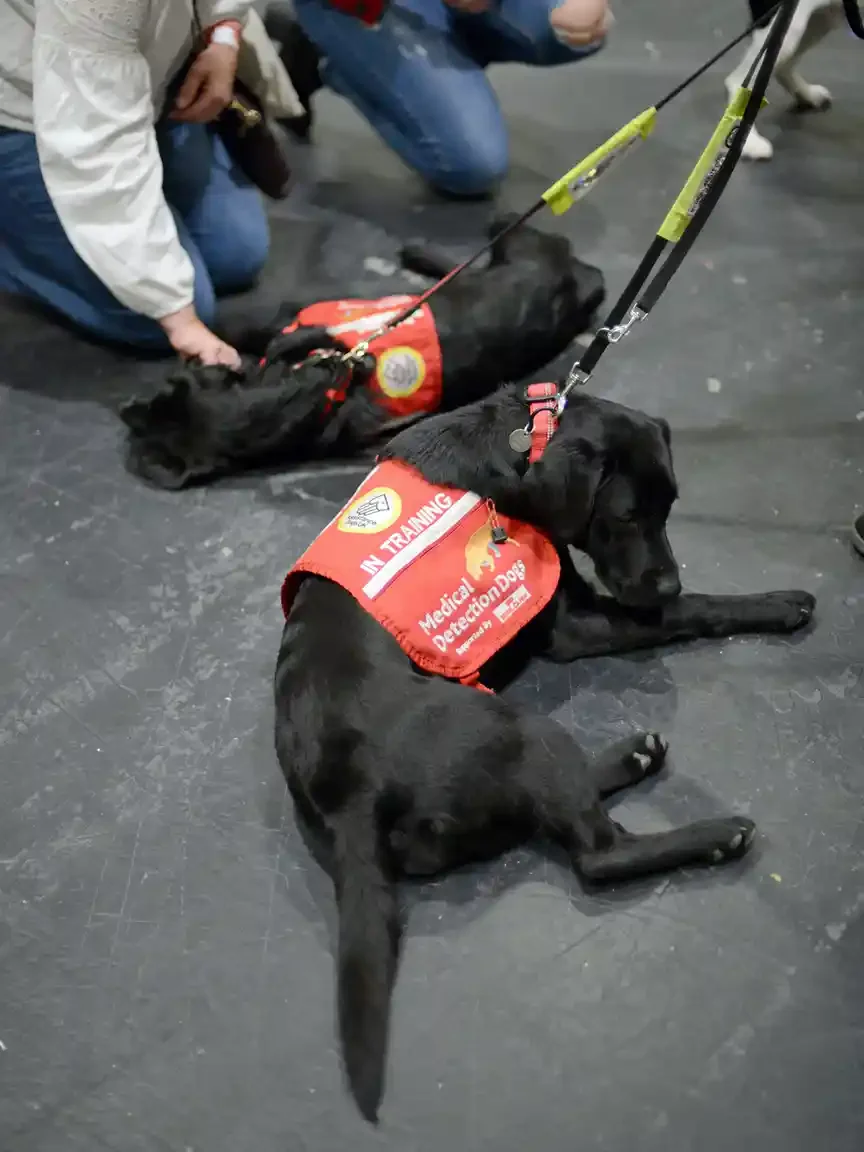
Two Labradors in training with the charity founded by researchers from the 2004 bladder cancer study. Simon King, CC BY-SA 4.0, via Wikimedia Commons.
Two of the study's authors, Claire Guest among them, founded Medical Detection Dogs in Milton Keynes in 2008 — one of the first organizations built specifically to do this work. Its dogs have since been trained on prostate cancer, colorectal cancer, and malaria, and it ran what is thought to be the United Kingdom's first bowel cancer detection trial, with dogs working through two thousand urine and stool samples.
Some years after the charity opened, one of its Labradors, Daisy, began behaving oddly toward Guest — pawing at her, pressing against her chest. Guest checked, found a lump, and was diagnosed with an aggressive breast tumor. It was caught early. She was treated, and survived.
None of this has yet produced an approved screening test. Trials continue, results vary between studies, and the compounds the dogs are responding to have still not been fully identified.
Which leaves the man who found the line. Hywel Williams became a professor of dermato-epidemiology and one of the most cited figures in his specialty. On the melanoma dog he has been plain: other case reports followed, but funding for serious work on whether dogs could discriminate the odors of particular cancers never arrived. He wrote the letter that started the field and watched other people build it.
The patient's name is not in the literature. Neither is her dog's. What survives of the animal who set all of this in motion is one line in a hospital file, written down by someone who thought it worth recording and had no idea what it was.
Did You Know?
The equipment is the reason it works. A dog’s nose carries up to 300 million olfactory receptors. A human nose carries around five million, roughly sixty times fewer.
Medical Detection Dogs also trains alert dogs for individual clients with conditions including Type 1 diabetes and severe allergies, a service that grew out of the same research program that began with bladder cancer urine.
Cancer is not the only target. In 2019, researchers reported in The Lancet Infectious Diseases that trained dogs could identify people carrying malaria parasites by odor alone — working from socks the children had worn overnight.
In October 2013, doctors in Brighton published the case of a 75-year-old man whose pet dog persistently licked an unremarkable lump behind his right ear. He had it examined because of the dog. Histology confirmed malignant melanoma, and it was removed.
An American oncologist wrote to the British Medical Journal in 2004 about a patient whose dog’s constant sniffing led her to a breast lump that proved malignant. Most of her care team had dismissed it as coincidence, because the tumor was internal rather than on the skin.