Mandrakes, Dogs, and the Screams of Legend
In Europe’s darker herb lore, the mandrake root screamed when uprooted—and the recommended earplugs came with four legs. Tied to a dog and hauled from the soil, this “solution” turns botany into ritual, and loyalty into tragedy.
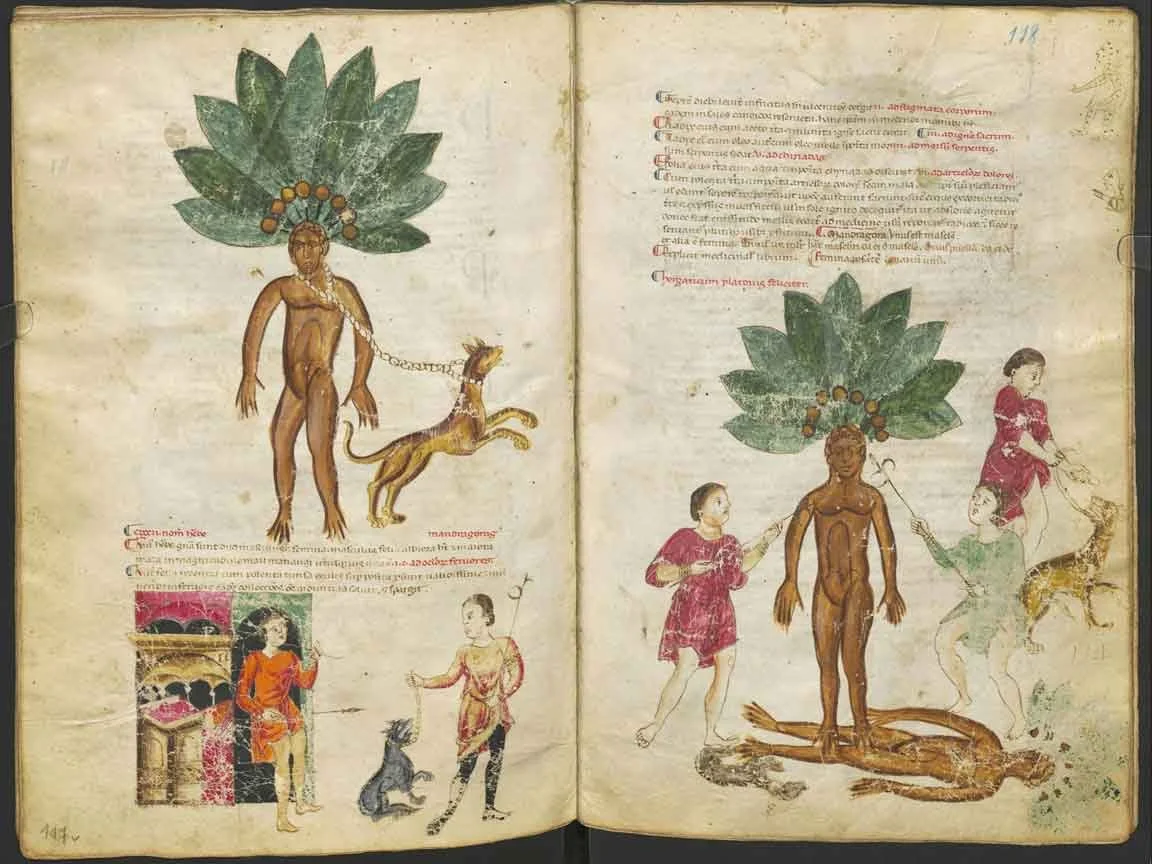
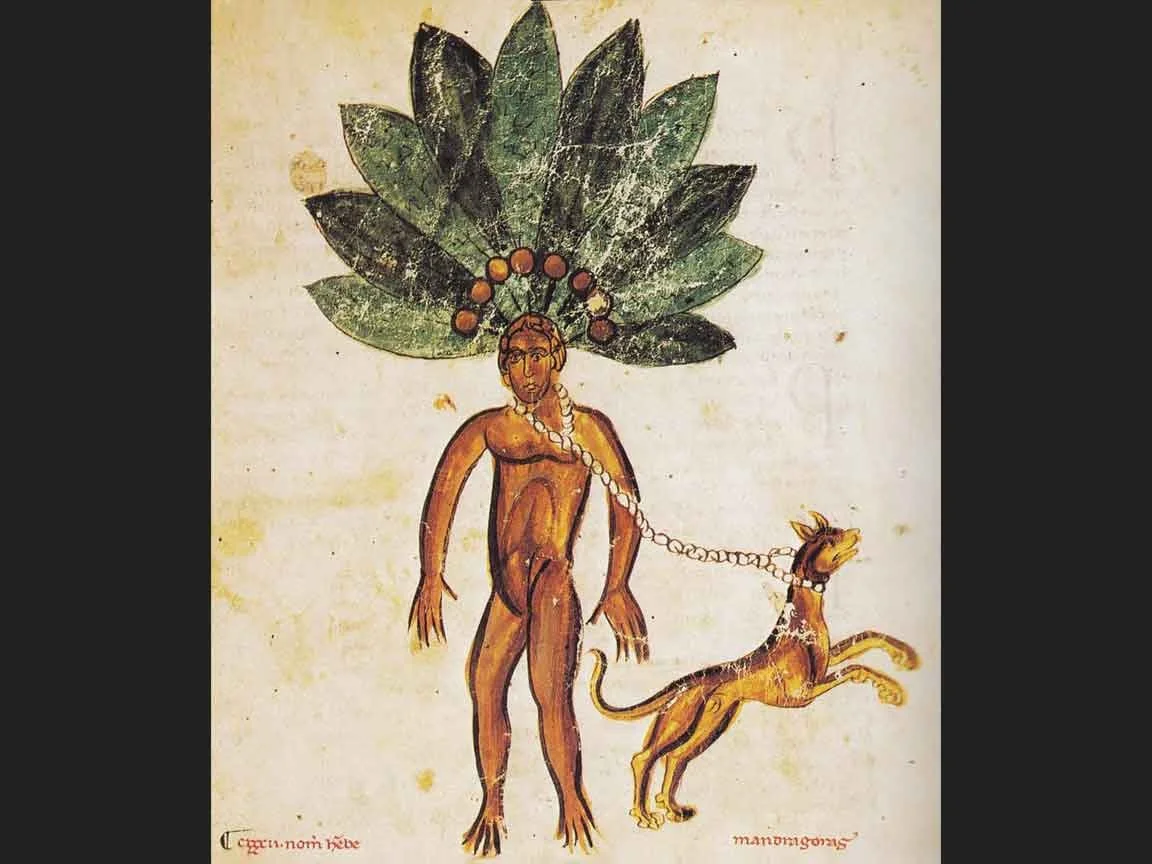
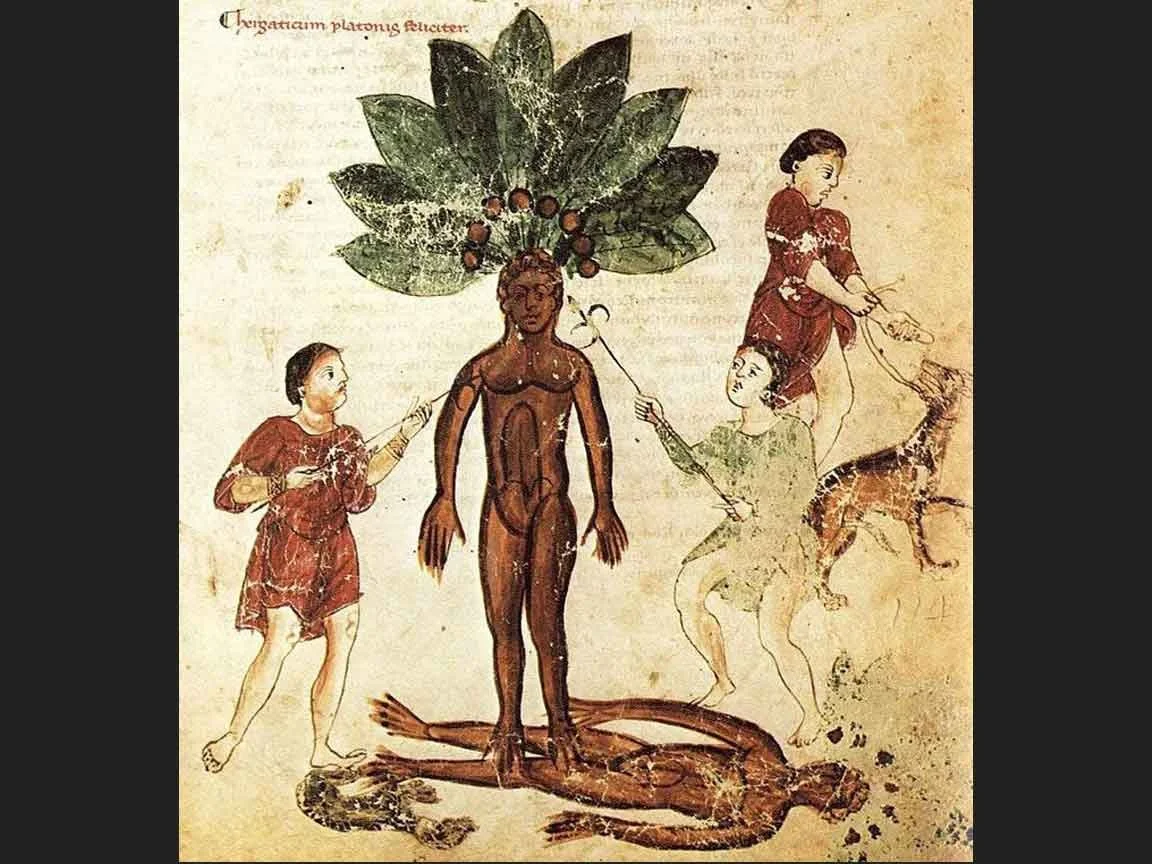
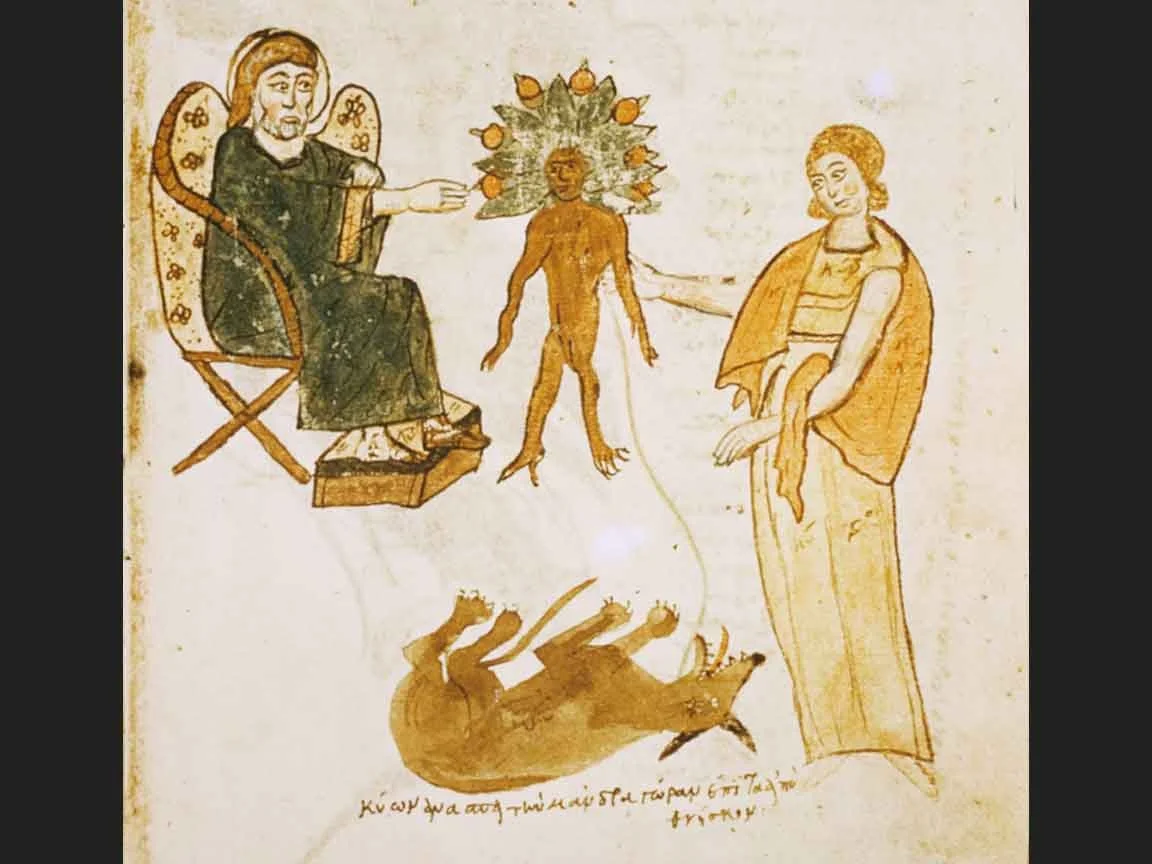
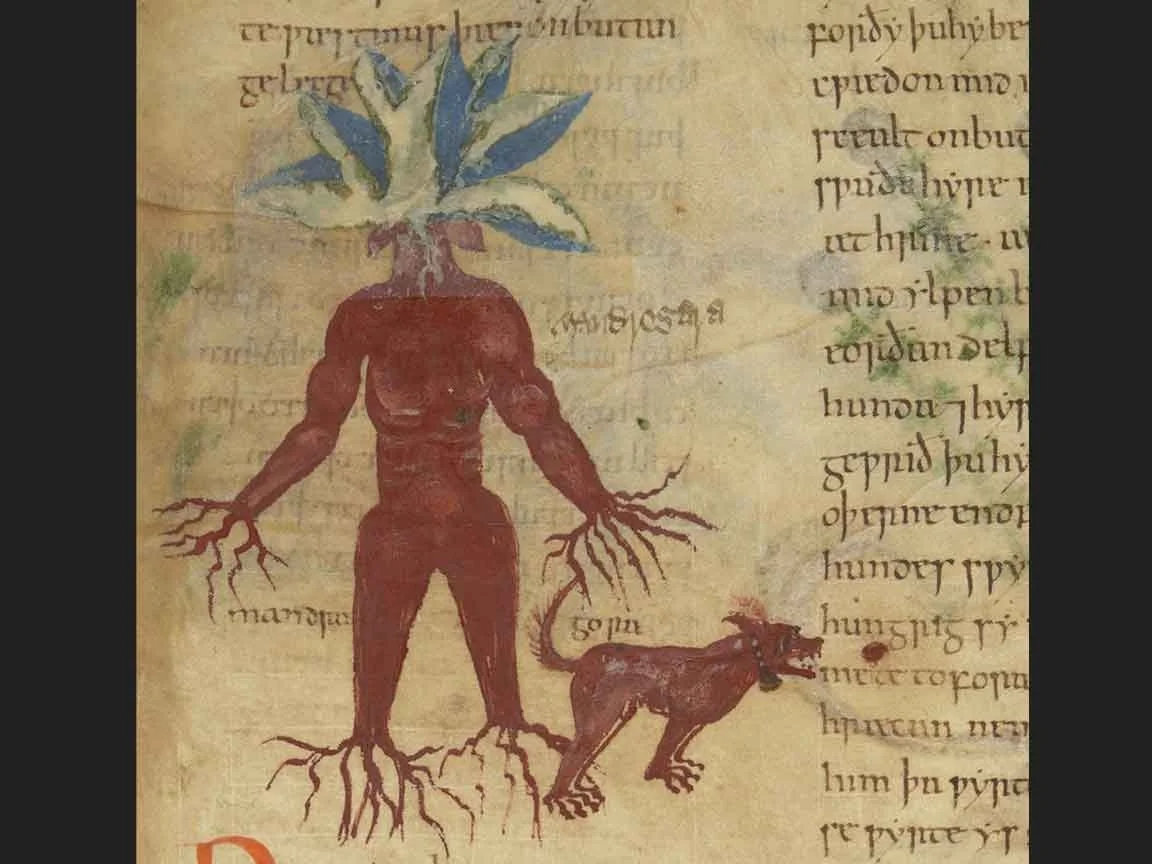
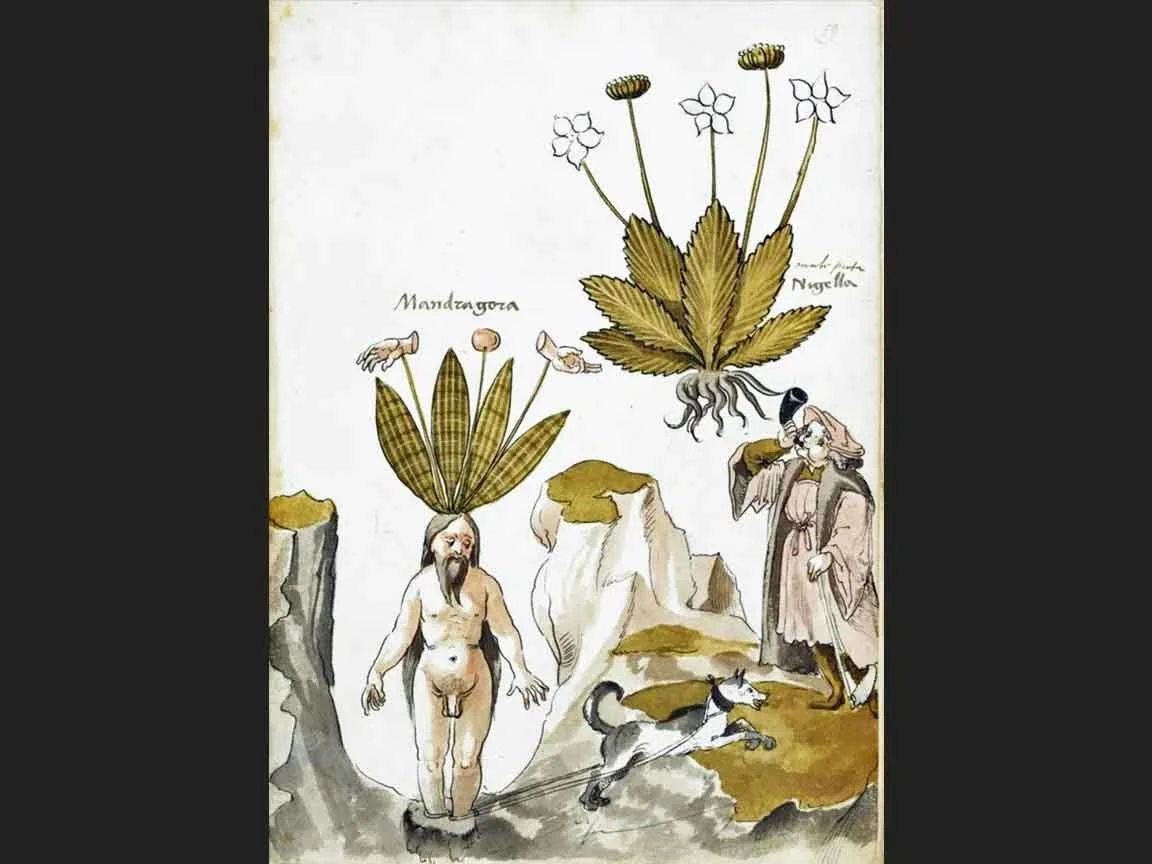
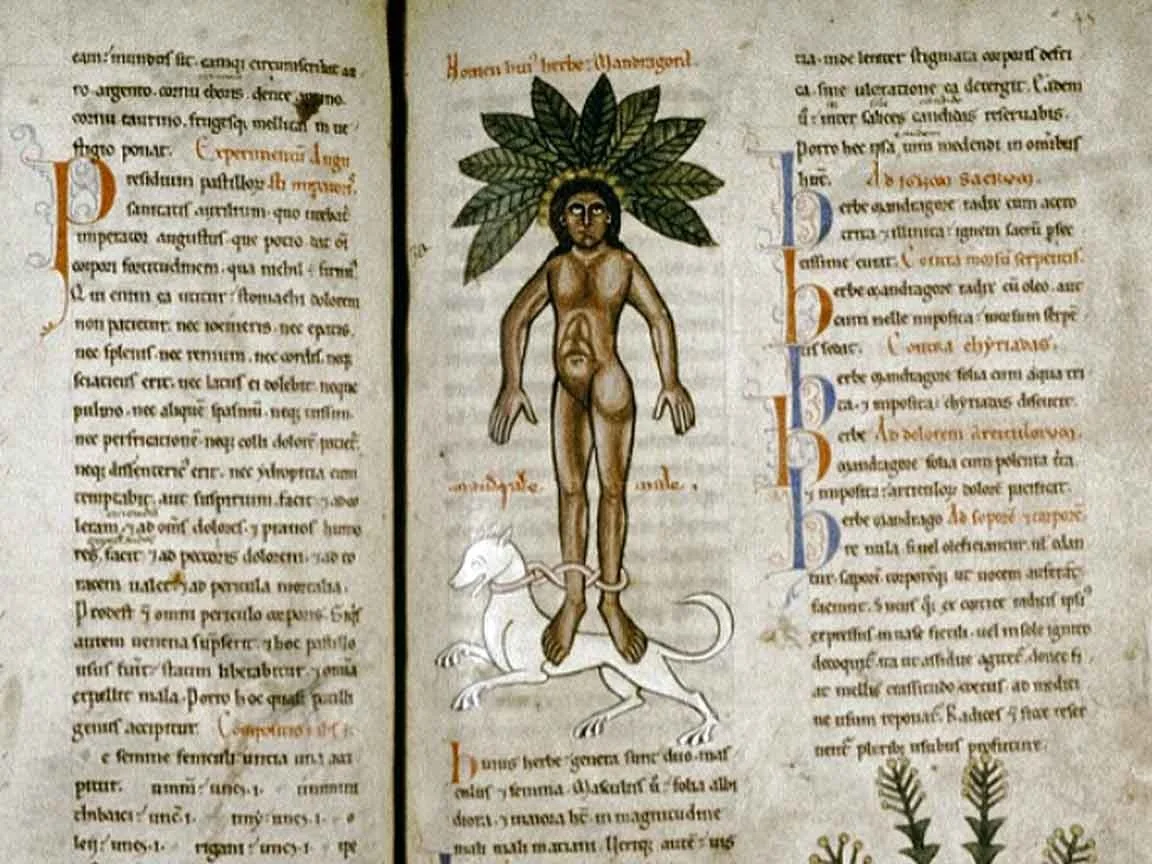
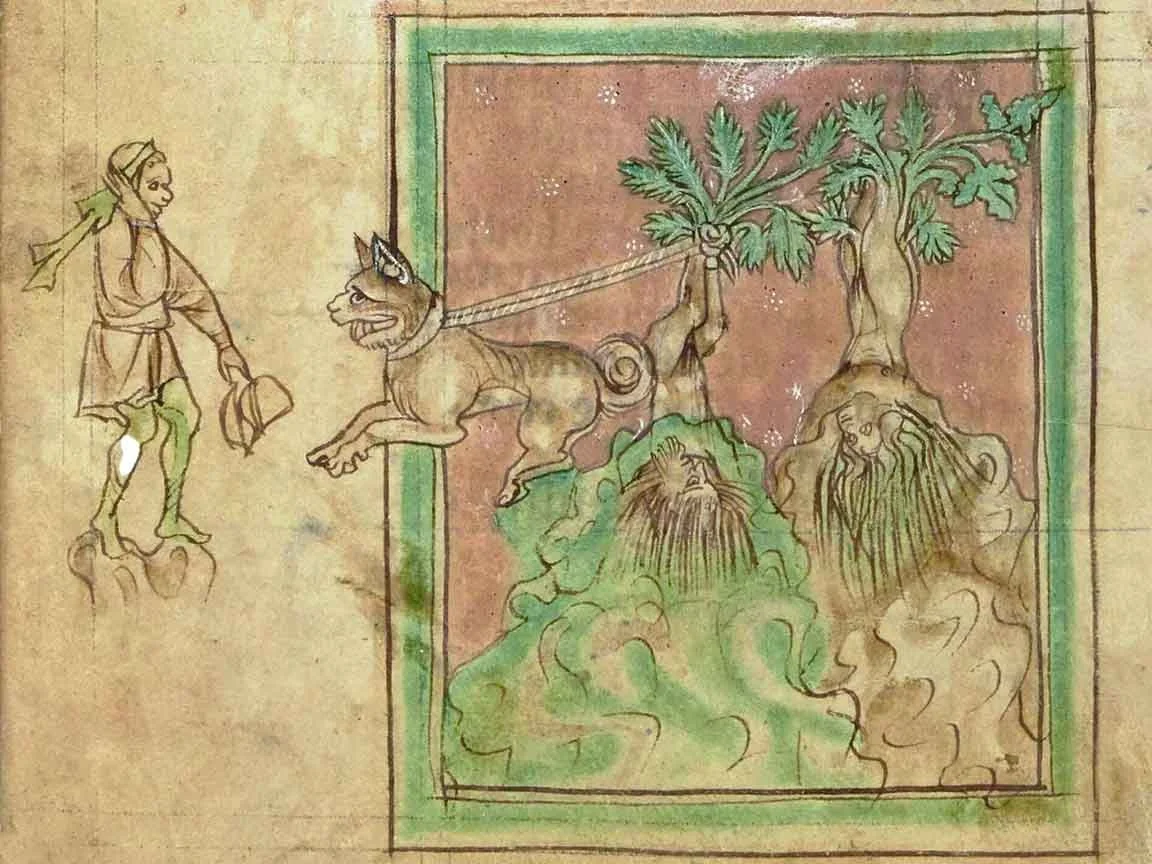
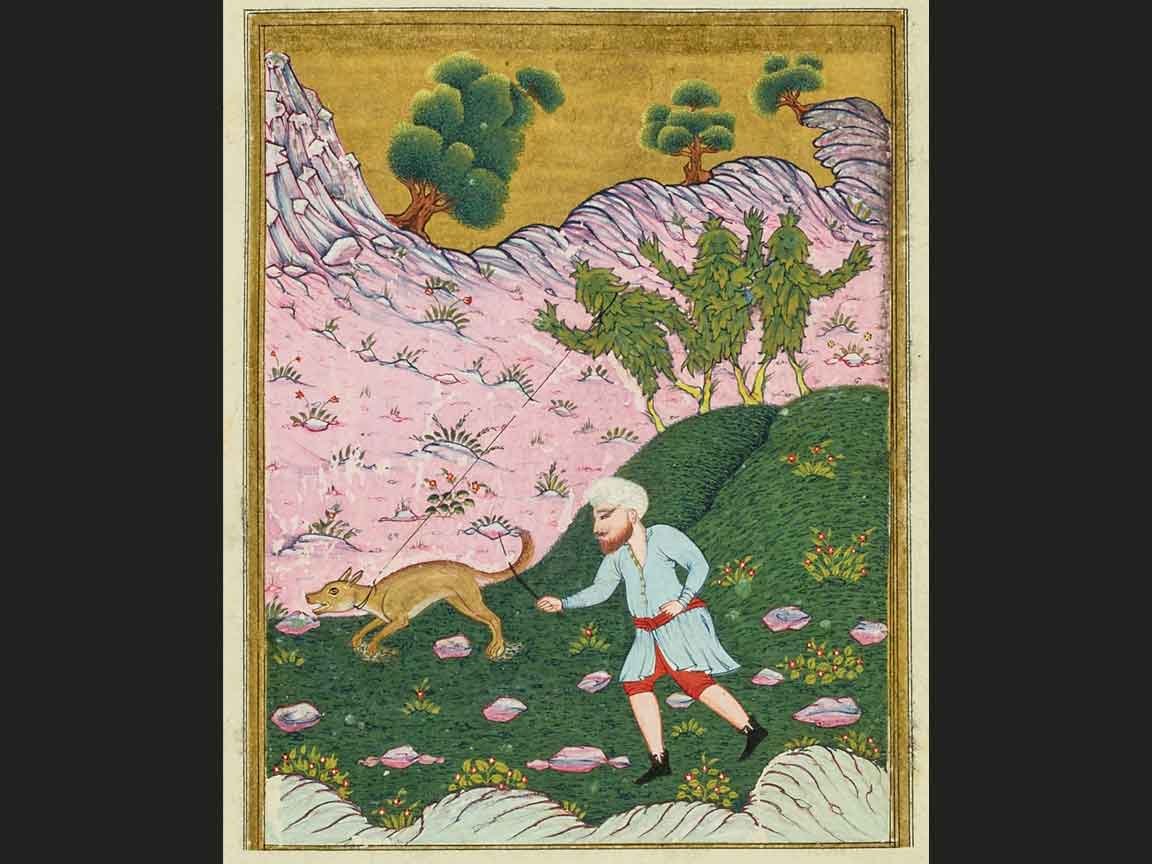
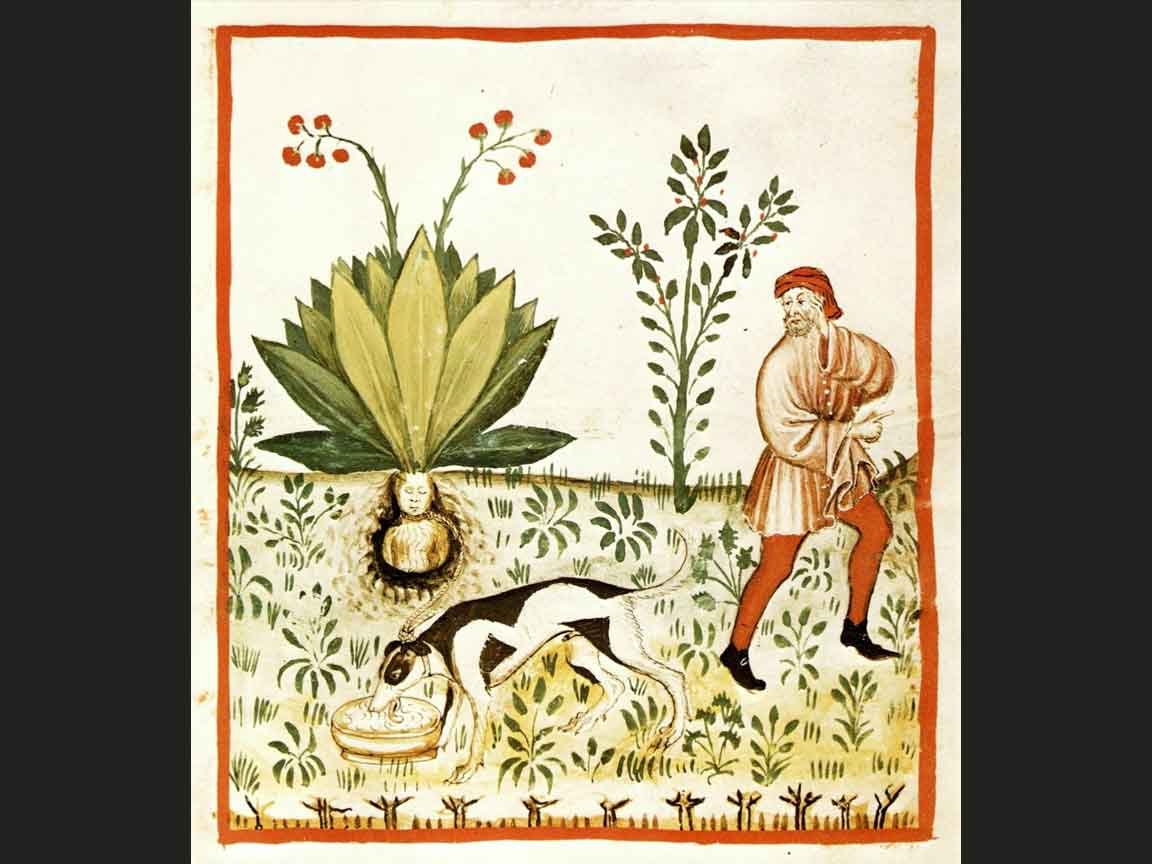
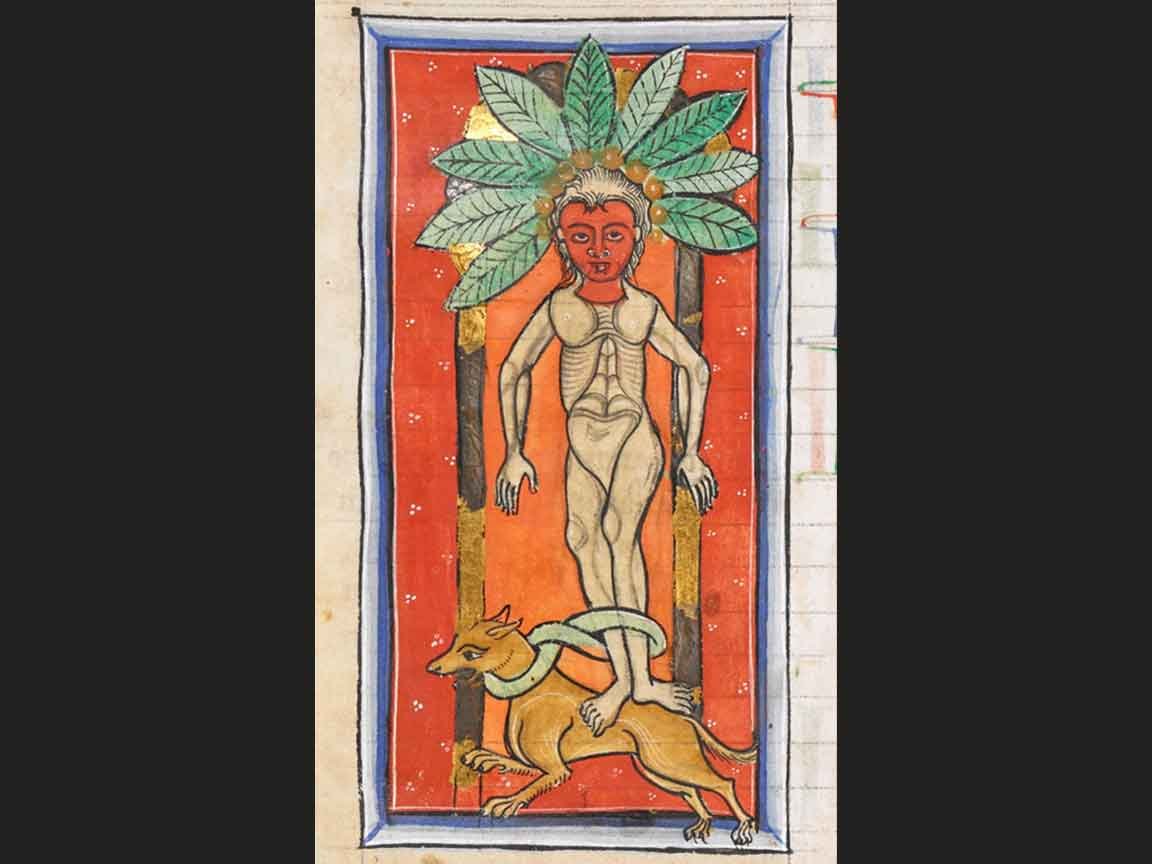
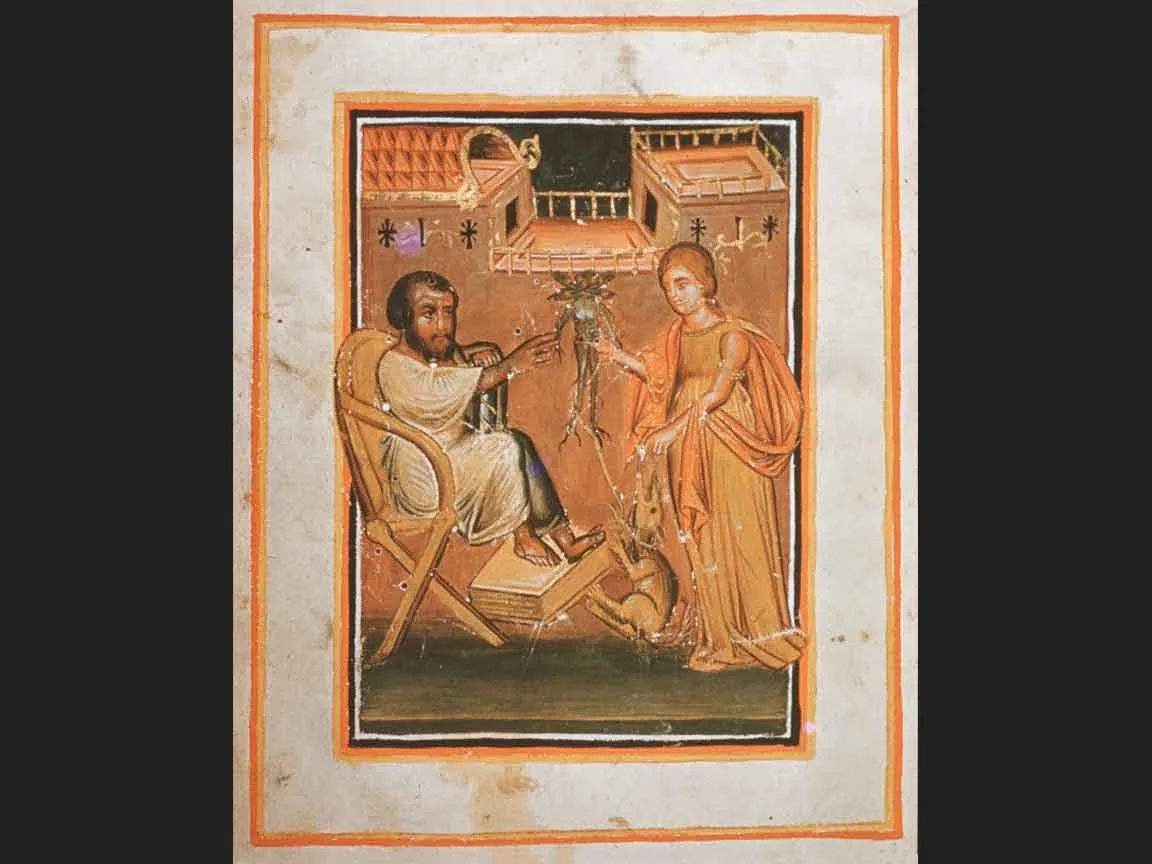
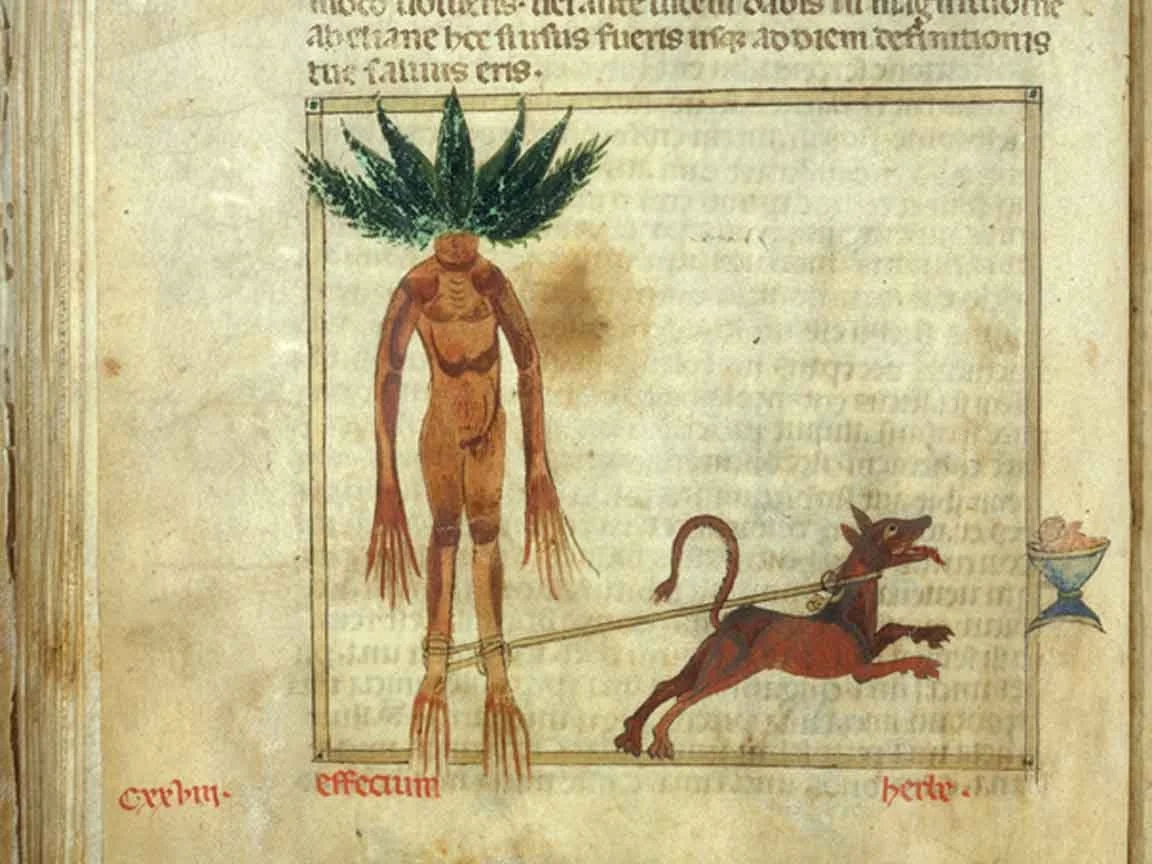
Gallery: Mandrakes and dog illustrations and illuminations from the 12th to 17th century. Hover over the image to read the description.
Where the Root Screamed and the Dog Paid the Price
In the folklore of old Europe and the ancient Mediterranean, few partnerships are as unsettling as that of the mandrake and the dog. The mandrake, a curious root with human-like limbs and potent medicinal properties, was rumoured to emit a death-dealing scream when pulled from the earth. The dog, meanwhile, found itself cast not as hero nor villain, but as a tragic proxy in a ritual designed to outwit the supernatural.
Stories of dogs tied to mandrake roots, lured by food and sacrificed to the plant’s shriek, run like a dark thread through centuries of herb lore and superstition. While the mandrake symbolised hidden power and danger, the dog became its silent martyr. An expendable buffer between human ambition and otherworldly peril. What follows is the story of this haunting duo: part herbal history, part cautionary tale, and entirely emblematic of a time when plants screamed, and dogs bore the consequences.
The Deadly Scream
Of all the botanical oddities embedded in Western folklore, none quite matches the mandrake root for sheer theatricality. With its gnarled limbs, fork like the stubby legs of a buried homunculus, and a face seemingly contorted in pain, the mandrake was said to emit a scream so lethal that anyone who heard it would drop dead, or go irrevocably mad. This legend, though often told with a wink today, was once taken with solemn caution.
In ancient and medieval times, this scream wasn't just a literary embellishment. Herbalists, apothecaries, and sorcerers regarded it with terror. The shriek, they claimed, echoed from beneath the earth like a soul in torment. It was an echo of life trapped in a root, and disturbing it meant risking one’s own. How this belief originated is murky, possibly from the humanlike shape of the root, or its use in powerful, sometimes poisonous potions. But it persisted through centuries and geographies.
The mandrake's howl became a cornerstone of its myth, and from this sprang the peculiar solution that put dogs at the centre of one of folklore’s more macabre rituals.
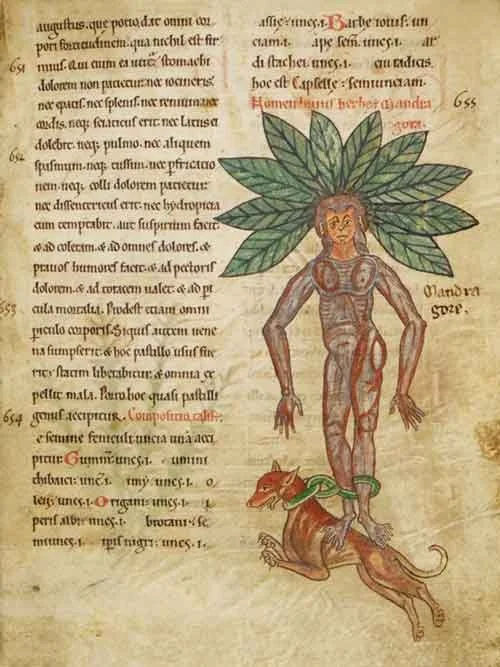
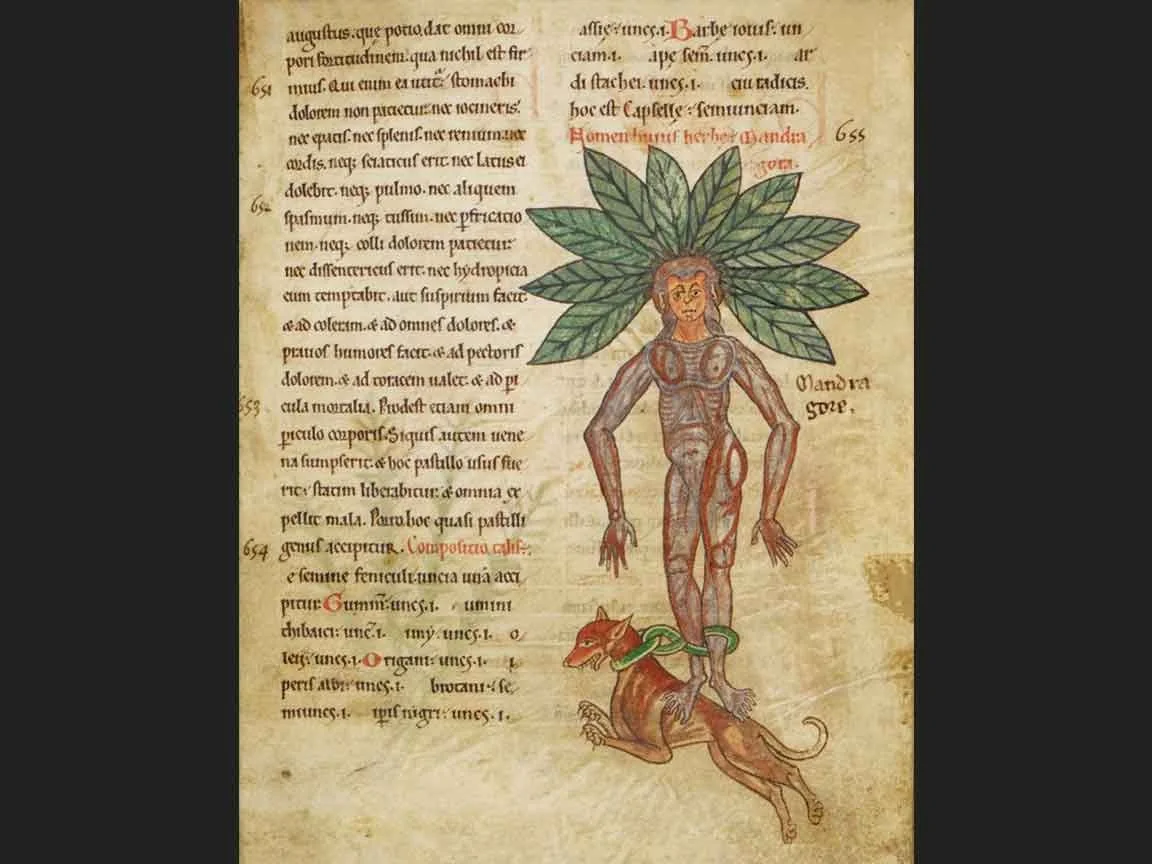
Pseudo-Apuleius. Harley MS 1585. Public domain via Wikimedia Commons
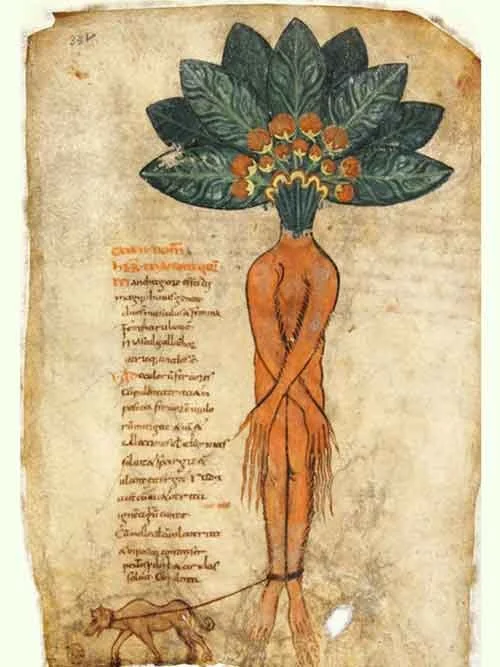
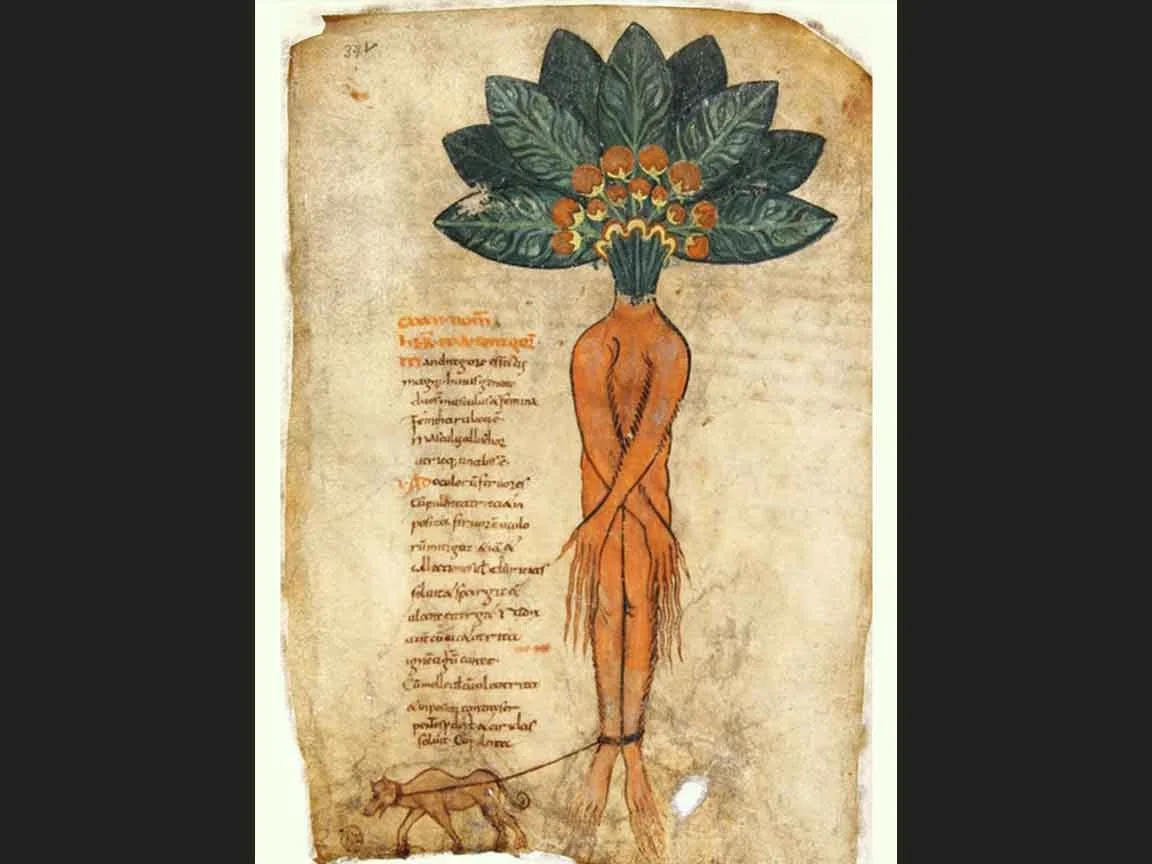
Pseudo-Apuleius-Manuskript Kassel, ca. 9th century. Public domain via Wikimedia Commons
The Dog's Role
To harvest a mandrake without succumbing to its fatal wail, tradition advised using a substitute, one tragically less valued than a human life. Enter the dog. Folklore prescribed a method whereby the root would be tied to a dog’s collar. The human gatherer, ears firmly plugged or turned away, would then coax the dog to pull.
The rationale was simple if brutal: should the mandrake scream, it would be the dog, not the gatherer, who absorbed the fatal force. And die it did, according to the tale. In this grim formula, the dog was both tool and shield, a silent victim in humanity’s quest for supernatural advantage. The logic was not unlike that of a canary in a coal mine, except here the threat was metaphysical, the danger not of gas but of ghostly sound.
What’s striking is the recurring appearance of this belief across cultures, from Mediterranean Europe to the British Isles. While exact methods varied, the expendability of the animal was a constant, casting a shadow over the otherwise pastoral role dogs played in everyday medieval life.
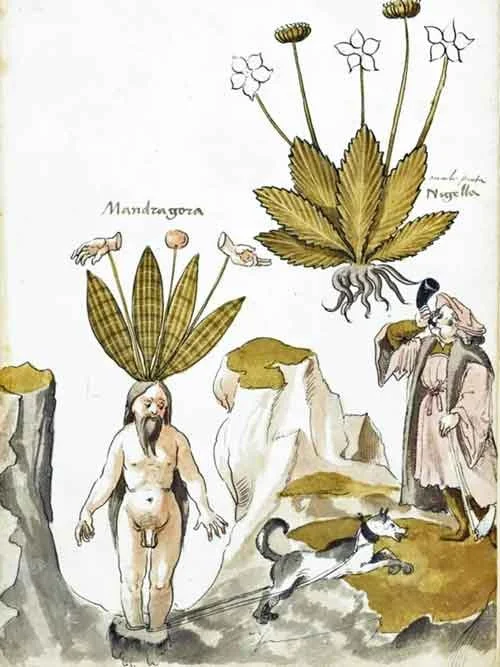
A mandrake being pulled out by a dog, in Giovanni Cadamosto, Herbal. Harley MS 3736 (BL), ca. 16th century. Public domain British Library Board)
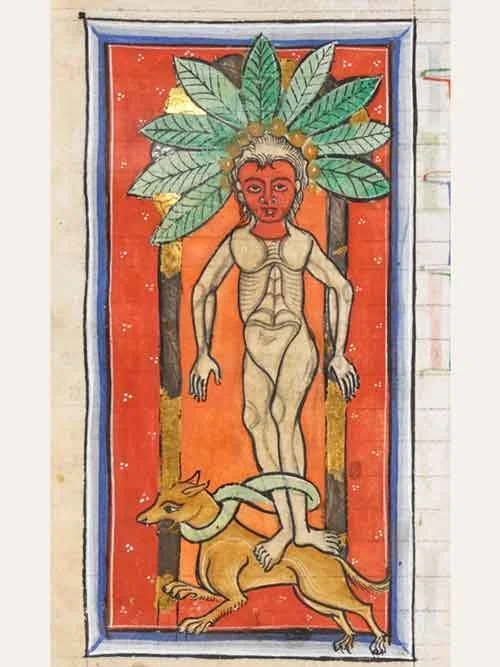
A Mandrake, England or France, c. 1175–1200. Sloane MS 1975 (BL). Public domain
The Sacrifice
The dog, poor soul, was seldom a volunteer. The method often began with an elaborate set-up: a piece of meat or bread would be placed just out of reach, near the spot where the mandrake root was half-exposed. The dog, hungry and unaware, would strain toward the food. In doing so, it would tug the root free from the soil. The scream, so the story goes, would ring out. And the dog would fall dead.
Whether the animal perished from fright, a snapped neck, or arcane magic depended on the teller. Some versions insist the death was instantaneous, others imply it was more of a swoon. Regardless, the tale ends with the root in human hands and the dog lying still.
The sacrifice served not only a functional purpose but also a moral one, reinforcing the mandrake’s fearsome power and the seriousness of meddling with forces beyond comprehension. Those who gathered the root were not merely herbalists, they were risk-takers, perhaps even transgressors. And the dog, tragic though its role, was the instrument that made such defiance possible.
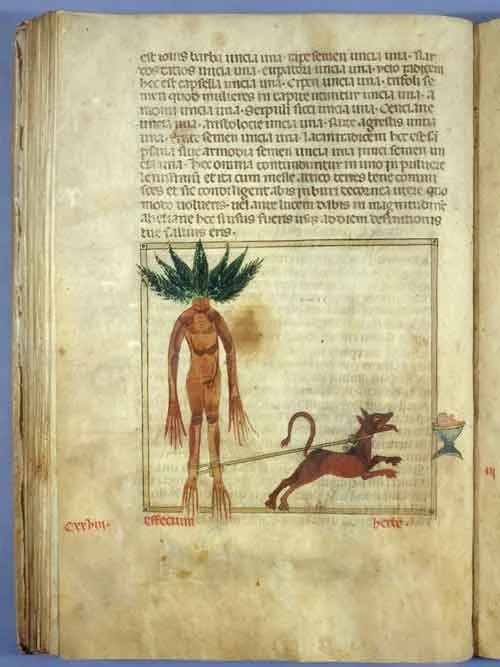
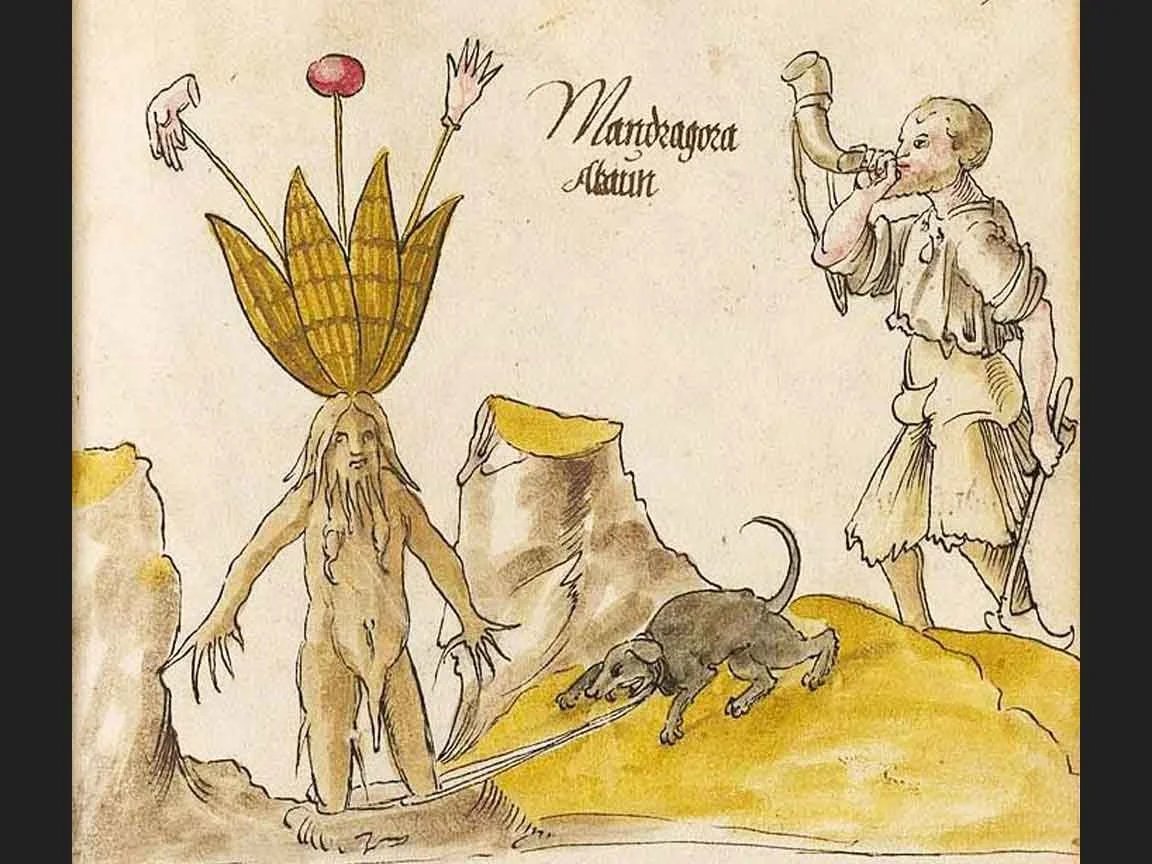
Antonius Musa, Herbal, MS.573 (Wellcome Collection), ca. 1225–1275. Public domain
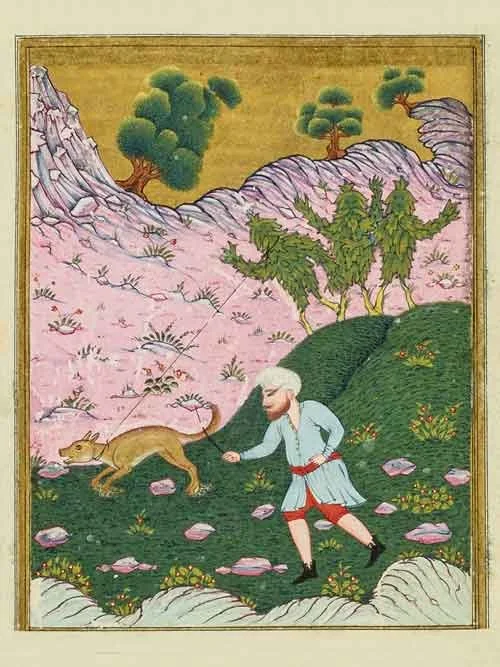
Illustration of Zakarīyā Ibn Muḥammad al-Qazwīnī‘s Wonders of Creation, Ms. Supplément turc 1063 (BnF), 1676. Public domain.
Ritualistic Gathering
The harvest of a mandrake was no haphazard affair. It was steeped in ritual and hedged about with protective measures. The most common precaution was the simplest: plug your ears. Wax, cloth, or even one’s fingers were used to block the scream. Some advised turning one’s face away entirely, lest even a glimpse of the root as it emerged prove dangerous.
In some regions, the timing of the harvest was considered crucial. Mandrakes were best gathered under the full moon or on a Friday at dawn, times believed to veil the plant’s potency or distract its spirit. Others recommended drawing a circle around the plant with a sacred blade, whispering incantations, or reciting the Lord’s Prayer backwards.
These ceremonies served both psychological and communal roles. They reassured the gatherer, lent authority to the healer, and underscored the exceptional nature of the plant. A mandrake was no mere root; it was a living relic, and treating it with theatrical reverence was both a safeguard and a statement of respect.
Medieval Depictions
The mandrake-dog ritual captured the medieval imagination so vividly that it made its way into illuminated manuscripts, herbals, and bestiaries. In these richly illustrated texts, one often finds curious scenes: a crouching herbalist in a red robe, a dog straining at a leash, and a squat, human-shaped root being yanked from the ground.
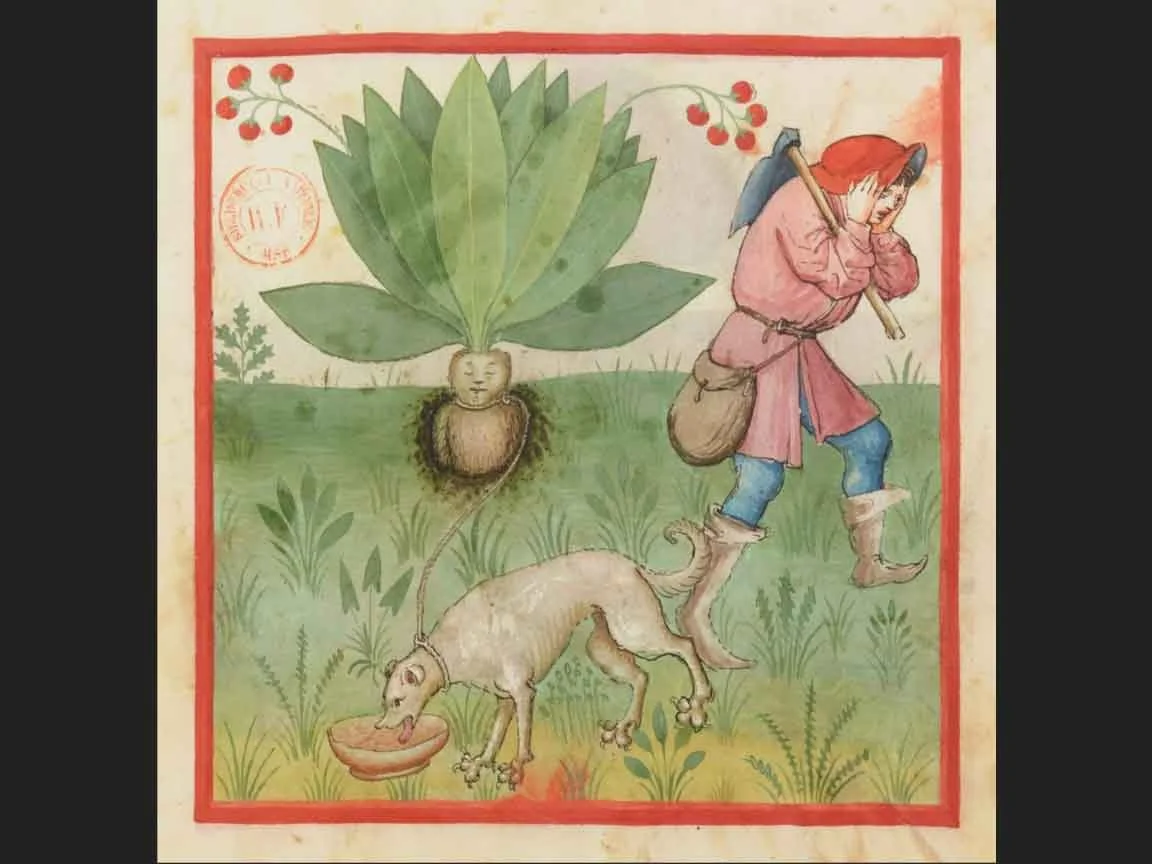
In the famed 12th-century manuscript, the Tacuinum Sanitatis, the mandrake is drawn with limbs and hair, a miniature human bursting from the earth. Other depictions show the dog mid-pull, eyes wild, while the gatherer flees with hands clamped over ears. These images were not ironic; they were visual summaries of accepted wisdom.
Such illustrations were part education, part warning. They taught how to handle a powerful plant, and what price might be paid if done incorrectly. In a world where the line between natural science and magic was thin, the dog-mandrake tableau became emblematic of the high stakes of herbal lore.
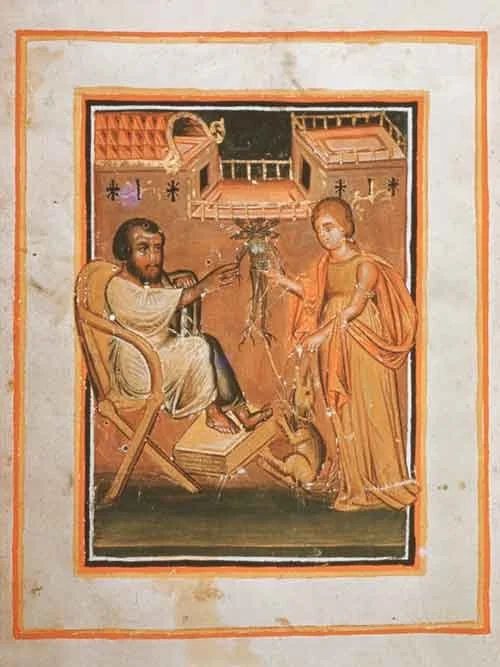
Dioscorides, De materia medica, BAV Chig. F. VII. 159 (Vatican City), ca. 15th century. The MacKinney Collection of Medieval Medical Illustrations. Public domain
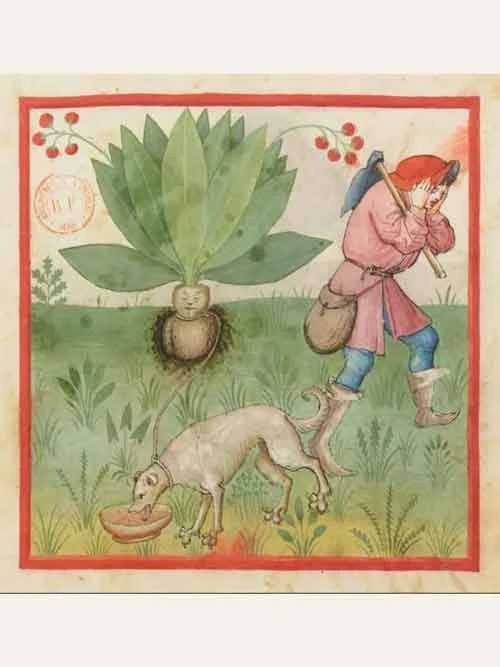
Tacuinum sanitatis, Ms. Latin 9333 (BnF), ca. 1474–1499. Public domain
Historical Context
Long before medieval monks copied their guides to safe mandrake harvests, the root held sway in ancient cultures. The Egyptians used it in love potions. The Greeks associated it with Aphrodite. In the Hebrew Bible, Rachel trades mandrakes for a night of fertility. The root’s distinctive human shape and narcotic properties gave it an aura of both danger and desirability.
By the time Pliny the Elder wrote about it in the 1st century CE, the mandrake was already cloaked in legend. Later physicians like Dioscorides described its “anaesthetic qualities” real enough when concentrated, but also gestured toward its spiritual potency. As Christianity spread, the root took on more infernal associations, branded a “witch’s root” and tied to sorcery.
Over time, the ritualised gathering fell out of medical fashion, replaced by more empirical methods. Yet the myth lingered in rural pockets, in storybooks, and eventually in pop culture. By the Victorian era, it was romanticised in Gothic novels. Today, while no one ties their Labrador to a mandrake plant, the tale survives in folklore podcasts, fantasy novels, and museum exhibits.
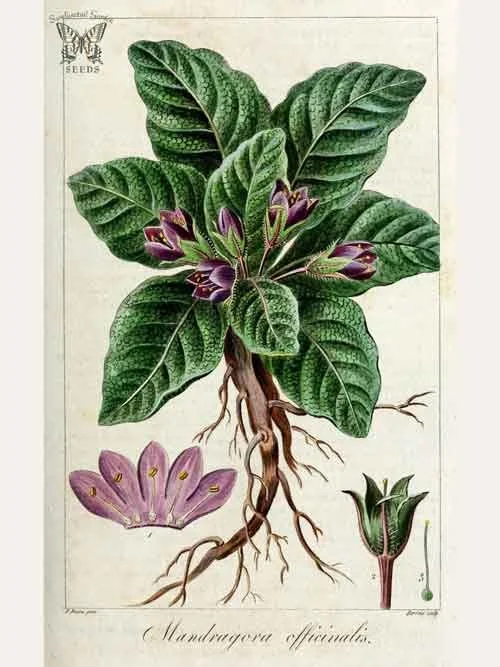
Mandragora officinarum, Herbier général de l’amateur, vol. 8, 19th-century. Public domain
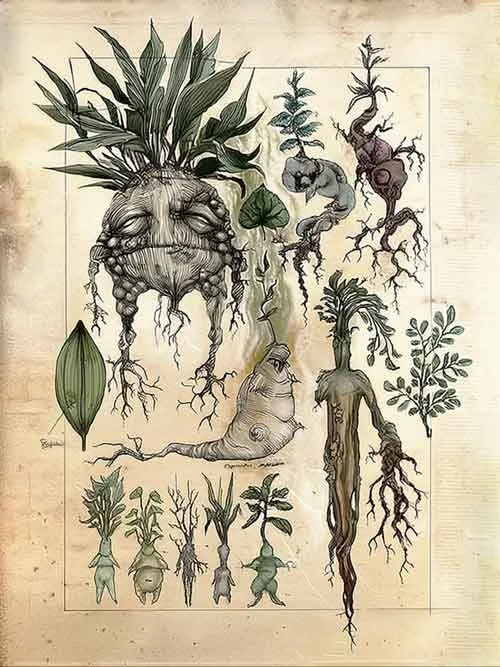
Illustration of mandrake root figures and botanical sketches. AI photo by Dogs in History
Why the Mandrake Dog Still Haunts
The tale of the mandrake and the dog is one of those rare folklore artefacts that retains its eerie charge despite centuries of retelling. It speaks to deep cultural currents: our desire to control nature, our unease with power, and our historical willingness to sacrifice the innocent in pursuit of the arcane. That a simple root and a trusting dog could together form such a lasting legend is testament to the strange beauty, and tragedy, of human imagination.
Today, no dogs need die for a mandrake to be admired. Modern folklore reinterpretations focus on mandrake as a healing symbol and dogs as ethical guardians. But the story still haunts the edges of our collective memory, a whispered warning from a time when magic screamed from the soil and a dog’s bark might be the last sound one ever heard.
Did You Know?

Mandrake root. Dogs in History
Mandrake roots can contain hallucinogenic alkaloids, used historically as anaesthetics.
In Harry Potter and the Chamber of Secrets, mandrakes are portrayed as potted plants with baby-like roots that emit a deadly cry when uprooted. To safely repot them, students at Hogwarts wear earmuffs to block out the fatal scream.
Jeanne d’Arc (d. 1431) was accused at her trial of carrying a mandrake root. She denied possessing one.
According to the 15th-century doctrine of signatures, the medicinal use of a plant was indicated by how closely some part of it resembled a human body part or organ. The fact that the mandrake root resembled an entire human body was a sign of its potency.