Long before the brandy barrel, Barry was an Alpine rescue dog, one of a pack from the Great St. Bernard Hospice that went out into snow and fog to find lost travelers. Somehow, he became the one the world remembered.
Barry, an illustration based on the Siegmund lithograph, walks above the Great St. Bernard Hospice, which took in travelers about 8,000 feet up in the Swiss Alps. Dogs in History (AI).
Barry was busy playing when the professor arrived. Up on the Great St. Bernard Pass, he and the other hospice dogs were tumbling over one another the way, in the visitor's words, tigers play together. Peter Scheitlin, a naturalist from St. Gallen, already knew Barry by reputation. He took off his hat to the dog, as he considered only proper, and tried to make friends.
Barry growled at him.
Scheitlin was not offended. "Had I been unfortunate," he wrote in 1840, "you would not have growled at me." It is the only first-hand account of meeting Barry that has been found, and it shows the dog before the legend got hold of him: not the gentle rescuer of later pictures, but a working animal in a pack, wary of a stranger.
The Dogs of the Great St. Bernard
Barry worked for a hospice in the old sense of the word: not a place for the dying, but a house that took in travelers. It had stood near the top of the Great St. Bernard Pass since the eleventh century, about 8,000 feet up on the route over the Alps between Switzerland and Italy. Augustinian canons ran it, and its door is said to have stood unlocked for nearly a thousand years.
Taking travelers in was only half the work. In winter, someone had to go out and find the ones who never arrived. From the middle of the seventeenth century, the hospice’s servants, known as marronniers, took dogs with them on those patrols. The men went out every day. The dogs went in front.
Augustinian canons and local guides from the Great St. Bernard Hospice bring a traveler in from the snow on a stretcher, accompanied by a working dog. The men went out on patrol every day, and the dogs went in front. GSB Archive, Public domain.
In fog and driving snow, the dogs broke trail through the drifts, found travelers who had strayed from the path, and barked to bring the men to them. Their most valuable skill sounds the least heroic. When the weather closed in and every direction looked the same, a hospice dog could find the way home. A traveler collapsed in the snow was saved only if someone could get him back to the hospice, and that was the dog's part of the job.
The Natural History Museum in Bern, which holds Barry’s remains today, is plain about what the dogs were not. They were not avalanche dogs, digging buried travelers out of the snow. They were finders and guides, working beside men who kept no logbook of what each dog had done.
One of the Pack
Barry was born at the hospice in 1800, the year Napoleon marched some 46,000 soldiers over the pass into Italy. The hospice dogs he grew up among were a mixed group of strong working animals, kept for what they could endure rather than how they looked. The Saint Bernard as a pedigree breed, with registered bloodlines and a written standard, did not exist until decades after his death. Barry himself weighed roughly 90 to 100 pounds, less than half the weight of the heaviest Saint Bernards today.
Marc Nussbaumer, the Bern museum scientist who has studied Barry’s remains, puts it simply: Barry was one dog among many. Over some two hundred years, the hospice's men and dogs are credited with saving more than 2,000 people. Barry saved lives, but so did every dog working beside him. He did not become famous for doing something the others could not.
Famous in His Own Lifetime
Barry was famous while he was still working, and it was the people crossing the pass who spread the word. According to the foundation that breeds the hospice dogs today, the soldiers Napoleon marched over the Great St. Bernard in 1800 took stories of the dogs home with them across Europe.
Of all the dogs in the pack, Barry was the one whose name spread. Scheitlin knew it before he ever raised his hat on the pass, and by the time Barry died, Nussbaumer says, he was well known. No source explains why it was Barry’s name, rather than another dogs, that people carried home. In 1812, that reputation went down the mountain with him.
Too Old for the Pass
In 1812, when Barry was about twelve and worn out, a hospice servant brought him down the mountain to Bern. Nobody knows why the prior chose Bern, a Protestant city far from the hospice, or where Barry lived for the next two years. The record says only that he was well looked after there, and that he died in 1814, of old age, at about fourteen.
The hospice did not let him go entirely. At the prior’s wish, his body was preserved and given to Bern’s natural history collection. Of all the dogs who had gone out ahead of the marronniers, Barry was the one the house chose to keep. Two years after his death, Friedrich Meisner, a professor of natural history in Bern, wrote that this faithful dog, who had saved so many people’s lives, would not soon be forgotten.
A Barrel, a Boy, a Bayonet
A dog that famous needed a story to match. The first thing added to the legend was a count of the lives Barry had saved. In the sources found so far, the figure of more than forty rescues first appears in Scheitlin’s book of 1840. Then came three more stories to explain his fame.
A Hennessy advertisement puts the brandy barrel to work. The barrel became the breed’s trademark, but the hospice dogs never carried one. Public domain.
The first was the drink. By 1840, Scheitlin had Barry setting out each day with a little basket of bread and a little flask of sweet, strengthening cordial at his neck. Later pictures gave the dogs a brandy barrel instead, and the barrel became the breed's trademark. The hospice dogs may sometimes have carried food in small packs. The barrel was another matter. “At no point in time,” a hospice clergyman said in 1956, “did the dogs carry such barrels.”
The Hospice Dog, by Pierre-Auguste Vafflard exhibited in Paris in 1810. The legend: Barry carries a half-frozen boy to the hospice and rings the bell at the gate. The Bern museum doubts any dog could have done it. Public domain, via Wikimedia Commons
The second was the boy. In the legend, Barry finds a half-frozen child, lets him climb onto his back, carries him to the hospice and rings the bell at the gate. A similar story was told before Barry was born, and the Bern museum doubts any dog could have done it. By 1840, a picture of the scene was on sale in Bern. Scheitlin urged his readers to buy it, hang it on the wall, and throw their portraits of Robespierre and Marat out of the window to make room.
The third was his death. A monument at the dog cemetery outside Paris, put up around 1900, says Barry saved forty people and was killed by the forty-first. Later versions supplied a soldier who mistook him for a wolf and ran him through with a bayonet. Barry died of old age in Bern. As Nussbaumer has observed, a hero, like a saint, is seldom allowed to die in bed.
The Body in the Glass Case
Caption title. Photo: Public domain, via Wikimedia Commons.
Barry is still in Bern, though not in the shape he had in life. By the 1920s his old mount had deteriorated, and its humble pose, head lowered, no longer suited a hero. There was a second problem. By then the public knew what a Saint Bernard looked like, and Barry did not look like one. According to the historian Michael Worboys, visitors complained. In 1923, the taxidermist Georg Ruprecht remounted the skin over a new model. He lengthened the legs by about four inches, enlarged and raised the head, and gave Barry the look of the massive Saint Bernard that breeders had developed long after his death.
Until 2014 the remounted Barry stood in the museum’s entrance hall, latterly between the men’s and women’s restrooms. The fur is his; most of the rest is a model. Since 2014 Barry has had a permanent exhibition of his own, and his real skull sits in a case of its own, smaller than the new head that was made for him.
His name has outlived him too. The hospice once chose its dogs for what they could endure, never for their looks. The foundation that now breeds Saint Bernards, at Martigny in the valley below, gives the name Barry to the handsomest male puppy in a litter.
Did You Know?
The Saint Bernard is named after a man who never saw one. Bernard of Menthon founded the hospice in the eleventh century; its dogs did not arrive until some six hundred years later.
For a time, the breed was named after Barry. In the nineteenth century, before “Saint Bernard” took hold, the hospice dogs were known in German as Barry-Hund, Barry dogs. Nobody knows where Barry’s own name came from.
A Saint Bernard today. The breed standard was established decades after Barry died, and the heaviest of these dogs weigh more than twice his 90 to 100 pounds. Dogs in History (AI).
Barry’s successors still spend summers on the pass. When the Fondation Barry took over the hospice kennel in 2005, it agreed that its Saint Bernards would return to the hospice each summer.
Switzerland put Barry on gold in 2017. Swissmint struck 4,500 proof 50-franc gold coins in his honor, designed by Maya Delaquis.
Barry is not the only famous dog in a museum. Hachikō is preserved in Tokyo, Sergeant Stubby at the Smithsonian, Owney at the National Postal Museum, Balto in Cleveland, and Togo in Wasilla, Alaska.
Breed: Saint Bernard | Country of origin: Switzerland (Great St Bernard Hospice) | First use: Companions, then guides and rescuers for lost Alpine travelers | Origins: 17th century
Discover More Dogs From Different Worlds…
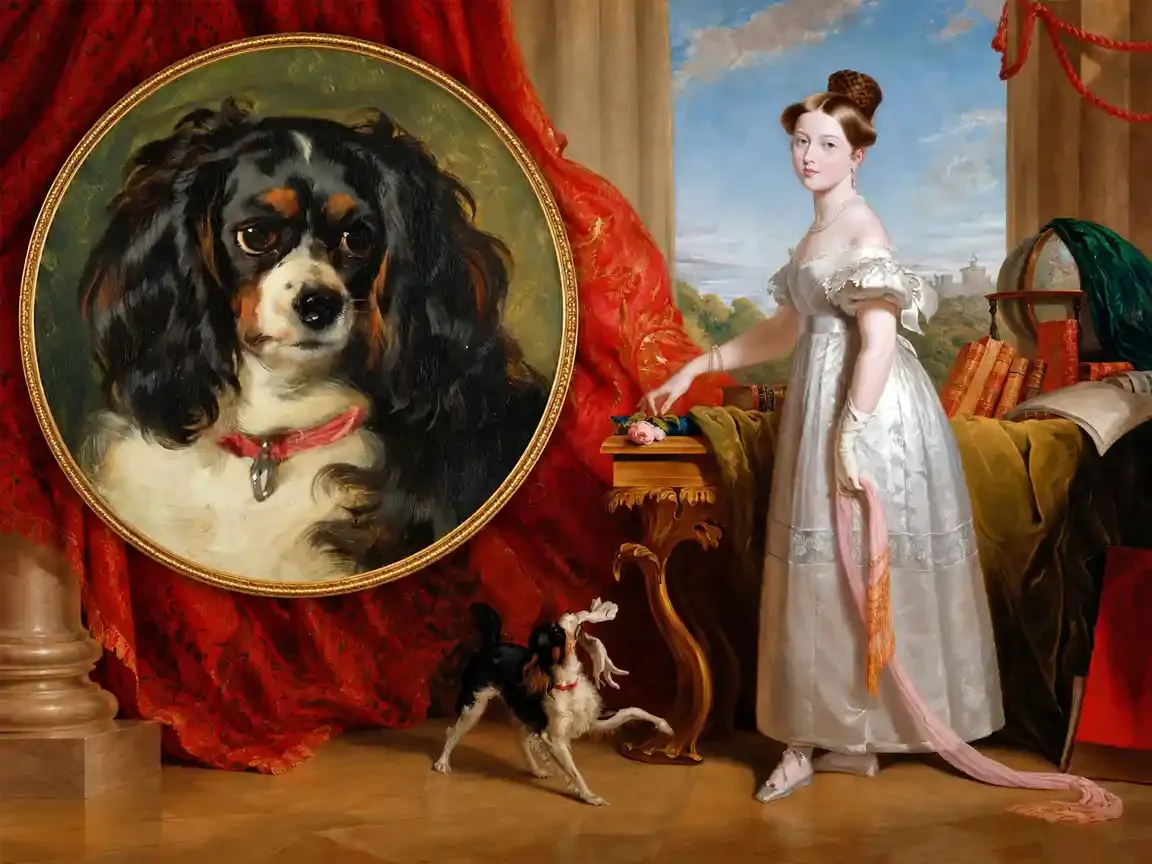
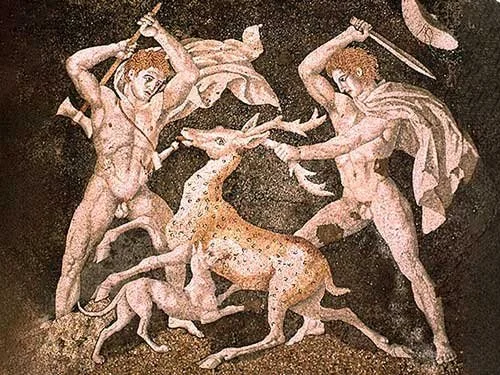
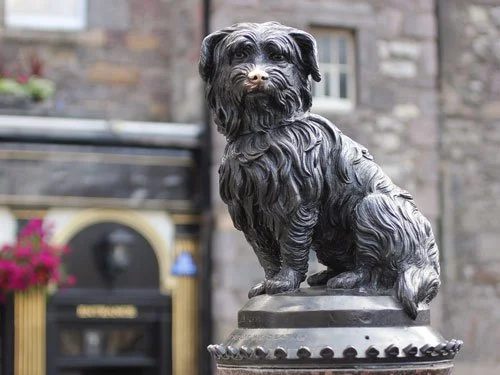
Barry’s legend gave him a barrel he never wore and a death he never died. Other famous dogs have had their stories embellished too: a terrier at an Edinburgh graveyard, a dog tied to Alexander the Great, and the spaniel remembered as a young princess’s first love.